
Pickleball isn’t just a game of shots and reflexes. It’s also a game of observation. The players who consistently stay one step ahead are often the ones who notice patterns before their opponents do. Small habits, preferred shots, and predictable movements can reveal valuable information throughout a match.
Reading opponent habits to gain an edge in pickleball helps you anticipate decisions, adjust your positioning, and make smarter strategic choices.
Whether an opponent favors a particular serve, avoids a certain shot, or reacts the same way under pressure, recognizing those tendencies can create opportunities that aren’t obvious at first glance.
By learning how to spot and use these patterns, you can improve your decision-making, reduce surprises, and gain a competitive advantage without changing your physical game.
Reading Opponent Cues in Pickleball
What Are The Key Body Language Signals To Watch In Pickleball Opponents?
Success in pickleball is not just about technique and shot execution. It also involves recognizing the subtle clues opponents reveal before they make their move. Developing the skill of reading opponent behavior can help players anticipate shots, improve court positioning, and make faster decisions during rallies.
Many players unknowingly telegraph their intentions through posture, paddle preparation, footwork, and visual focus. While these signals are rarely obvious on their own, learning to recognize patterns over the course of a match can provide a meaningful competitive advantage.
How Does An Opponent’s Posture Reveal Their Next Shot Intentions?
One of the most useful aspects of reading opponent tendencies is observing posture before contact with the ball. A player’s body position often provides clues about the type of shot they are preparing to hit.
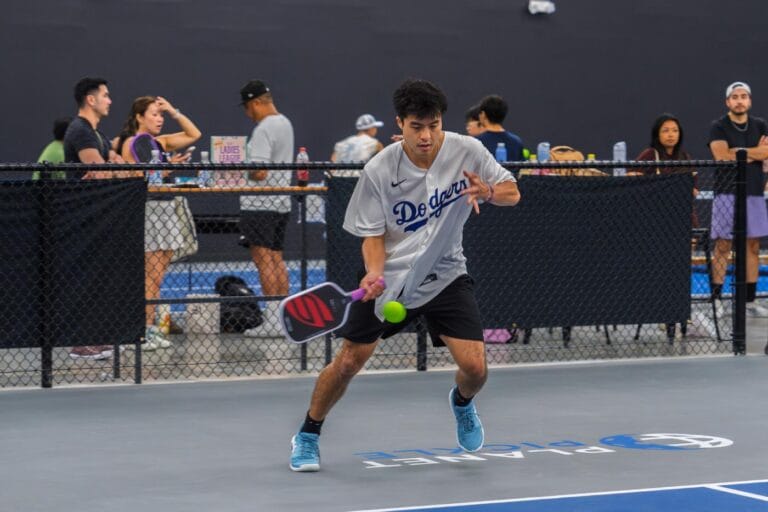
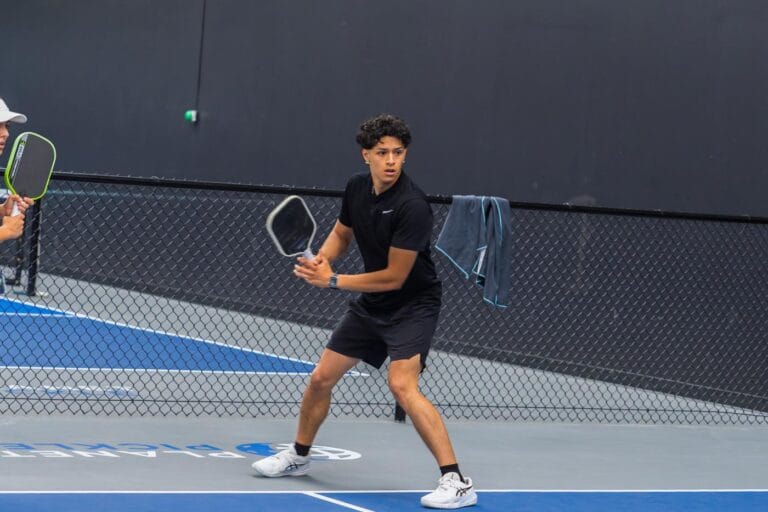
For example, a low, balanced stance with bent knees typically suggests that the player is preparing for a more aggressive shot, such as a drive or hard groundstroke. This posture allows them to generate power and maintain stability through the swing.
In contrast, a more upright stance may indicate a softer shot. Players preparing for a dink, drop shot, or controlled placement often appear more relaxed and less loaded through their legs. While posture alone does not guarantee a specific shot, it can help narrow the possibilities and improve anticipation.
When practicing reading opponent behavior, focus on identifying recurring patterns rather than making assumptions from a single movement. Some players consistently use similar body positions before certain shots, making their tendencies easier to recognize as the match progresses.
Which Nonverbal Cues Indicate Shot Selection Patterns?
Beyond posture, nonverbal cues can provide additional information about shot selection. Paddle position is one of the most important indicators.
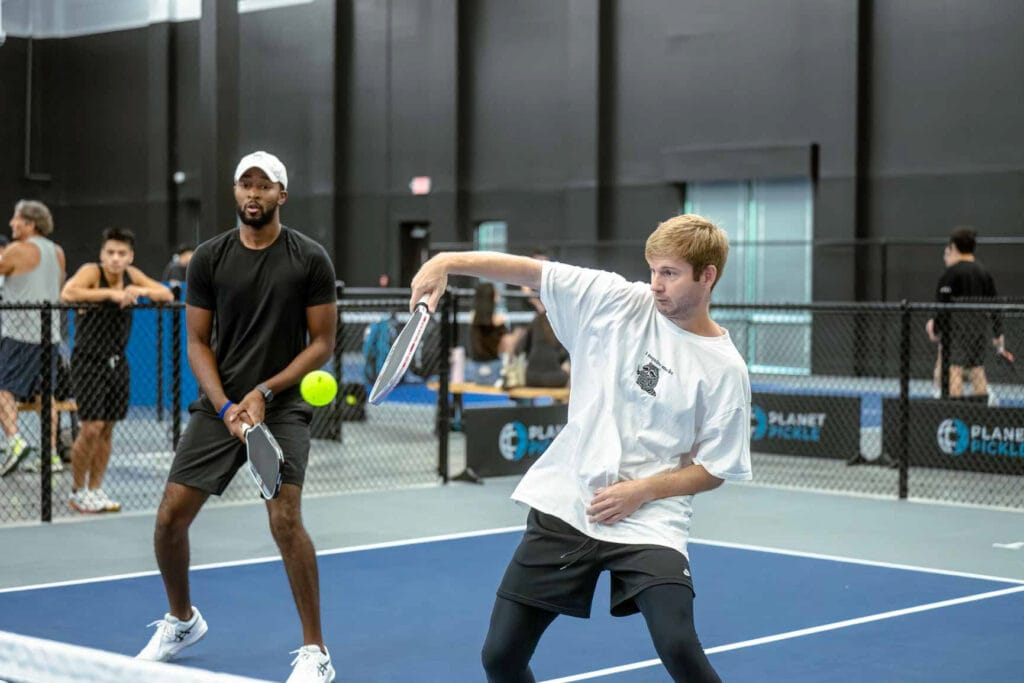
Players who hold the paddle high and prepare early are often setting up for an aggressive volley or overhead shot. Those who keep the paddle lower may be preparing for a softer touch shot or defensive return.
Eye movement can also reveal valuable information. Many players instinctively glance toward their intended target before striking the ball. While experienced competitors may disguise this habit, recreational and intermediate players frequently give away their intentions with their gaze.
Shoulder alignment offers another clue. The direction the shoulders face often influences where the ball is likely to travel. If an opponent’s shoulders open toward a sideline before contact, there is a greater chance they are targeting that area of the court.
These small observations become increasingly valuable when combined. Rather than focusing on a single signal, effective reading opponent skills involve gathering multiple clues simultaneously and making informed predictions.
Recognizing Patterns Throughout A Match
One of the most effective ways to improve anticipation is to look for repeated behaviors. Every player develops habits, even if they are unaware of them. Some players always favor a cross-court dink under pressure, while others consistently attack down the line when given an opportunity.
Pay attention to how opponents respond in specific situations. Do they favor a certain shot when pulled wide? Do they speed up the ball after a particular setup? These patterns often become more predictable as a match continues.
The goal of reading opponent tendencies is not to guess correctly every time. Instead, it is about increasing the likelihood of being prepared for what comes next.
Turning Observation Into Better Court Positioning
Reading body language is most useful when it influences your positioning and decision-making. Anticipating a likely shot allows you to move earlier, cover more court, and react with greater confidence.
Players who develop strong reading opponent skills often appear faster than they actually are because they begin moving before the ball is struck. Their advantage comes from observation and anticipation rather than pure athleticism.
Over time, learning to recognize posture, paddle preparation, gaze direction, and recurring habits can help transform your court awareness. By paying attention to these subtle signals, you can make smarter decisions, improve your defensive coverage, and gain a valuable edge during competitive play.
How Can Anticipation Techniques Improve Your Reaction Time In Pickleball?
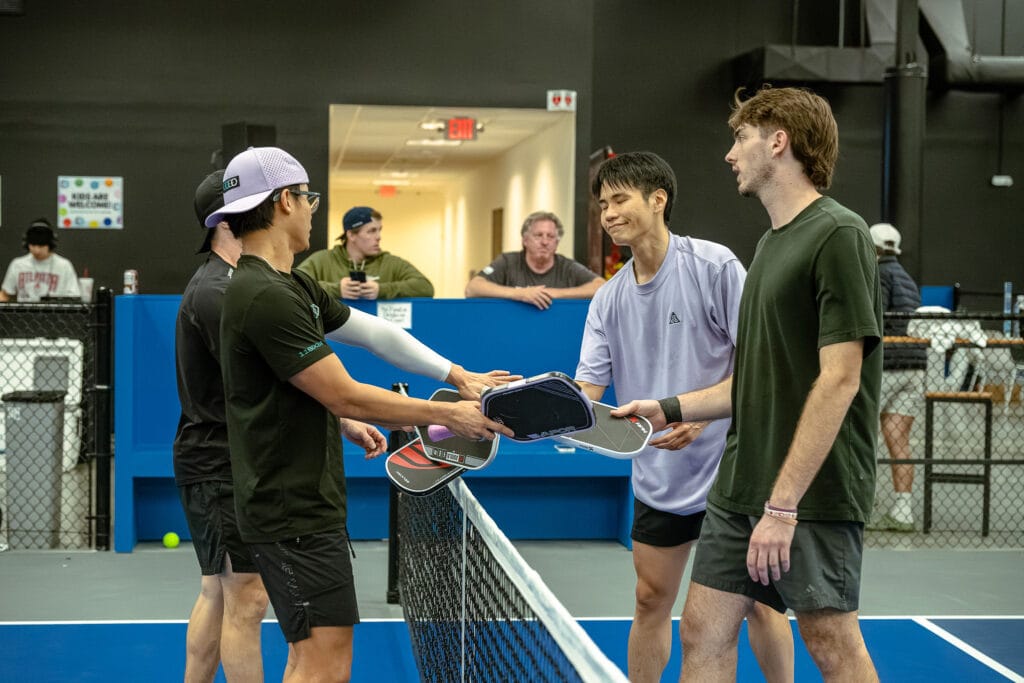
Quick reactions are important in pickleball, but anticipation is often what separates experienced players from the rest. The ability to predict what an opponent is likely to do before the ball is struck gives you valuable extra time to react, move, and prepare your next shot.
While athleticism certainly helps, anticipation is a skill that can be developed through practice and observation. A key part of reading opponent tendencies is recognizing patterns in their movement, shot selection, and decision-making under pressure.
The more information you can process before the ball leaves their paddle, the more effectively you can position yourself and respond.
What Drills Enhance Anticipation Skills For Predicting Opponent Shots?
Improving anticipation begins with training your eyes and mind to recognize cues more quickly. One effective exercise is shadowing, where players focus on following an opponent’s movements without worrying about hitting the ball. This helps develop awareness of footwork patterns, paddle preparation, and court positioning.
Another useful drill involves practicing with a partner who intentionally mixes up their shots. Rather than following a predictable sequence, they alternate between drives, dinks, lobs, and drop shots. Your goal is not simply to return the ball but to identify clues that reveal the upcoming shot before it happens.
Video analysis can also be a valuable training tool. Watching recorded matches allows players to pause before contact and predict where the ball is likely to go. Over time, this exercise strengthens the mental skills involved in reading opponent behavior and recognizing common tendencies.
Many advanced players also practice reaction drills that combine movement and decision-making. Instead of focusing solely on speed, these drills challenge players to process information quickly and choose the correct response under pressure.
How Does Cognitive Processing Speed Affect Shot Prediction Accuracy?
Anticipation is not only a physical skill. It also depends heavily on how quickly the brain can interpret information and make decisions. Cognitive processing speed refers to the ability to recognize patterns, evaluate options, and react appropriately in a short amount of time.
In pickleball, players are constantly gathering information from multiple sources. They may be tracking the ball, observing paddle angles, watching foot placement, and assessing court positioning all at once. Faster cognitive processing allows these observations to be converted into action more efficiently.
This is where reading opponent cues becomes especially valuable. The earlier you recognize a pattern, the more time your brain has to prepare a response. Even gaining a fraction of a second can significantly improve shot selection and court coverage.
Mental training techniques can help strengthen this skill. Visualization is one common method. Before matches or practice sessions, players mentally rehearse different game situations and imagine how they would respond.
This process helps the brain build familiarity with common scenarios, making reactions feel more automatic during actual play.
Turning Anticipation Into A Competitive Advantage
Developing anticipation is not about guessing. Instead, it involves collecting information, recognizing patterns, and making informed decisions based on what you observe. The most successful players combine physical readiness with strong observational skills, allowing them to react earlier and more confidently.
As you continue working on reading opponent behavior, you’ll likely notice improvements in more than just reaction time. Better anticipation can lead to stronger court positioning, fewer rushed shots, and greater consistency during competitive matches.
Over time, these small advantages add up. By sharpening your observation skills and training your ability to process information quickly, you can become more effective at predicting shots and staying one step ahead of your opponents on the pickleball court.
What Game Awareness Strategies Help You Read Opponent Court Positioning Effectively?
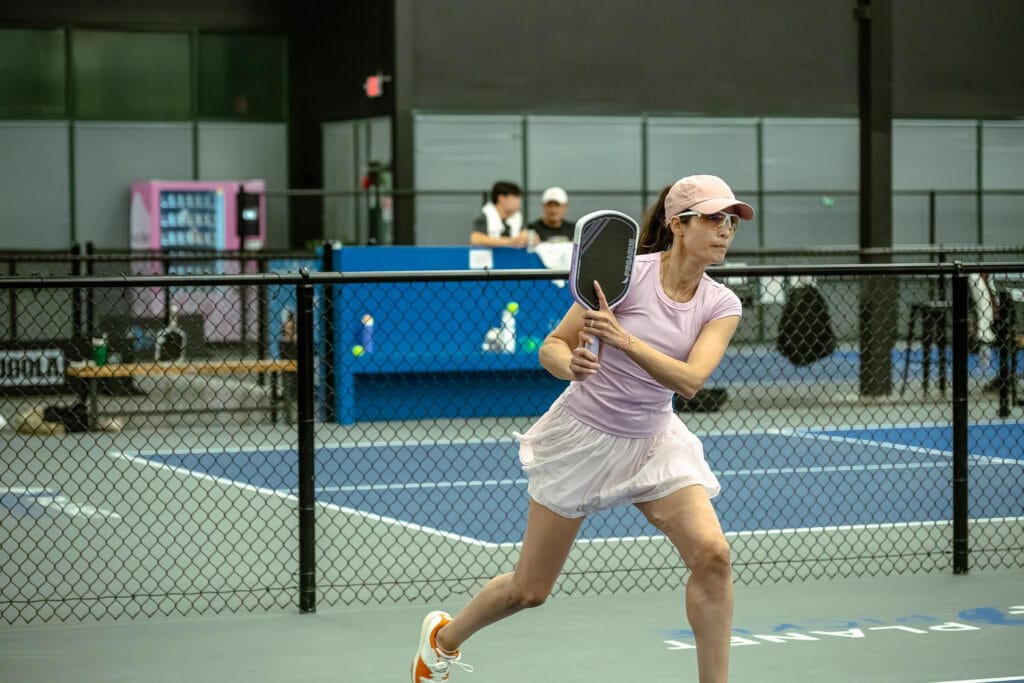
Success in pickleball is not just about hitting quality shots. It also depends on understanding where your opponent is on the court and how that positioning influences their options. Players who develop strong court awareness can often predict plays before they unfold, giving them a valuable advantage during rallies.
A major part of reading opponent behavior involves recognizing positioning patterns and understanding how those patterns affect shot selection. The better you become at analyzing court movement, the easier it becomes to anticipate opportunities and respond with confidence.
How To Interpret Opponent’s Spatial Positioning To Anticipate Play?
One of the most effective ways to improve reading opponent tendencies is by paying close attention to where they position themselves throughout a rally. An opponent’s location often reveals what they are preparing to do next.
For example, a player who moves aggressively toward the non-volley zone may be looking to apply pressure with volleys and quick exchanges at the net.
On the other hand, a player who remains deeper in the court may be preparing for a drive, defensive return, or lob. These positional clues can provide valuable information before the shot is even made.
Court positioning should also be viewed in relation to available angles. An opponent standing near a sideline may leave more open space on the opposite side of the court. Recognizing these openings allows you to make smarter shot selections and force your opponent into difficult recovery situations.
Experienced players often combine positioning awareness with shot anticipation. By observing both factors together, they can make earlier decisions about where to move and how to prepare for the next ball. This proactive approach improves reaction time and overall court coverage.
Why Court Positioning Matters For Shot Prediction
Many players focus entirely on the paddle or the ball, but positioning frequently provides clues even earlier. Before a player prepares their swing, their movement patterns often indicate their intentions.
For instance, if an opponent quickly shifts toward the center after a shot, they may be attempting to protect against an angled return. If they begin shading toward one side, they could be anticipating a particular response based on previous rallies.
Developing this level of awareness strengthens reading opponent skills because it helps you identify habits and tendencies over time. During longer matches, these patterns become increasingly valuable. Players often return to familiar positioning choices when under pressure, creating opportunities for strategic adjustments.
Which Tactical Adjustments Improve Your Court Coverage Based On Opponent Behavior?
Recognizing positioning patterns is only useful if you can adapt your strategy accordingly. Strong game awareness involves making real-time adjustments based on what you observe throughout a match.
If an opponent consistently favors one side of the court, you can begin adjusting your positioning to reduce the effectiveness of that strategy. Similarly, if they frequently move forward after certain shots, you can prepare for net play or look for opportunities to force them backward with a well-placed lob.
Another important adjustment involves identifying gaps in court coverage. Some players recover quickly to the center after every shot, while others leave openings when moving laterally. By observing these habits, you can target areas that are more difficult for them to defend.
These adjustments do not require dramatic changes to your game. Often, small positioning shifts and smarter shot selection are enough to create a meaningful advantage during a rally.
Turning Court Awareness Into A Competitive Edge
Developing game awareness takes practice, but it can dramatically improve your performance on the pickleball court. Rather than reacting solely to the ball, you begin gathering information from your opponent’s movements, positioning, and recovery patterns.
As your skills in reading opponent behavior improve, you’ll find it easier to anticipate plays, cover the court more effectively, and make better tactical decisions under pressure. Over time, this awareness becomes second nature, allowing you to stay one step ahead and gain greater control of each rally.
How Do Psychological Cues Influence Reading Your Opponent In Pickleball?
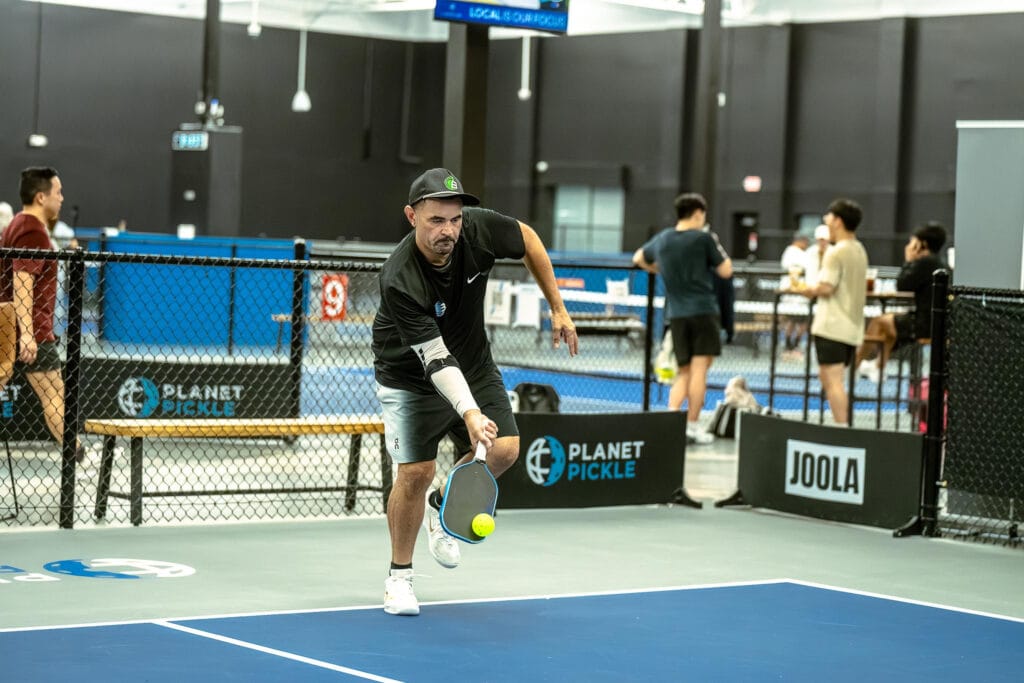
While physical cues like paddle position and court movement are important, some of the most valuable information comes from an opponent’s mindset.
Confidence, frustration, hesitation, and pressure can all influence how a player approaches a rally. Learning to recognize these psychological patterns can add another layer to reading opponent behavior and help you make smarter decisions during a match.
The mental side of pickleball often affects shot selection just as much as technical skill. Players rarely make decisions in a vacuum.
Their emotions, confidence level, and recent results all shape the choices they make on the court. By paying attention to these factors, you can better anticipate how they are likely to respond in different situations.
What Mental Game Factors Affect Opponent’s Shot Decisions?
An opponent’s emotional state frequently influences the type of shots they choose. Players who are feeling confident tend to play more aggressively, looking for opportunities to attack, speed up the pace, or attempt difficult winners.
They are often willing to take calculated risks because they trust their ability to execute under pressure. On the other hand, players who have recently made mistakes may become more conservative.
After missing several shots, they might avoid aggressive plays and instead rely on safer, higher-percentage returns. Recognizing this shift can help you anticipate where the ball is likely to go and how the rally may develop.
Pressure is another important factor. During critical points, some players become more cautious, while others try to force the action. A player protecting a lead may prioritize consistency, whereas a player trying to recover from behind may take greater risks in an attempt to change momentum.
This is where reading opponent tendencies becomes especially useful. Rather than focusing solely on individual shots, you begin to recognize how emotions influence decision-making throughout the match.
How Can Understanding Match Psychology Enhance Anticipation?
Strong anticipation involves more than predicting physical movements. It also requires understanding how players typically react to specific situations.
For example, some opponents become impatient during long rallies and eventually attempt a low-percentage winner. Others remain disciplined and wait for the right opportunity. Identifying these tendencies allows you to adjust your strategy accordingly.
Match psychology also becomes important after momentum shifts. A player who loses several points in a row may start second-guessing their decisions or changing tactics unexpectedly. Conversely, a player riding a streak of success may continue returning to the same strategy because it has been working.
By recognizing these emotional patterns, you gain insight into what an opponent is likely to do next. This gives you an advantage when positioning yourself and preparing for upcoming shots.
Recognizing Confidence And Frustration Signals
Certain behaviors can provide clues about an opponent’s mental state. Confident players often move decisively, maintain positive body language, and commit fully to their shots. Their movements appear relaxed and purposeful.
Frustrated players may display different behaviors. They might rush between points, show visible disappointment after mistakes, or hesitate before making decisions. These subtle signals can reveal when confidence is beginning to fade.
Although these observations should never be viewed as guarantees, they can help support the overall process of reading opponent behavior. When combined with physical cues and court positioning, psychological observations create a more complete picture of what is happening during a match.
Turning Psychological Awareness Into A Strategic Advantage
Understanding match psychology does not mean trying to analyze every emotion your opponent experiences. Instead, it involves recognizing patterns that influence decision-making and using that information to improve your own strategy.
The best players combine technical skills with strong situational awareness. They pay attention to how opponents respond to pressure, handle momentum swings, and react after mistakes. Over time, these observations make reading opponent tendencies more accurate and effective.
By developing awareness of both physical and psychological cues, you can improve anticipation, make better tactical decisions, and gain a valuable edge during competitive pickleball matches.
What Are Common Shot Selection Patterns Of Pickleball Opponents To Recognize?
One of the most effective ways to improve your performance in pickleball is to pay attention to the patterns your opponents create throughout a match.
Most players have preferred shots, favorite targets, and habits they return to when they feel comfortable or under pressure. Recognizing these tendencies allows you to anticipate plays more effectively and make smarter decisions before the ball even leaves your opponent’s paddle.
Developing this skill is a key part of reading opponent behavior. Instead of reacting to every shot as a surprise, you begin to identify recurring patterns that reveal how a player prefers to construct points. Over time, this awareness can give you a significant advantage on both offense and defense.
How To Identify Opponent’s Favorite Shots And Tendencies?
The best way to identify an opponent’s tendencies is through careful observation during the early stages of a match. Rather than focusing only on the outcome of each rally, pay attention to the choices your opponent makes when presented with different situations.
For example, some players consistently rely on their forehand whenever possible, even if it requires additional movement. Others prefer cross-court dinks, aggressive drives, or deep returns aimed at the baseline. These preferences often emerge after only a few rallies.
It is also helpful to observe how opponents respond under pressure. A player may use a wide variety of shots when relaxed, but repeatedly return to a favorite option during critical points. These moments often reveal the patterns that matter most.
Reading opponent tendencies becomes easier when you look for repetition rather than isolated actions. One aggressive drive does not establish a pattern, but repeated drives in similar situations can provide valuable information about future shot selection.
Why Shot Selection Patterns Matter During A Match
Understanding shot patterns helps you make more informed decisions throughout a rally. When you recognize an opponent’s preferences, you can begin positioning yourself more effectively before the shot occurs.
For instance, if an opponent repeatedly attacks down the line from a particular position, you can prepare earlier for that possibility. Likewise, if they consistently choose soft dinks instead of speeding up the ball at the kitchen line, you can adjust your court positioning and strategy accordingly.
This level of awareness reduces reaction time because you are no longer starting from a neutral position with every shot. Instead, you are making educated predictions based on observed behavior.
How Does Shot Prediction Inform Your Defensive And Offensive Play?
Shot prediction influences nearly every aspect of pickleball strategy. Defensively, it allows you to prepare for incoming shots sooner, improving balance, footwork, and positioning. Anticipating where the ball is likely to go often leads to cleaner returns and fewer rushed reactions.
On offense, prediction helps you identify opportunities to apply pressure. If you know an opponent favors a particular response, you can intentionally create situations that encourage that shot and prepare your next move in advance.
For example, some players struggle when forced to move laterally and will often respond with predictable defensive shots. Recognizing this tendency allows you to build points strategically rather than relying solely on power or speed.
Strong offensive players frequently use shot selection to move opponents around the court and create openings. By understanding how your opponent is likely to react, you can set up sequences that place them in uncomfortable positions and increase your chances of winning the rally.
Turning Pattern Recognition Into A Competitive Advantage
Learning to recognize shot selection patterns takes practice, but the rewards are substantial. The more experience you gain with reading opponent behavior, the easier it becomes to identify habits, predict responses, and adapt your strategy in real time.
Rather than focusing only on individual shots, start looking for trends across multiple rallies. Pay attention to where opponents hit the ball, how they respond to pressure, and which shots they trust most.
These observations provide valuable insight that can improve anticipation, strengthen decision-making, and help you gain greater control of the match.
How To Integrate Reading Opponent Skills For Match Success In Pickleball?
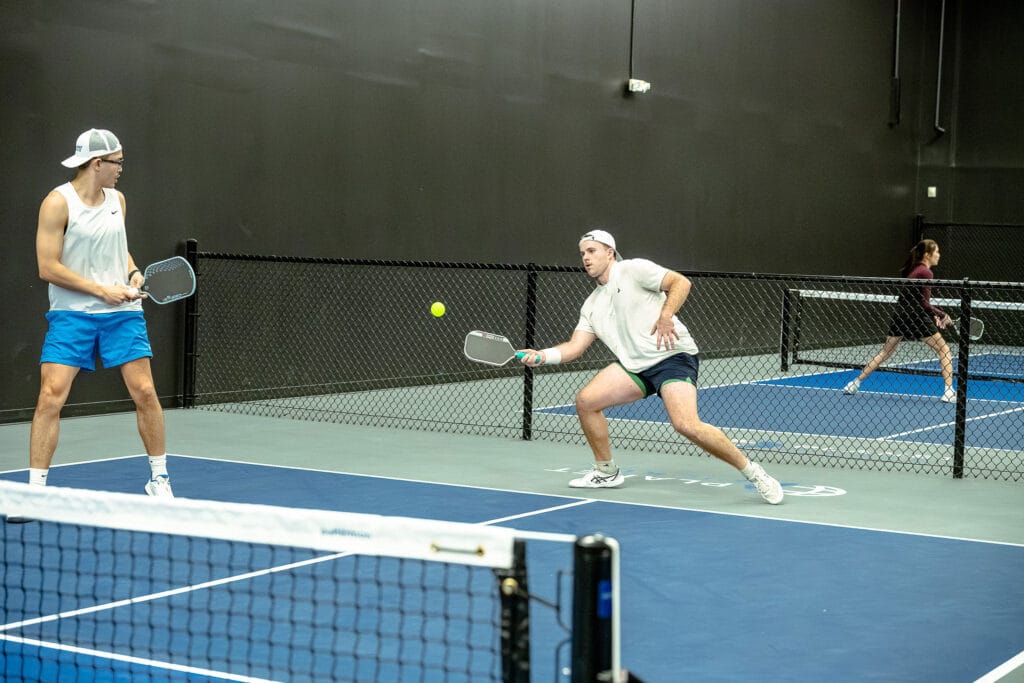
Developing strong observation skills is valuable, but the real advantage comes from applying them consistently during competition.
The most successful players do not rely on a single clue or tactic. Instead, they combine multiple sources of information, including body language, court positioning, shot selection patterns, and match context, to make smarter decisions throughout a game.
Mastering reading opponent behavior is ultimately about turning observations into action. When these skills work together, players can anticipate plays earlier, improve positioning, and make more confident decisions under pressure.
What Are Effective Ways To Combine Body Language, Anticipation, And Game Awareness?
Each of these skills provides a different piece of the puzzle. Body language offers immediate clues about an opponent’s intentions, anticipation helps predict what may happen next, and game awareness provides the broader context needed to make strategic decisions.
For example, an opponent’s paddle angle may suggest a cross-court shot, while their court positioning reveals limited options for recovery.
At the same time, previous rallies may show a tendency to favor that shot in similar situations. When these observations are combined, your prediction becomes far more reliable than relying on any single cue.
During practice matches, focus on connecting these elements rather than treating them as separate skills. Observe how an opponent moves before contact, where they position themselves after each shot, and how their decisions change during important points.
Over time, these observations become easier to process in real time. Reading opponent tendencies effectively requires this layered approach. The goal is not to guess but to gather enough information to make informed decisions before the ball is struck.
Applying Opponent Analysis During Competitive Matches
Many players practice observation skills but struggle to apply them under match conditions. One effective approach is to focus on a single area during the opening stages of a match. You might spend the first few rallies identifying preferred shots, recovery habits, or positioning tendencies.
As the match progresses, begin combining these observations into a broader understanding of your opponent’s strategy. Look for recurring patterns and ask yourself simple questions. Do they favor one side of the court? Do they become more aggressive when leading? Are they predictable during defensive situations?
These insights can help guide both offensive and defensive decisions. Rather than reacting to every shot independently, you begin building a strategic framework that improves anticipation and court coverage.
How To Practice And Monitor Progress In Reading Opponents?
Like any skill in pickleball, reading opponent abilities improves through deliberate practice and ongoing evaluation. One of the simplest ways to measure progress is to reflect on matches afterward and identify situations where your predictions were correct or incorrect.
Keeping a training journal can be particularly helpful. After playing, note any tendencies you recognized, successful adjustments you made, and situations where you struggled to anticipate your opponent’s actions. Over time, these notes can reveal areas of improvement and recurring weaknesses.
Feedback from coaches, training partners, or doubles teammates can also provide a valuable perspective. Others may notice patterns in your decision-making that are difficult to identify on your own.
Reviewing match footage, when available, offers another opportunity to evaluate how effectively you are interpreting opponent behavior.
Turning Observation Into Match Success
The ultimate goal of reading opponent skills is not simply gathering information. It is using that information to make better decisions on the court. Players who consistently recognize patterns, anticipate plays, and adapt their strategy gain a significant competitive advantage.
As you continue developing these abilities, you’ll likely find that matches begin to slow down mentally. Instead of constantly reacting, you’ll be anticipating, positioning, and planning ahead.
By combining body language analysis, anticipation techniques, and game awareness into a single approach, reading opponent behavior becomes a practical tool for improving consistency, confidence, and overall match performance.
Conclusion
Reading your opponents’ habits is one of the most effective ways to gain an advantage in pickleball. By paying attention to shot selection, movement patterns, court positioning, and tendencies under pressure, players can make smarter decisions and stay one step ahead throughout a match.
Developing these skills takes practice, quality court time, and opportunities to compete against a variety of players. For premier pickleball courts, training programs, leagues, events, and amenities, choose Planet Pickle.
Ready to elevate your game and become a more strategic player? Call 678-404-5792 to learn more about Planet Pickle’s programs and court offerings, or visit our website to explore memberships, training opportunities, and everything you need to enjoy the ultimate pickleball experience.