
Once the fundamentals become automatic, improving at pickleball gets more complicated. Simply playing more games may reinforce existing habits without fixing the weaknesses that keep you from advancing.
For intermediate players, meaningful progress often requires more focused practice, targeted feedback, and increasingly challenging drills.
An intermediate pickleball bootcamp creates an intensive environment for developing the skills that separate casual play from more strategic competition.
Players can work on shot selection, third-shot drops, resets, court positioning, transition-zone play, consistency, and decision-making while applying those skills under realistic pressure.
For players serious about reaching the next level, structured training can reveal gaps that ordinary recreational games miss and provide a clearer path toward smarter, more confident, and more complete pickleball.
What to Expect From an Intermediate Pickleball Bootcamp
What Is an Intermediate Pickleball Bootcamp and Who Is It For?
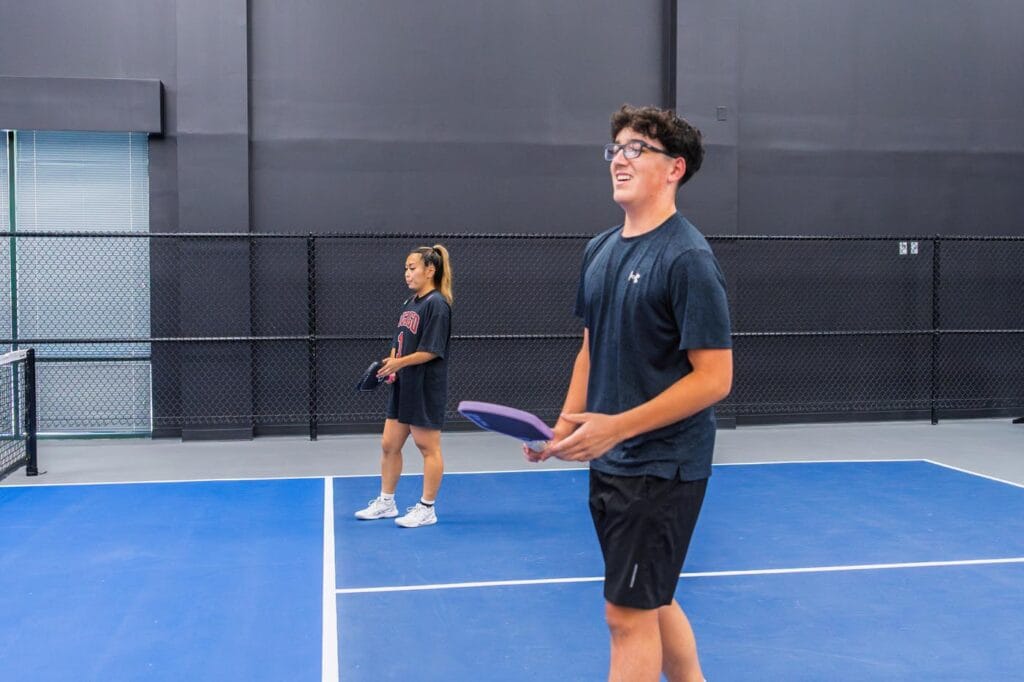
An intermediate pickleball bootcamp is designed for players who already understand the fundamentals but want more structure than they typically get from recreational games or occasional practice. At this stage, improvement is less about learning the rules and more about making familiar skills reliable under pressure.
Intermediate players may serve and return consistently, sustain rallies, and understand basic doubles positioning, yet still struggle with transition play, shot selection, resets, or knowing when to attack.
A focused bootcamp creates repeated opportunities to work on those situations rather than hoping they happen naturally during games. That makes the format particularly useful for players who feel as though they are playing frequently without seeing the same rate of improvement.
What Counts as an Intermediate Pickleball Player?
Skill labels are not perfectly standardized from one facility or group to another, so being called “intermediate” should not depend on one isolated shot or a single rating.
In practical terms, intermediate players have moved beyond simply getting the ball over the net. They can usually maintain a rally, serve and return with reasonable reliability, understand where they should be positioned in doubles, and recognize basic concepts such as the non-volley zone and transition area.
The next challenge is consistency and decision-making.
For example, a player may know how to dink but speed the ball up at poor moments. They may be capable of a third-shot drop in practice but abandon it once a point becomes competitive. Others reach the kitchen line effectively but struggle to defend when opponents attack their feet or force them backward.
Those are exactly the kinds of gaps that separate knowing a skill from being able to use it during a match.
More structured pickleball training programs can help players practice those situations deliberately instead of relying entirely on match play.
Intermediate Training Should Focus on Game Situations, Not Just Technique
Once the basics are established, repeatedly practicing isolated forehands and backhands has diminishing value unless those strokes are connected to actual point construction.
A strong intermediate pickleball bootcamp should spend significant time on situations players encounter during competitive doubles. That may include controlling the third and fifth shots, moving through the transition zone, defending drives, resetting hard balls, maintaining patience at the kitchen, and recognizing when an attack is actually available.
Planet Pickle’s approach to intermediate pickleball coaching similarly emphasizes consistency, transition play, third shots, kitchen-line decisions, and using skills in realistic game situations.
This type of practice helps answer a question many intermediate players eventually face: “I know what I am supposed to do, so why am I not doing it consistently in games?”
Often, the missing piece is not more information. It is enough targeted repetition to make the right response easier to recognize and execute.
A Bootcamp Offers Something Open Play Usually Cannot
Open play is valuable for getting court time, meeting different opponents, and learning to adapt to a variety of playing styles. It is not necessarily designed to diagnose or correct technical and tactical problems.
During a normal game, players are focused on winning the current rally. There may be little opportunity to stop, repeat the same situation, adjust footwork, or test a different decision several times in a row.
Structured clinics and bootcamps reverse that relationship. Practice becomes the priority, with gameplay used to apply what has just been trained.
Players who enjoy both formats can use open play and structured clinics for different purposes: one provides competitive repetition, while the other creates space for focused improvement.
Who Benefits Most From an Intermediate Pickleball Bootcamp?
This format is a strong fit for players who already play regularly but notice recurring patterns they cannot solve on their own.
You may be ready for an intermediate pickleball bootcamp if you can keep points going but lose control when the pace increases, reach the kitchen inconsistently, rely too heavily on hard drives, struggle against stronger opponents, or make the same positioning mistakes from game to game.
It can also be useful for players preparing to enter leagues or tournaments and realizing that recreational success does not always translate smoothly into more competitive matches.
The important distinction is readiness. A player who is still learning scoring, serving mechanics, or basic court positioning may benefit more from beginner instruction first. Someone who already executes advanced patterns consistently may need a higher-level training environment.
The Goal Is Transfer, Not Just a Better Practice Session
A productive bootcamp should not leave players merely performing drills well. The real test is whether those skills begin appearing naturally during points.
Can you recognize when to reset instead of counterattack? Can you move forward without rushing through the transition zone? Can you choose a higher-percentage shot when an opponent speeds the ball up?
Progress at the intermediate level often comes from improving those decisions alongside technique.
That is what makes concentrated training valuable. Instead of collecting more shots, players learn how to connect the shots they already have into a more dependable, intentional game.
How an Intermediate Pickleball Bootcamp Builds Skills Through Structured Training
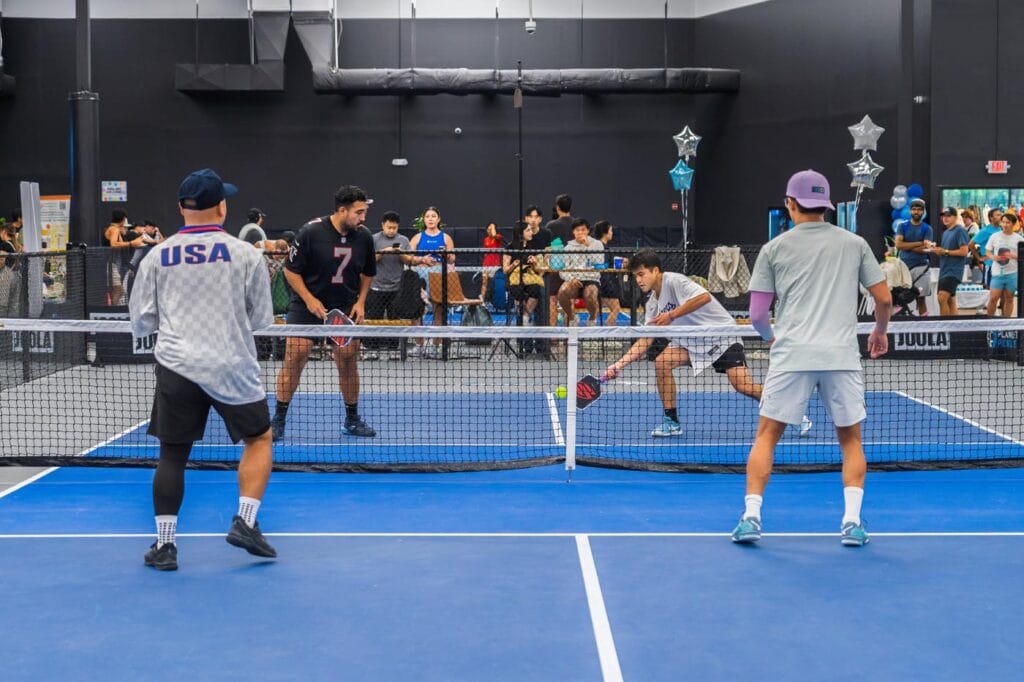
An intermediate pickleball bootcamp should do more than put players through a long series of drills. The real value comes from sequencing practice so that technical skills, tactical decisions, and live play reinforce one another.
For intermediate players, that progression matters. Most already know how to serve, return, dink, volley, and rally. The challenge is using those skills consistently when the pace changes, opponents apply pressure, or a point moves from the baseline to the kitchen.
A well-structured intermediate pickleball bootcamp closes that gap by moving from focused repetition into increasingly realistic game situations.
Technical Work Should Lead Into Live-Ball Decisions
Isolated drills have a purpose, particularly when a player needs to correct mechanics or build consistency. But intermediate training becomes more valuable when those repetitions lead directly into decision-making.
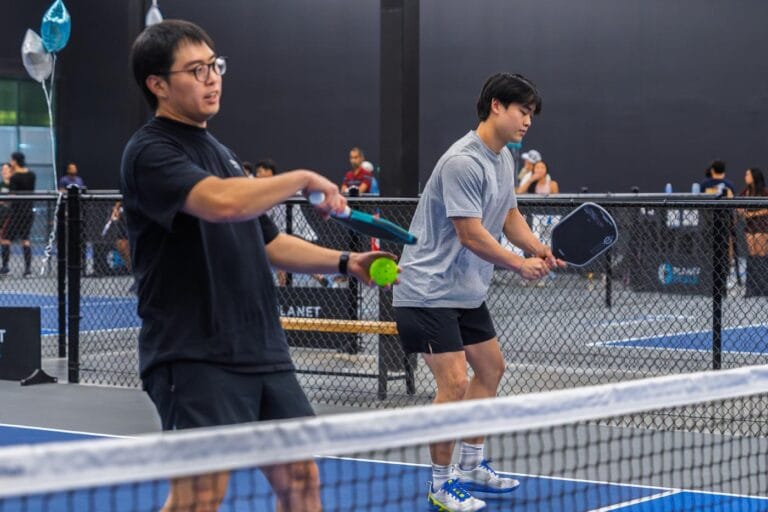
A session might begin by isolating a skill such as a third-shot drop, controlled volley, reset, or deep return. Once the basic execution becomes reliable, the drill can introduce movement, a partner, changing targets, or an opponent who is no longer feeding predictable balls.
That progression changes the question from “Can you hit this shot?” to “Can you recognize when this is the right shot and execute it under pressure?”
Planet Pickle offers skill-specific workshops and structured training formats that focus on areas such as footwork, shot accuracy, and game strategy, reflecting the value of breaking larger performance problems into trainable components.
Transition Play Deserves Significant Practice
Intermediate players often understand where they want to end up but have difficulty getting there cleanly. Moving from the baseline toward the non-volley zone requires more than running forward after the third shot.
Players need to recognize whether the ball they have produced actually gives them permission to advance, stop in balance before the opponent strikes, defend balls directed at their feet, and continue moving forward when the opportunity develops.
This makes the transition zone one of the most useful areas for intermediate training. Rather than treating the trip to the kitchen as a single movement, drills can break it into decisions: advance, hold, reset, or recover. The objective is not simply to reach the line faster. It is to arrive under control.
Doubles Training Should Develop Movement and Shot Selection Together
Intermediate doubles becomes increasingly tactical. Partners need to move in relation to one another, protect the middle, recognize attacking opportunities, and avoid creating gaps when one player is pulled wide.
Communication matters, but positioning often determines whether the team has an easy ball to play in the first place.
Training can recreate common doubles patterns rather than relying on generic rallying. Examples include serving and working forward, defending a hard third-shot drive, resetting from the transition zone, handling a speed-up at the kitchen, or deciding whether a high ball is actually attackable.
These scenarios encourage players to connect technique with court awareness. The goal is not to memorize one “correct” response to every situation. Strong intermediate players become better at reading ball height, opponent position, partner position, and their own balance before choosing a shot.
Footwork Drills Should Resemble Pickleball Movement
General agility exercises can support athletic development, but court-specific movement deserves priority when the goal is better pickleball.
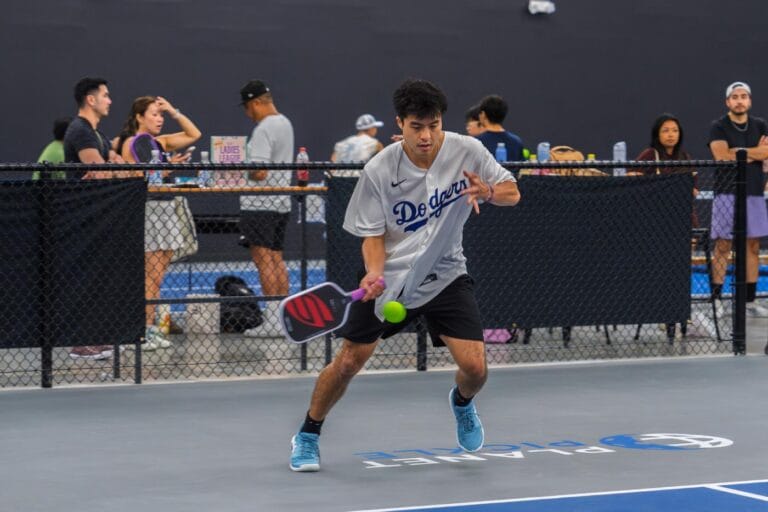
Players rarely move in long, uninterrupted sprints. They split-step, shuffle laterally, make short adjustment steps, stop and restart, recover after shots, and repeatedly change direction while maintaining paddle readiness. Useful drills reproduce those demands.
For example, a player might move laterally along the kitchen line while responding to unpredictable feeds or practice transitioning forward, stopping in balance, playing a reset, and continuing toward the net.
Focused pickleball drills for footwork, dinking, serving, and returns can also help players understand how individual skills fit into a broader practice routine.
Serve and Return Practice Should Emphasize What Happens Next
At the intermediate level, simply getting the serve in is no longer the entire goal.
Players can begin working on depth, placement, consistency, and how the serve influences the return they are likely to receive. Return practice should similarly consider the next movement. A deep return is useful partly because it can give the receiving team more time to establish position near the kitchen.
This creates a more realistic practice sequence: Serve, anticipate the return, prepare for the third shot, then play the point forward.
Practicing the opening shots as a connected pattern teaches players to think beyond individual strokes.
Competitive Drills Should Add Pressure Gradually
A player may execute a skill comfortably during cooperative drilling and lose it as soon as the score matters.
That is why an intermediate pickleball bootcamp should eventually introduce consequences and uncertainty. A drill can begin cooperatively, become competitive once control improves, and finally transition into live points with a specific tactical objective.
Instead of simply playing games at the end of practice, players might earn points only after successfully reaching the kitchen, completing a reset, or constructing a rally around the skill being trained. This makes match play part of the learning process rather than a separate activity.
Mental Improvement Comes From Better Decisions Under Pressure
Competitive mindset does not have to mean motivational exercises or formal psychological training.
For many intermediate players, mental development is more practical. It means staying patient during long dink exchanges, recovering after a mistake, resisting the urge to attack a low ball, and continuing to make percentage-based decisions when the score becomes close.
Those habits are difficult to build through explanation alone. Repeated exposure to pressured, game-like situations gives players opportunities to recognize poor decisions, adjust, and try again immediately. Over time, the right choice becomes easier to access even when a point speeds up.
The strongest intermediate pickleball bootcamp therefore connects every stage of practice. Technique creates more reliable shots, drills add movement and decisions, competitive scenarios add pressure, and live play tests whether the improvement transfers to actual points.
That progression is what turns practice volume into meaningful skill advancement.
How Equipment Choices Support Intermediate Pickleball Development
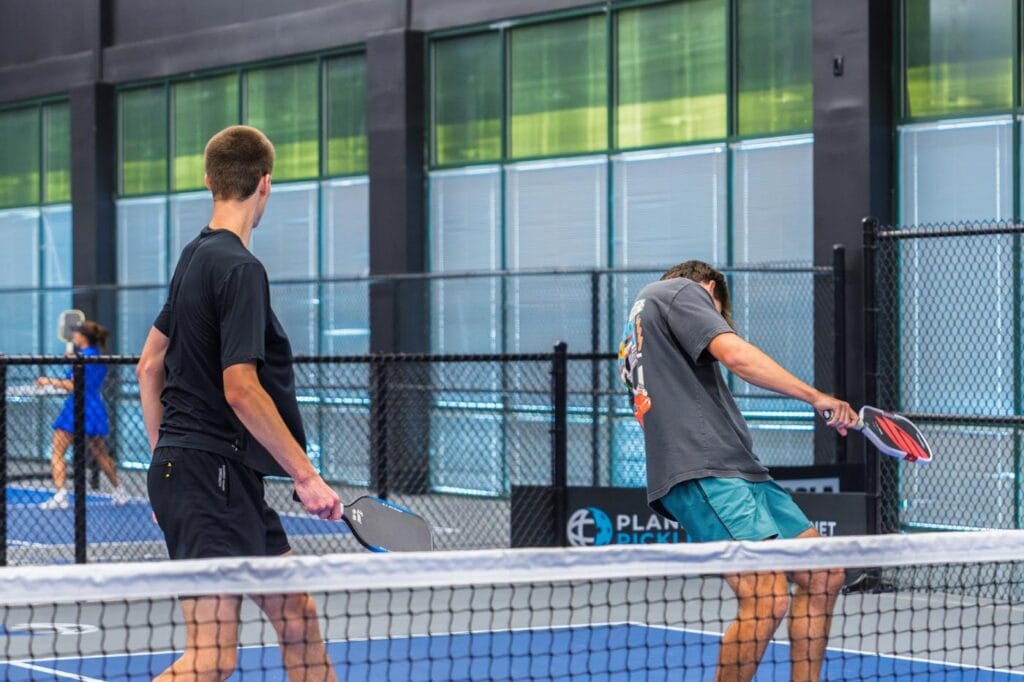
Equipment will not replace sound technique, but the wrong setup can make skill development harder than it needs to be.
For players attending an intermediate pickleball bootcamp, the goal is not to find a paddle that promises more power or spin. It is to use equipment that feels predictable enough to support consistent practice.
At the intermediate level, small differences in paddle weight, grip size, balance, and face material become more noticeable because players are asking more from their shots. A paddle that feels comfortable during casual rallies may feel sluggish during fast exchanges or unstable when trying to control resets and dinks.
The best equipment choice is usually the one that lets a player execute familiar techniques without forcing compensations.
Paddle Weight Affects Both Stability and Reaction Speed
Paddle weight changes how quickly the paddle moves and how much momentum it carries through contact.
Lighter paddles can feel easier to maneuver during quick exchanges at the kitchen, while heavier paddles may provide greater stability and natural power. Neither is automatically better for an intermediate player. The important question is whether the paddle supports the player’s actual game.
Someone who struggles to react quickly during volleys may prefer a more maneuverable setup. A player who feels the paddle twist on off-center contact may benefit from greater stability. Arm fatigue also matters. A paddle that feels fine for ten minutes may become uncomfortable during a longer training session.
Rather than choosing by weight alone, players should consider how the paddle behaves during the shots they use most often.
Grip Size Should Feel Secure Without Restricting the Hand
Grip fit is easy to overlook because it does not attract the same attention as paddle materials or surface technology.
A grip that feels too large can make wrist movement more difficult, while one that feels too small may encourage excessive squeezing or create instability in the hand. Players should be able to hold the paddle securely without maintaining unnecessary tension.
Overgrips can also change both circumference and feel, so the effective grip size may be different from the manufacturer’s original specification.
An intermediate pickleball bootcamp provides a useful environment for noticing these details because repetitive drilling quickly reveals discomfort that might be ignored during an occasional recreational game.
Paddle Materials Change Feel More Than They Change Fundamentals
Modern paddles use a wide range of face and core materials, including carbon fiber, graphite, fiberglass, and polymer-based cores.
These materials can influence responsiveness, dwell time, power, spin potential, and overall feel, but players should be cautious about assuming that one construction automatically produces better results.
A paddle with a softer response may make resets and dinks feel easier to control. A livelier paddle may provide additional pace on drives and counters but require more precise touch during slower exchanges.
The useful comparison is not which material is “best.” It is which response helps the player execute the shots their developing game depends on.
For players who want to compare options before committing to a purchase, testing different paddles during actual play can reveal differences that specifications alone do not show. Planet Pickle’s paddle demo program allows players to try current paddles before deciding what feels appropriate.
Avoid Changing Equipment Every Time Performance Dips
Intermediate players often reach a frustrating stage where progress becomes less obvious. That can make equipment changes tempting.
A new paddle may genuinely solve a comfort or fit problem, but repeatedly switching equipment can also make it harder to identify whether inconsistency is coming from technique, timing, positioning, or the paddle itself.
Training works best when the equipment remains reasonably stable long enough for the player to develop reliable feedback. If a shot suddenly feels inconsistent, start by looking at mechanics and contact point before assuming the paddle is responsible.
Shoes Matter Because Pickleball Is a Lateral Sport
The paddle receives most of the attention, but footwear can have a greater effect on movement quality.
Pickleball involves repeated lateral movement, short accelerations, stops, pivots, and changes of direction. Court shoes are designed to support that type of movement more effectively than footwear made primarily for straight-line running.
Appropriate shoes should feel secure during side-to-side movement and comfortable enough for a full session. Worn tread or poor lateral support can undermine footwork even when the player’s positioning decisions are correct.
A broader pickleball equipment checklist also emphasizes the importance of pairing a suitable paddle with the correct ball and court footwear rather than focusing on the paddle alone.
Use Bootcamp Training to Evaluate Equipment Under Real Conditions
The best time to evaluate equipment is not while taking a few swings in a store. It is during the situations that actually challenge the player.
Pay attention to how the paddle feels during fast volleys, resets, serves, returns, dinks, and longer rallies. Does it remain comfortable as fatigue increases? Can you control softer shots without sacrificing confidence on drives? Does the grip remain secure when exchanges become faster?
Those observations are more useful than choosing equipment based on specifications alone. An intermediate pickleball bootcamp can help players separate genuine equipment limitations from technique problems because the same skills are repeated often enough to reveal patterns.
Equipment should support development quietly in the background. When the paddle, shoes, and other essentials fit well, players can spend less attention adapting to their gear and more attention improving movement, decision-making, and shot execution.
How an Intermediate Pickleball Bootcamp Prepares Players for Tournament Competition
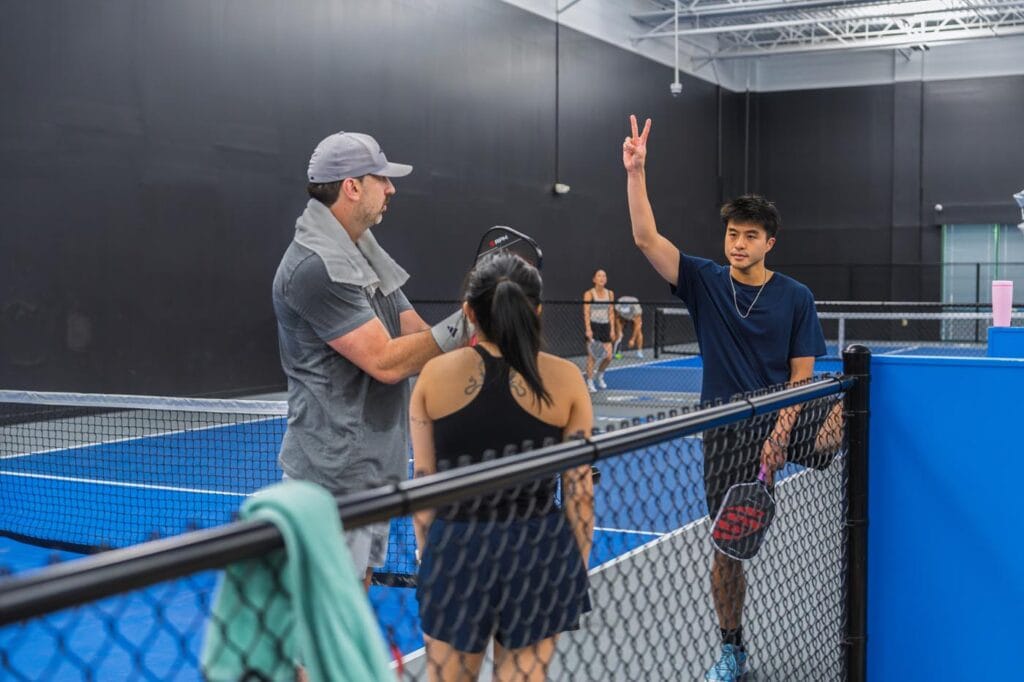
Tournament preparation requires a different kind of practice from ordinary recreational play. Players still need reliable strokes and sound positioning, but competition adds score pressure, unfamiliar opponents, changing momentum, and less room to correct mistakes between points.
An intermediate pickleball bootcamp can help bridge that gap by making practice more representative of the decisions players will face in matches.
Rather than treating tournament readiness as a collection of advanced shots, effective preparation focuses on applying existing skills consistently when rallies become less predictable.
Match Play Reveals What Drills Cannot
Controlled drills are useful for building technique because they allow players to repeat the same situation. Tournament matches do not provide that predictability.
An opponent may drive almost every third shot, slow the game down with dinks, target one player repeatedly, or change tactics after losing several points. Preparing for competition therefore requires periods of live play where players must identify what is happening and respond without knowing which ball will come next.
Practice games can become more purposeful by assigning specific objectives. A player might focus on reaching the kitchen without rushing, reducing attackable balls, targeting returns consistently, or recognizing when a defensive rally has shifted into an attacking opportunity.
The score then becomes only one measure of success. The larger question is whether the player’s decisions remain sound once the rally stops following a drill pattern.
Tournament Preparation Should Include Score Pressure
Many skills feel different at 9-9 than they do during cooperative practice. Adding scoring to drills introduces consequences without requiring every session to become a full match. Players can begin at 8-8, play short games, defend a lead, or practice serving while facing game point.
These situations expose habits that may be hidden during low-pressure repetitions. Some players speed up the ball too early. Others become overly cautious, abandon reliable patterns, or rush between points after making an error.
Understanding pickleball scoring and serving rotations also removes unnecessary mental clutter. In competition, players should be able to track the score and serving sequence without losing focus on positioning and strategy.
Competitive Players Need More Than One Game Plan
Intermediate players often develop a preferred pattern. That is useful until an opponent takes it away. A tournament-ready player needs alternatives.
If drives are being blocked effectively, can the player slow the third shot down? If opponents are dominating kitchen exchanges, can the team change placement or create movement instead of trying to hit harder? If one partner is being targeted, can both players adjust positioning and communication?
An intermediate pickleball bootcamp can create these problems deliberately so players practice adapting before the stakes are real. The purpose is not to collect dozens of tactics. It is to become better at recognizing what is and is not working early enough to make a useful adjustment.
Partner Communication Becomes More Important in Doubles Competition
Tournament doubles exposes small coordination problems quickly. Partners need clear expectations about middle balls, switches, lobs, movement through the transition zone, and who should take balls that fall between them.
Communication between rallies matters too. A brief discussion about return placement or an opponent’s pattern can prevent two players from making separate adjustments that work against each other.
Good teamwork does not require constant conversation. It requires enough communication that both players understand the plan.
Bootcamp practice can help by pairing tactical scenarios with partner decisions. Instead of simply hitting a sequence of shots, players learn to recognize how their own positioning affects the person beside them.
Useful Feedback Should Identify Patterns, Not Just Errors
A missed shot does not always mean the stroke itself was poor. The player may have attacked from an off-balance position, chosen a difficult target, moved too early, contacted the ball too low, or created the problem several shots earlier.
That distinction matters in tournament preparation. Effective feedback should help players identify recurring patterns rather than treating every mistake as an isolated technical flaw.
If a player repeatedly loses points while moving through the transition zone, for example, simply practicing more volleys may not solve the underlying issue.
The most useful coaching connects outcome to cause: what decision created the situation, what options were available, and what could be repeated differently next time.
Players Should Practice a Repeatable Between-Point Routine
Competition includes plenty of time when the ball is not in play. What a player does during those few seconds can influence the next rally. After an error, a simple routine can help prevent frustration from carrying forward.
That might mean turning away briefly, taking a breath, confirming the score, identifying the next tactical priority, and returning to the ready position. The routine should be simple enough to use regardless of whether the previous point was brilliant or disastrous.
This is less about trying to eliminate nerves and more about keeping attention on information that can still influence the match.
Tournament Readiness Means Making Your Game More Dependable
An intermediate pickleball bootcamp does not need to transform a player into someone with an entirely new collection of shots before competition. A more realistic goal is reliability.
Can the player serve and return when the score is tight? Can they recognize when to attack and when to reset? Can they adjust when an opponent changes tactics? Can doubles partners solve problems together instead of independently? Can the player recover mentally after two or three poor points?
Those are the skills that make practice transferable. Tournament preparation works best when players are not simply trying to look better during drills. They are learning which parts of their game remain dependable when the opponent, score, and pressure are no longer controlled.
How Can You Tell Whether an Intermediate Pickleball Bootcamp Is Working?
Success stories can be useful when evaluating an intermediate pickleball bootcamp, but they should be read carefully. A positive testimonial may tell you that a player enjoyed the instruction, felt more confident, or noticed improvement.
It does not necessarily prove that every participant will advance at the same pace or achieve the same competitive results. For intermediate players, the more meaningful question is whether training produces changes that carry over into actual games.
Better results may show up as more consistent shot selection, fewer unforced errors, stronger positioning, improved decision-making, or greater confidence handling situations that previously caused problems.
Look for Specific Improvements Rather Than General Praise
Statements such as “great coaching” or “I improved a lot” can indicate a positive experience, but specific feedback is more informative.
Useful testimonials describe what changed. A player might mention becoming more comfortable at the kitchen line, understanding when to reset rather than attack, improving third-shot consistency, or making better decisions during doubles play.
Planet Pickle’s published player testimonials include feedback about skill improvement, program quality, and confidence-building experiences. These comments provide useful context about the overall training environment, but individual experiences should still be viewed as personal outcomes rather than guarantees.
For someone comparing training options, specificity matters because it reveals whether the program is addressing recognizable pickleball problems rather than simply providing enjoyable court time.
Improvement Should Be Visible in Match Play
The clearest sign of effective intermediate training is not how well a player performs during a familiar drill. It is what happens once the ball becomes unpredictable.
A player who has worked on resets, for example, should gradually become better at recognizing defensive situations and taking pace off the ball during actual points. Someone practicing transition play should begin reaching the non-volley zone with better balance instead of rushing forward regardless of the incoming shot.
Those changes may appear gradually. Not every improvement immediately translates into more wins, particularly when a player begins competing against stronger opponents. Match results are therefore useful, but they are only one part of the picture.
Track Decisions Alongside Wins and Losses
Intermediate players can improve substantially without seeing an immediate jump in their win percentage.
Suppose a player previously attacked almost every ball from the transition zone. After training, that player begins recognizing low balls, resetting more patiently, and waiting for a better attacking opportunity. They may still lose some matches, but the quality of their decisions has improved.
That is meaningful development.
Other indicators may include:
- reaching the kitchen more consistently after the return
- keeping more serves and returns deep
- reducing unnecessary speed-ups
- recovering position more quickly after being pulled wide
- communicating more clearly with a doubles partner
- recognizing opponent patterns earlier in a match
Tracking a few specific behaviors gives players a better view of progress than relying entirely on memory or the final score.
Confidence Matters Most When It Changes Behavior
Confidence is frequently mentioned as a benefit of coaching, but it becomes useful when it affects what a player actually does.
A more confident intermediate player may commit to a third-shot drop rather than abandoning it after one miss. They may stay patient during a dink exchange instead of speeding up a poor ball. They may also recover faster after losing several points rather than changing strategy impulsively.
This type of confidence comes from understanding what to do and having enough successful repetitions to trust the decision. An intermediate pickleball bootcamp should therefore help players become more decisive, not simply more enthusiastic.
Competitive Progress Is Not Always a Straight Line
Moving from recreational intermediate play into tournaments can temporarily make results look worse.
Players face unfamiliar opponents, stronger shot selection, tighter margins, and more pressure. Someone who dominated a regular recreational group may discover weaknesses that were rarely challenged before. That does not automatically mean the training failed.
Competition can expose the next layer of development. A player may discover that their return depth breaks down under pressure or that they struggle when opponents repeatedly attack the middle. Those observations create clearer priorities for future practice.
Personalized Feedback Should Become Actionable
Coaching has the greatest value when feedback gives the player something concrete to change. “Be more patient” is difficult to act on. “Stop advancing when your third shot sits high and establish your balance before the opponent contacts the ball” gives the player a recognizable situation and response.
Good feedback also helps distinguish technical mistakes from tactical ones. A missed volley may result from faulty mechanics, poor positioning, rushed movement, or simply choosing an unnecessarily difficult shot. Understanding the cause makes practice more efficient.
The Best Success Measure Is a More Dependable Game
Testimonials can help prospective players understand what others enjoyed or valued about a program, but the strongest evidence of progress happens on the court.
After an intermediate pickleball bootcamp, players should be able to identify changes in how they construct points, respond under pressure, communicate with partners, and recover from mistakes.
The goal is not instant transformation or guaranteed tournament success. It is a game that holds together more reliably when the pace increases and the opponent stops cooperating.
That kind of progress may be less dramatic than a headline-worthy success story, but for an intermediate player, it is often the change that matters most.
Conclusion
An intermediate pickleball bootcamp can help players move beyond basic fundamentals and develop the consistency, strategy, and decision-making needed for more competitive play.
Focused instruction, purposeful drills, and match-based practice can sharpen skills such as shot placement, court positioning, transition play, and handling faster rallies under pressure.
Training in a structured environment also gives players opportunities to identify weaknesses and apply new techniques against different opponents.
For quality pickleball instruction and opportunities to keep developing your game, choose Planet Pickle. If you’re ready to take your skills to the next level, call 678-404-5792 to learn more about Planet Pickle and choose us for quality courts, programs, leagues, and amenities.