
Every pickleball point starts with the serve, making it one of the easiest places to gain consistency before a rally even begins. Yet a legal serve involves specific requirements, and simply getting the ball into play won’t necessarily put your opponent under pressure.
Understanding pickleball serve rules gives you the foundation to serve confidently and avoid unnecessary faults. From there, technique matters: placement, depth, pace, and repeatable mechanics can turn the serve into a strategic part of your game.
Focused drills help reinforce those skills until they hold up during competitive play. This guide breaks down the essential pickleball serve rules, practical techniques, and effective drills you can use to develop a more accurate, reliable, and purposeful serve.
Pickleball Serve Rules Every Player Should Know
What Are the Official Pickleball Serve Rules You Must Follow?
Serving starts every rally, but it is also one of the easiest places to commit an avoidable fault. The pickleball serve rules govern where you stand, how the ball is struck, and where it must land. There are also two legal serving methods to understand: the volley serve and the drop serve.
Learning the distinction matters because some requirements that apply to a traditional volley serve do not apply to a drop serve.
What Makes a Volley Serve Legal in Pickleball?
A volley serve is made by striking the ball out of the air without first bouncing it. For this type of serve, the serving motion must meet specific requirements.
The server must use an underhand motion. At the moment the paddle contacts the ball, the paddle head must not be above the highest part of the wrist, and contact with the ball must occur below the server’s waist. In this context, the waist is defined in relation to the navel rather than the waistband of the player’s clothing.
These requirements apply at the moment of contact. Players do not need to exaggerate the underhand motion, but the serve must satisfy each element required for a legal volley serve.
How Is a Pickleball Drop Serve Different?
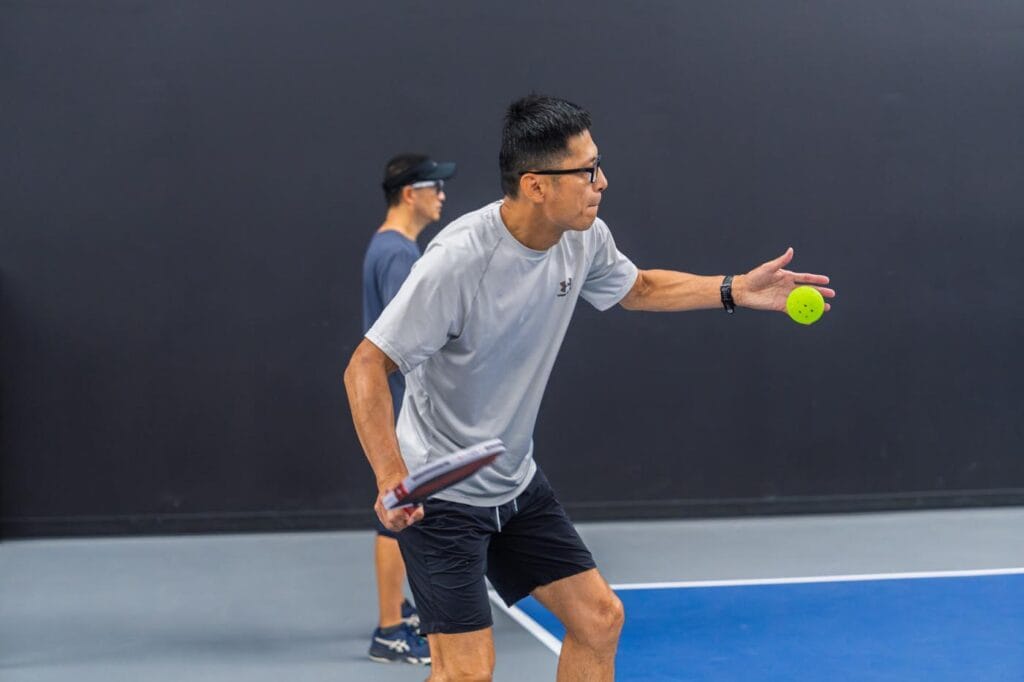
The drop serve gives players another legal way to put the ball into play. Instead of striking the ball before it bounces, the server releases the ball and allows it to bounce before hitting it.
The ball cannot be thrown downward, tossed upward, or otherwise propelled to create the bounce. It must be released from the server’s hand or allowed to roll off the paddle face without adding force.
Once the ball has bounced, the server can strike it with either a forehand or backhand motion. The restrictions concerning the volley serve’s paddle position, upward arc, and contact below the waist do not apply to the drop serve.
This distinction is worth remembering when learning pickleball serve rules because treating both serving methods as though they have identical mechanics can create unnecessary confusion.
Where Must the Serve Land?
Whether you use a volley serve or drop serve, the ball must travel diagonally across the court and land in the correct service court.
The centerline, sideline, and baseline of the receiving service court are considered in. The non-volley zone line, commonly called the kitchen line, is different. A serve that touches the non-volley zone line is a fault. The ball must clear the non-volley zone and its line before landing in the proper service court.
A serve that lands outside the correct diagonal service court is also a fault.
What Are the Foot Rules When Serving?
Your position matters just as much as the serving motion. At the moment the ball is struck, at least one foot must be on the playing surface behind the baseline.
Your feet cannot touch the baseline or the court inside the baseline when contact is made. The server must also remain within the imaginary extensions of the sideline and centerline that define the legal serving area.
This means you can move as part of your service routine, but your foot position at the moment of contact must satisfy the serving requirements.
What Happens if the Serve Touches the Net?
A serve is not automatically a fault simply because it touches the net. If the ball clips the net and still lands in the correct service court, beyond the non-volley zone and its line, play continues.
There is no automatic redo simply because a legal serve touched the net. If the ball hits the net and fails to land legally, however, the serve is a fault.
Do You Get a Second Serve After a Fault?
No. Pickleball does not generally provide a second serve after a standard service fault in the way tennis does. If the serve is faulted, the serving side loses that serve.
What happens next depends on the format and scoring situation. In doubles under traditional side-out scoring, service may pass to the serving team’s second server or result in a side out. In singles, a service fault generally transfers the serve to the opponent. Under rally-scoring formats, the scoring consequence can differ.
For that reason, saying that every service fault automatically “gives the point to the opponent” is inaccurate.
Common Pickleball Serving Faults to Avoid
Most service faults come from a relatively small group of mistakes. Players should watch for:
- Stepping on or beyond the baseline at contact
- Serving from outside the permitted serving area
- Using an illegal volley-serve motion
- Propelling the ball before a drop serve
- Serving into the net without the ball landing legally
- Landing the serve in the wrong service court
- Hitting the non-volley zone or its boundary line
Once the legal mechanics become automatic, serving becomes less about avoiding faults and more about placement, depth, consistency, and setting up the next shot. Mastering the pickleball serve rules first gives you a reliable foundation for developing those more strategic serving skills.
Which Pickleball Serve Techniques Improve Accuracy and Power?
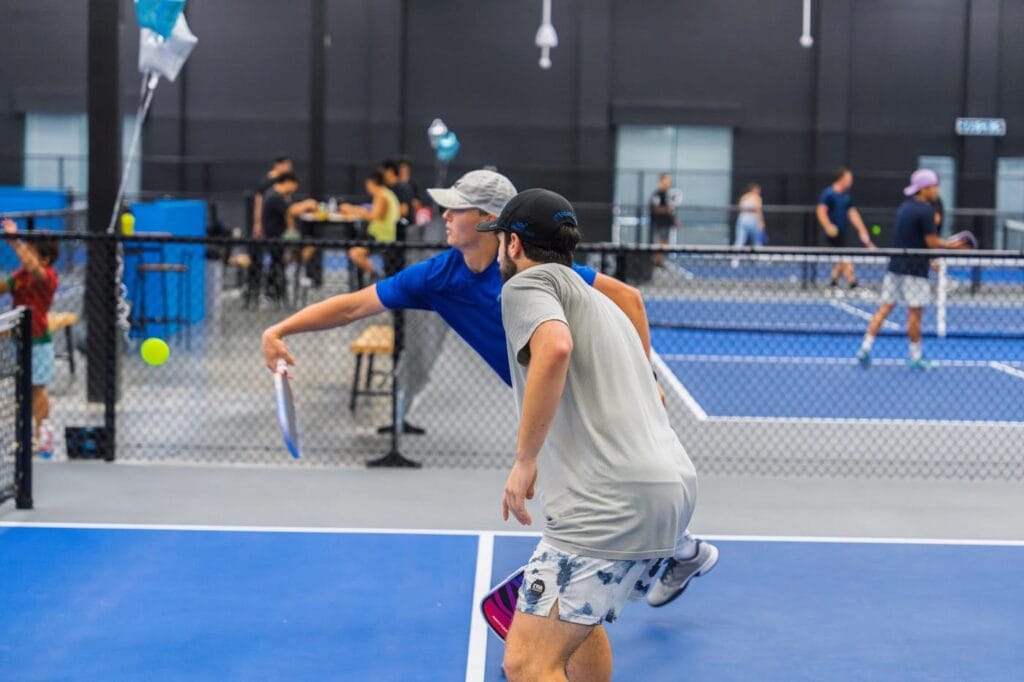
Once you understand the pickleball serve rules, the next step is developing a motion you can repeat under pressure. A strong serve is not simply the hardest ball you can hit. The most effective serves combine consistency, depth, placement, and enough pace or spin to make the return more difficult.
For most players, accuracy should come before maximum power. A fast serve that frequently misses the service court costs more than a moderately paced serve that consistently lands deep and puts the returner under pressure.
Choose a Grip That Supports a Repeatable Swing
The continental grip is a common starting point because it provides good control and works with a natural serving motion. Some players prefer slight grip adjustments when generating topspin or changing the shape of the serve, but dramatic changes are rarely necessary for developing an effective basic serve.
Whatever grip you use, avoid squeezing the paddle too tightly. Excess tension in the hand and forearm can restrict the swing and make it harder to control the paddle face.
Grip consistency also matters. Constantly changing hand position while learning makes it difficult to determine whether an inaccurate serve came from the grip, swing path, contact point, or aim. Develop one reliable serve first, then experiment with variations.
Build Power From the Ground Up
Trying to create all your serving power with the arm often produces a rushed, inconsistent swing. Instead, start from a balanced position and allow the legs, hips, torso, shoulder, and arm to contribute to the motion.
A small weight transfer from the back foot toward the front can help create momentum without requiring an aggressive movement. The goal is not to make the serve mechanically complicated. You want enough body involvement to produce effortless pace while remaining balanced at contact.
Your footwork must still comply with pickleball serve rules. At the moment of contact, your feet need to remain legally positioned behind the baseline and within the permitted serving area.
Use a Smooth Swing and Consistent Contact Point
Consistency usually improves when the serving motion becomes simple and repeatable. Set up the same way, establish a predictable rhythm, and avoid unnecessary movement immediately before contact.
For a volley serve, focus on a smooth upward swing that satisfies the legal serving requirements. Accelerate naturally through the ball rather than making a sudden, forceful movement with the wrist.
The follow-through should be a continuation of the swing rather than a separate action. Stopping the paddle immediately after contact can reduce fluidity and make directional control more difficult.
Drop-serve players can use the bounce to establish a repeatable contact point. Release the ball rather than throwing or propelling it, then allow it to bounce naturally before swinging. A consistent release makes timing easier to reproduce from one serve to the next.
Prioritize Depth Before Chasing the Sidelines
Placement does not always mean aiming for the smallest possible target. One of the most useful goals is simply serving deep into the opponent’s service court.
A deep serve can push the returner farther behind the baseline, increasing the distance they must cover before moving forward. It can also make an aggressive return more difficult.
Rather than immediately aiming for corners, divide the legal service court into larger target zones. Practice serving deep toward the middle, deep toward the sideline, and toward the receiver’s backhand side. As accuracy improves, gradually make the targets smaller.
Remember that the non-volley zone line is out on a serve, so attempting to land the ball extremely short introduces unnecessary risk unless you are deliberately developing a change-of-pace serve.
Add Spin Only After You Can Control the Ball
Topspin can help players combine pace with a ball that dips into the service court. Sidespin can alter the ball’s path and potentially make the return less comfortable. Neither is particularly useful, however, if adding spin causes frequent faults.
Spin should come from a controlled swing path and paddle-face angle rather than an exaggerated wrist movement. Start with moderate spin while maintaining your normal serving rhythm.
A useful progression is consistency first, placement second, spin third, and additional pace last. That order helps preserve the reliable mechanics you need before adding more demanding variations.
Practice Accuracy and Power Separately
Trying to improve everything at once makes it difficult to identify what is actually changing. Use dedicated serving drills instead.
Place large targets in the back portion of the service court and serve sets of balls while tracking how many reach the intended area. Once you can consistently hit a target at comfortable speed, increase the pace slightly without changing your basic motion.
You can also alternate locations, such as deep middle, deep wide, and deep backhand, to practice changing placement without telegraphing the serve.
The best serving technique is ultimately the one you can repeat when the score matters. Develop a legal, controlled motion first, then add depth, placement, spin, and power without sacrificing consistency.
Pickleball Serve Drills You Can Use in a Practice Session
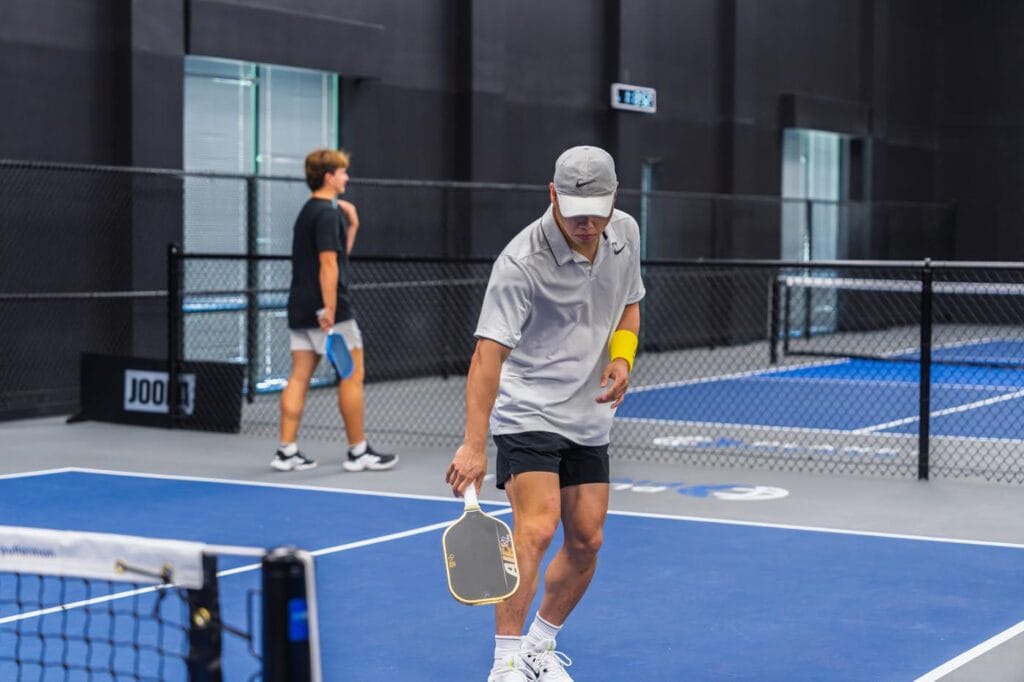
Once you understand the basic pickleball serve rules and have a serving motion that feels comfortable, improvement comes from purposeful repetition. Simply hitting a basket of balls can warm up your serve, but structured drills make it easier to see whether your accuracy and consistency are actually improving.
The most useful serving sessions include measurable goals. Instead of judging a serve by how it feels, count successful targets, track consecutive serves, or notice what kind of return your serve produces.
Start With a 20-Ball Accuracy Challenge
Divide the diagonal service court into three general targets: deep and wide, deep through the middle, and toward the receiver’s body position. You can use flat court markers or simply visualize each zone.
Choose one target and hit 20 serves toward it. Count how many land in the intended area while remaining legal. Record the result so you have a number to beat during your next session.
Don’t make the target too small at first. Trying to paint the sidelines can encourage unnecessary faults. Begin with generous zones and gradually narrow them as your control improves.
You can also repeat the drill from both sides of the court. Many players discover that a location that feels natural from one serving position requires a different aim from the other.
Add Pressure With the Five-in-a-Row Drill
Pick a target and make five legal serves in a row. Miss the service court or your target zone, and the count returns to zero.
Once five becomes comfortable, increase the goal to seven or ten.
The challenge is not just reaching the number. Pay attention to what happens when you get close. If you reach four successful serves and suddenly grip the paddle tighter, rush your routine, or become overly cautious, you have found something worth practicing.
Try to make serve number five look and feel exactly like serve number one. That ability to maintain your routine when the outcome matters is useful in actual games.
Practice Depth Without Chasing the Baseline
Place two markers several feet inside the baseline to create a deep target zone. Serve 10 balls from each side and count how many land within it.
This drill teaches you to push the returner farther back without treating the baseline itself as the target. A serve does not need to land inches from the line to create useful depth.
Once you can reach the zone consistently, combine depth with direction. Alternate between deep-middle and deep-wide serves while keeping the same basic setup.
Make Placement Less Predictable
Hitting the same target repeatedly is useful for developing control, but matches require you to change locations without several practice attempts.
For this drill, choose three targets and assign each a number. Before every serve, randomly select a number and serve to the corresponding location. With a partner, simply have them call the target before you begin your motion.
Keep score for 15 or 20 serves. This exposes an important difference between having an accurate serve and being able to place it intentionally on demand.
Use the Serve-Plus-One Drill for Match Practice
Serving practice becomes more realistic when someone sends the ball back.
Serve to a partner and have them return normally. Play your next shot, then stop the rally and reset.
Now evaluate the serve by what happened afterward. Did serving deep produce a weaker return? Was the returner’s backhand harder to target than expected? Did adding pace improve the result, or simply make your serve less reliable?
Experiment with placement while keeping your serving motion relatively consistent. Over time, you can begin identifying which serves give you the most useful third-shot opportunities.
Build a Simple 15-Minute Serve Routine
You do not need an hour of repetitive serving to make progress. A focused 15-minute block can cover several skills:
- Minutes 1 to 5: Complete the 20-ball accuracy challenge from both serving positions.
- Minutes 6 to 10: Alternate deep targets and finish with a five-in-a-row challenge.
- Minutes 11 to 15: Practice random placement or serve-plus-one points with a partner.
Keep one simple statistic from each session, such as 14 successful target serves out of 20. Tracking the same measure over several weeks gives you a clearer picture of improvement than relying on memory.
Whatever drill you choose, practice using the same motion you intend to use during competition. The goal is not simply to hit more serves. It is to build a legal, repeatable serve that still holds up when you have a specific target, an opponent waiting for the return, and a point on the line.
How Can You Identify and Correct Common Pickleball Serve Faults?
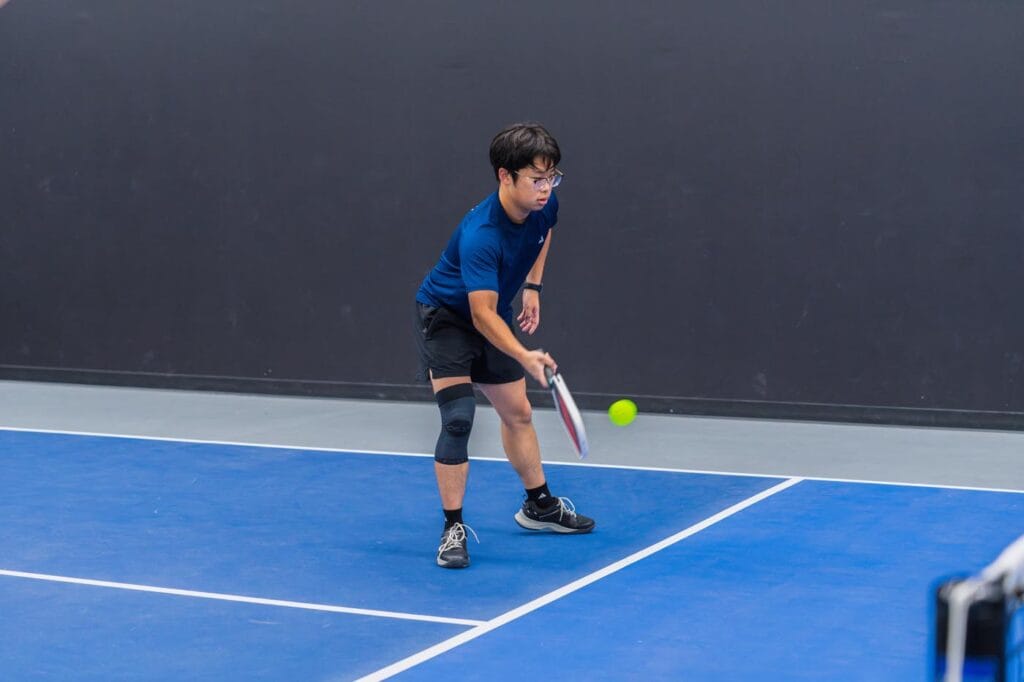
A missed serve and an illegal serve are not always the same problem. One may come from poor placement or timing, while another happens because the serving motion or foot position violates the pickleball serve rules. Knowing which type of mistake you are making is important because each requires a different correction.
Instead of responding to every fault by changing your entire swing, identify exactly what happened first. That makes the adjustment smaller, easier to practice, and less likely to create a new problem.
Diagnose the Fault Before Changing Your Serve
Serve faults generally fall into a few categories: positioning, serving motion, or where the ball lands. When a serve fails, ask yourself what actually caused it.
A ball that lands beyond the baseline may indicate too much power, an open paddle face, or poor directional control. A serve that repeatedly hits the net may point to trajectory or contact problems. A foot fault, by contrast, requires an adjustment to where you stand rather than how you swing.
This distinction matters during practice. If three serves miss for three different reasons, making the same correction after each one will not solve the underlying problems.
Fix Foot Faults by Creating More Space at the Baseline
Serving too close to the baseline gives you little margin for natural movement. If your foot regularly touches or crosses the line during the serve, begin your setup slightly farther back.
Under standard pickleball serve rules, your feet must remain behind the baseline at the moment the ball is struck. Your position also needs to stay within the imaginary extensions of the sideline and centerline for the appropriate service area.
A simple practice fix is to place a marker a comfortable distance behind the baseline and use it as your starting point. You should be able to complete your normal serving motion without worrying about stepping onto the line before contact.
Avoid solving the problem by becoming completely rigid. You still want a balanced, natural motion. The goal is simply to establish enough space that normal movement does not create a fault.
Correct Serves That Consistently Hit the Net
One serve into the net may be nothing more than a mistimed swing. Repeated net serves suggest a pattern worth investigating.
First, reduce your serving speed and see whether you can comfortably clear the net. If you can, gradually restore your normal pace while maintaining the same controlled trajectory.
Also pay attention to where your swing finishes. Cutting the motion short can make it harder to produce a repeatable ball flight. A smooth follow-through toward your intended target generally gives you more control than trying to force the ball over the net with a sudden wrist movement.
Troubleshoot Serves That Keep Going Long
When several serves travel beyond the baseline, the instinctive response is often to hit much softer. That can create an entirely different problem.
Instead, change one variable at a time.
Try the same comfortable swing with a slightly different aim or trajectory. If the ball continues to travel long, reduce pace gradually. Making small adjustments lets you discover what actually controls your depth instead of rebuilding the serve after every miss.
The same principle applies to serves that repeatedly travel wide. Pick a larger target farther inside the service court and establish control there before working closer to the sideline.
Watch for Illegal Serving Mechanics During Practice
Some faults are harder to notice because the ball still lands perfectly in the service court. A serving motion can produce a good-looking result and still fail to meet the rules.
This is particularly important when practicing a volley serve. Players can become focused on pace or spin and stop noticing whether their contact and paddle motion remain legal. Drop serves follow different requirements, so players should understand which serving method they are using rather than blending the mechanics of the two.
If you are unsure about your motion, record several serves from the side. Slow-motion video can reveal foot placement and contact details that are difficult to judge while you are serving.
Use a One-Correction Rule During Practice
Constantly changing your grip, stance, swing, contact point, and target at the same time makes it difficult to know what worked.
When you notice a recurring fault, choose one adjustment and test it over several serves. For example:
Problem: Repeated foot faults
Adjustment: Start farther behind the baseline
Problem: Serves consistently land long
Adjustment: Reduce depth gradually without changing the entire motion
Problem: Serves frequently hit the net
Adjustment: Slow down and establish comfortable net clearance
Problem: Serves repeatedly miss wide
Adjustment: Move the target farther inside the service court
This approach turns faults into useful feedback rather than something to simply avoid. Once you can recognize why a serve failed, corrections become much more deliberate, and you can preserve the parts of your serving motion that are already working.
How Do Paddle Setup and Court Position Affect Your Pickleball Serve?
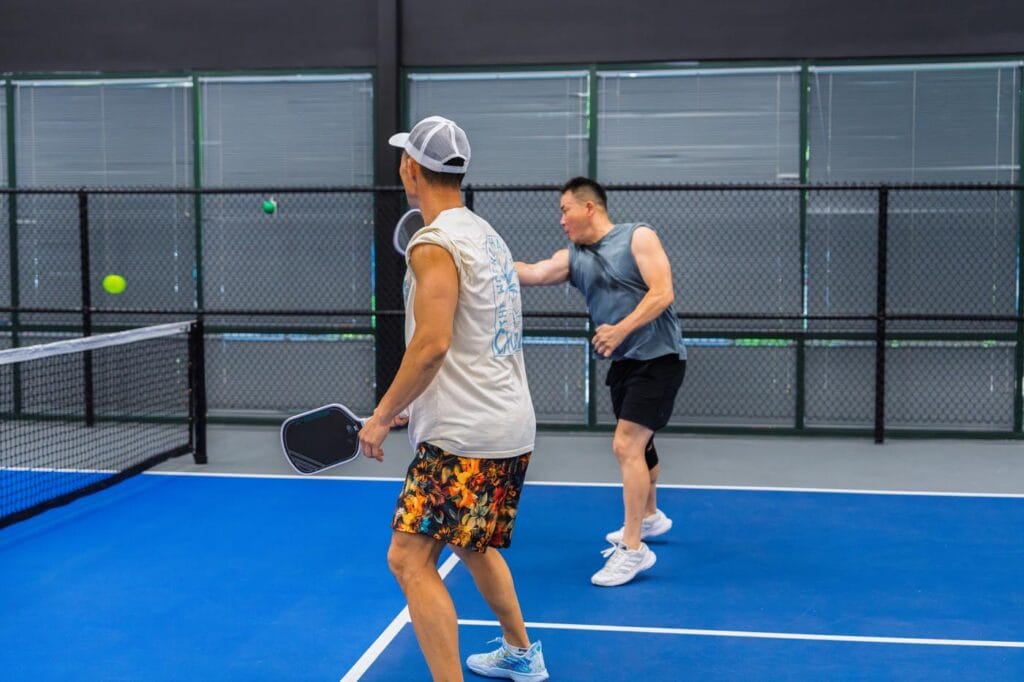
Once your serving motion is consistent, small equipment and positioning choices can influence how comfortably you control pace, spin, and placement.
The goal is not to find a paddle that magically creates a better serve. It is to choose equipment that complements your swing and a starting position that gives you room to execute it legally.
For players learning pickleball serve rules, comfort and repeatability should usually take priority over chasing maximum power.
Choose Paddle Weight Based on Control and Swing Comfort
Paddle weight affects how the paddle feels as it moves through the serving motion. A heavier-feeling setup may provide more stability and momentum, while a lighter-feeling paddle can be easier to accelerate and maneuver. Neither is automatically better for serving.
Pay attention to what happens after repeated serves. A paddle that feels powerful for the first few attempts may be less useful if you struggle to control it over an entire session. Likewise, an extremely light paddle may feel quick but provide less of the stability you prefer at contact.
The best test is practical. Hit serves at your normal pace, then try deep targets, directional serves, and controlled spin. Look for the paddle that allows you to change placement without substantially changing your natural motion.
Make Sure the Grip Fits Your Hand
Grip size and shape can be easy to overlook because players tend to focus on paddle materials and surface technology. Yet the handle is your direct connection to the paddle.
A grip that feels too large can make it difficult to adjust the paddle naturally. One that feels too small may encourage you to squeeze harder than necessary to maintain control.
You should be able to hold the paddle securely without excessive tension in your hand or forearm. If you find yourself constantly repositioning your hand between serves, the handle shape, grip size, or overgrip setup may deserve attention.
Grip condition matters as well. A worn or slippery grip can make consistent paddle control harder, particularly in hot conditions or during longer sessions.
Treat Paddle Surface and Shape as Secondary Factors
Paddle shape, surface characteristics, and construction can affect how a paddle performs, but these differences should be considered in the context of your entire game rather than serving alone.
For example, an elongated paddle may provide additional reach but can feel different through the swing than a more traditional shape. Surface characteristics can also influence how easily a player generates spin.
Before changing equipment specifically to improve your serve, determine whether the limitation is actually the paddle. Inconsistent contact, poor targeting, or an unreliable serving routine generally need practice rather than new equipment.
A useful paddle should make your preferred serve easier to repeat, not require you to rebuild your mechanics around it.
Give Yourself Enough Room Behind the Baseline
Court positioning affects both legality and comfort.
Under pickleball serve rules, the server must meet specific foot-position requirements when the ball is struck. Standing directly against the baseline leaves very little room for natural movement and can increase the chance of a foot fault.
Instead, establish a starting position slightly behind the baseline that allows you to complete your normal motion comfortably. How much space you need depends on your stance and serving style.
This is particularly useful for players who naturally transfer their weight forward during the serve. You do not need to eliminate that movement. You need enough room to perform it without violating the serving rules.
Change Your Starting Position With a Purpose
You also have some room to vary where you stand laterally within the legal serving area.
A position closer to the centerline creates different serving angles than one closer to the sideline. Rather than automatically serving from the same spot every time, experiment during practice and observe how your starting location changes the path to your preferred targets.
The important part is staying within the legal serving boundaries. Moving several feet to create a new angle is useful only if your feet still satisfy the pickleball serve rules at contact.
Equipment and positioning should ultimately make serving simpler, not more complicated. A comfortable paddle, secure grip, and repeatable starting position give you a stable foundation.
From there, improvements in depth, placement, pace, and consistency can come from the serving skills you have already been developing rather than constant equipment changes.
How Do Serve Strategies Influence the Start of a Pickleball Rally?
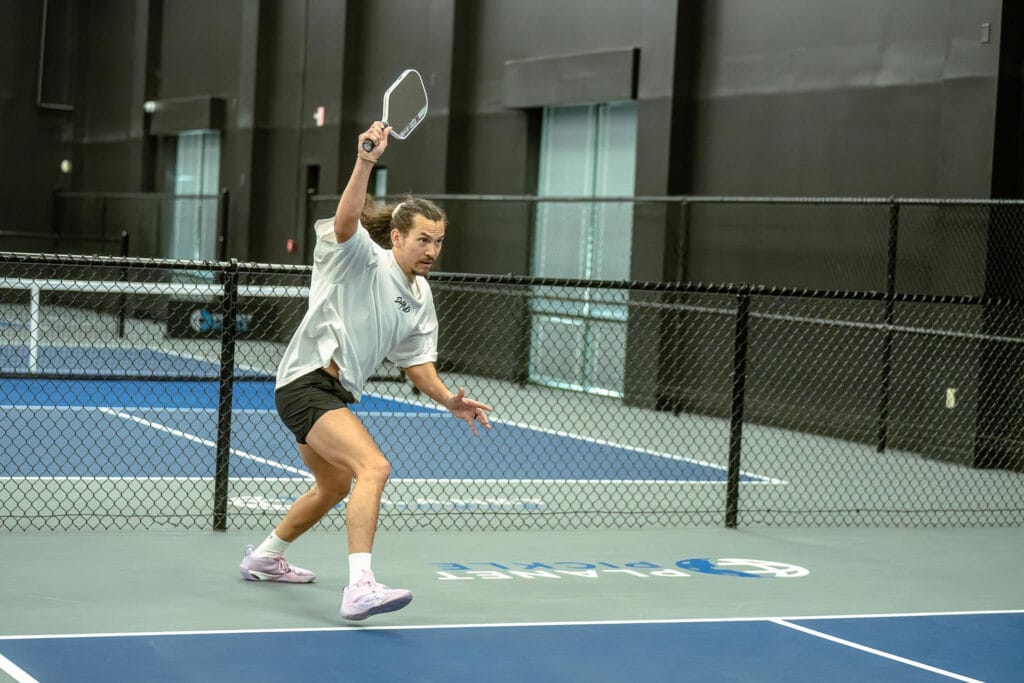
A good serve does not need to be an outright winner to be strategically useful. Its main job is to start the rally on favorable terms. Once you can serve reliably within the pickleball serve rules, the next step is deciding where to put the ball based on the opponent in front of you.
This is where serving becomes less about perfect mechanics and more about decision-making. Placement, depth, pace, and variation can influence the return you receive and, in turn, the type of third shot you have to play.
Serve Deep to Make the Returner Work From Farther Back
Depth is one of the simplest ways to make a serve more effective. A deep serve can keep the receiver near the baseline and make it harder for them to move forward immediately after returning.
That matters because the receiving team typically wants to return the serve and advance toward the non-volley zone. Keeping the returner deeper can make that transition more difficult.
There is a tradeoff, however. Aiming too aggressively at the baseline increases your chance of serving long. Rather than targeting the line itself, aim for a comfortable deep zone that gives you some margin for error.
Use Placement to Exploit the Returner’s Position
Watch where your opponent stands before choosing a target.
If the receiver favors one side of the service court, there may be open space elsewhere. If they stand unusually deep, a serve with less pace may disrupt their timing. Against someone who consistently produces stronger returns from one side, directing more serves toward the other may be worth testing.
Serving toward the body can also create an awkward decision. Instead of allowing the returner to extend comfortably to either side, a well-placed body serve may force them to adjust their feet before making contact.
The point is not to identify a supposedly universal “weak spot.” Observe what the individual opponent does well and poorly, then adapt.
Think About the Return You Want to Receive
Instead of asking only, “Where should I serve?” ask a second question:
What return am I trying to create?
Suppose an opponent consistently drives short serves aggressively but sends deeper serves back with less pace. Depth may be more valuable than adding extra speed.
Another opponent might struggle when moving laterally. Alternating between wider serves and serves toward the middle could force more movement before the return.
Pay attention during the first several points. Opponents often reveal useful patterns quickly, especially if you vary your placement enough to test different responses.
Use Spin as Variation, Not the Entire Strategy
Spin can change the ball’s flight and bounce, but it becomes much more effective when paired with purposeful placement.
For example, topspin can help produce a ball that dips and then moves forward after the bounce. Combined with depth, that may make the returner’s contact less comfortable. However, adding more spin is not automatically better if it substantially reduces your serving percentage.
The same principle applies to pace. A hard serve that frequently misses is usually less useful than a slightly slower serve you can place consistently.
Any spin technique you use must also comply with current pickleball serve rules. Tactical variety only helps when the serve itself is legal.
Avoid Becoming Predictable
Variation does not mean attempting a completely different serve on every point. Often, subtle changes are enough.
You might serve deep to the backhand several times, then switch to the middle. You could establish a comfortable serving rhythm before changing pace. Even moving your legal starting position can alter the angle your opponent sees.
The advantage comes from preventing the returner from becoming too comfortable with one repeated pattern.
Adapt Your Serve as the Match Develops
Serving strategy should change when the evidence on the court changes.
If your opponent begins anticipating a wide serve, change the location. If additional pace produces better returns for them, take some speed off. If a particular placement repeatedly generates short or defensive returns, keep using it until the opponent adjusts.
This creates a simple strategic loop:
Serve → Watch the return → Notice the pattern → Adjust
That is ultimately the difference between serving as a stroke and serving as a strategy. The pickleball serve rules determine what you are allowed to do. Match strategy determines which legal option makes the most sense against the player standing across from you.
How Do Recent USA Pickleball Rule Updates Affect Serving?
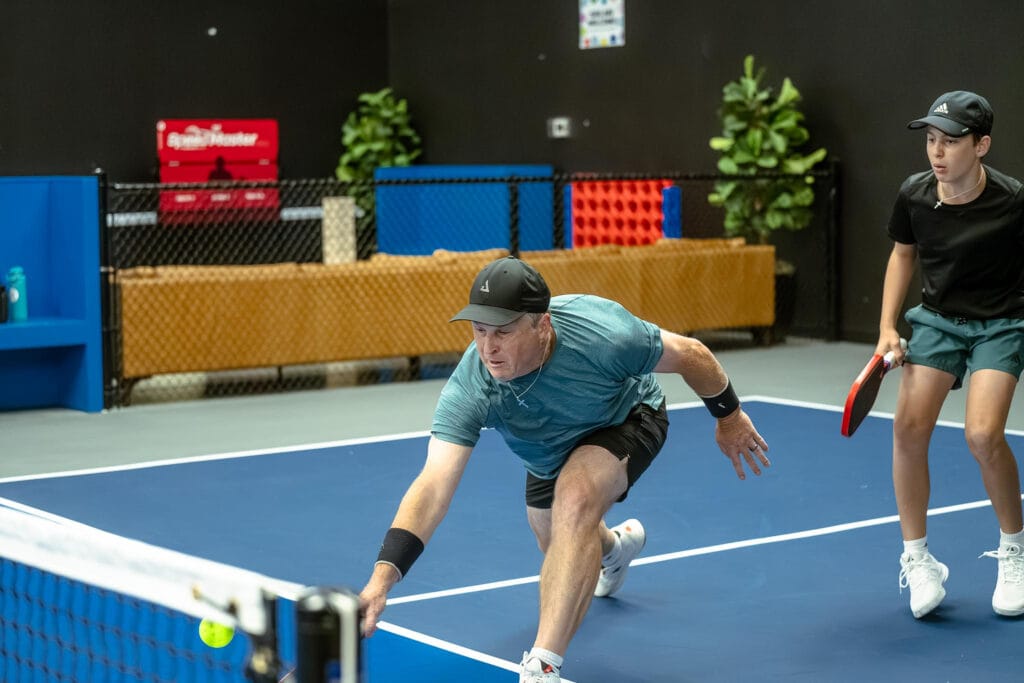
Pickleball serving rules have changed enough over the years that advice from an older video, article, or playing partner may no longer match the current rulebook. For players trying to stay legal, the safest reference is the current USA Pickleball rulebook, which is updated annually. The 2026 edition is the current official version.
One important editorial correction to the original section is that there is no recent USA Pickleball rule promoting “consistency over power.” That is useful playing advice, not an official rule. It should not be presented as a regulatory change.
Know the Difference Between a Volley Serve and Drop Serve
Current pickleball serve rules recognize two serving methods, and understanding the distinction prevents a lot of confusion about what constitutes a legal motion.
With a volley serve, the player releases the ball and strikes it before it bounces. This method has specific requirements governing the serving motion and contact.
With a drop serve, the player releases the ball, allows it to bounce, and then strikes it. The serving-motion restrictions that apply to a volley serve are not simply copied over to a drop serve.
That distinction is particularly important when players hear general advice such as “every serve has to be hit exactly this way.” Before applying a technical rule, check which type of serve it actually governs.
Do Not Confuse Proposed Rule Changes With Current Rules
Pickleball’s rule-development process can create another source of confusion. Proposed changes are publicly available before they become part of an official rulebook.
For example, proposals submitted for the 2027 rulebook include changes intended to simplify serving requirements, including aspects of ball release and the distinction between volley and drop serves. Those are proposals for 2027, not rules players should automatically begin following in 2026.
The distinction matters for anyone researching pickleball serve rules online. A page discussing a proposed rule may rank in search results alongside the current rulebook, even though the proposal has not taken effect.
Before changing your serving motion based on something you read, check three things:
- Which rulebook year does the information reference?
- Is the change approved or merely proposed?
- Does it apply to volley serves, drop serves, or both?
That quick check can prevent you from unnecessarily changing a perfectly legal serve.
Keep Your Ball Release and Serving Routine Rule-Compliant
Rule changes and clarifications have increasingly made the details of the serve worth paying attention to, particularly the release and subsequent serving action.
Rather than building a serve around the limits of what might be considered legal, develop a motion that is easy to recognize and repeat. A straightforward release and clearly compliant serving action leave less room for disputes, especially during tournament play.
This also makes practice more productive. If your serving routine depends on unusual movements or borderline mechanics, a future clarification can force you to rebuild habits that have become automatic.
Foot Position Still Deserves Attention
Rule discussions often focus heavily on paddle movement and ball contact, but the server’s feet matter too.
At the time of the serve, your position must comply with the baseline and serving-area requirements. Standing a comfortable distance behind the baseline can make those requirements easier to satisfy without disrupting your natural weight transfer.
This is an area where older and newer players alike can make simple mistakes because attention tends to stay on the ball rather than the feet.
Check the Rulebook at the Start of Each Season
You do not need to relearn your serve every January. You should, however, verify whether anything relevant has changed. USA Pickleball publishes its official rulebook and provides information about revisions and changes for the current year.
For recreational players, an annual check is usually enough to prevent outdated habits or advice from creeping into play. Tournament players should also review event-specific information before competing.
Most importantly, avoid changing your serve because you heard that “there’s a new rule.” Find out what actually changed first. Pickleball rules continue to evolve, but proposed changes, old regulations, tournament experiments, and current pickleball serve rules are not interchangeable.
Conclusion
Mastering the pickleball serve starts with understanding the rules, developing consistent technique, and practicing drills that improve accuracy, placement, and control.
Whether you’re learning the fundamentals or refining your serve for more competitive play, regular practice can help you build confidence and start each point with greater purpose. Having access to quality courts, organized programs, and other players can also make it easier to keep developing your skills.
For a complete pickleball experience, choose Planet Pickle. If you’re ready to practice your serve, sharpen your skills, and enjoy more time on the court, call 678-404-5792 to learn more about Planet Pickle and choose us for quality courts, programs, leagues, and amenities.