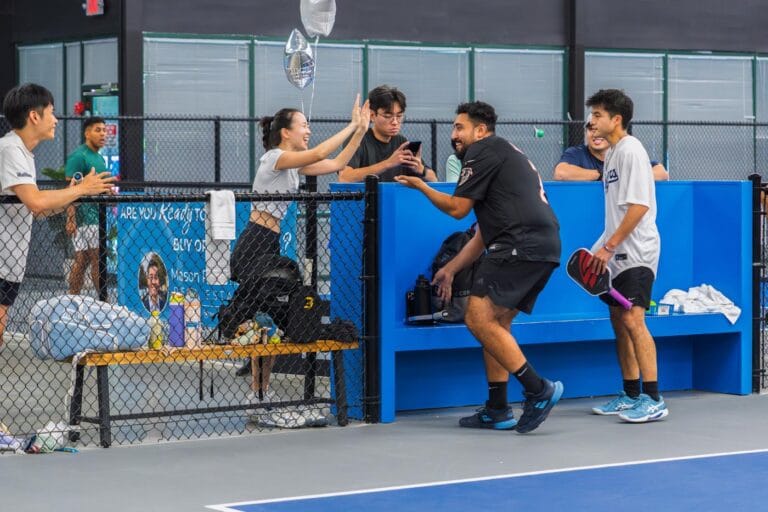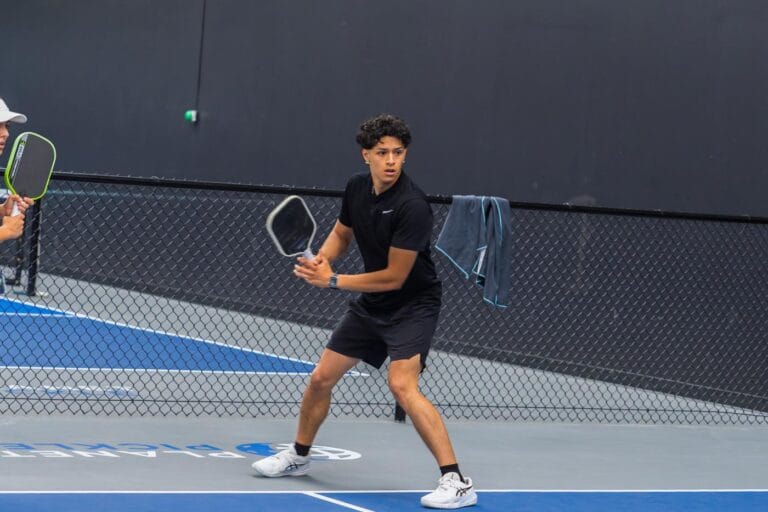

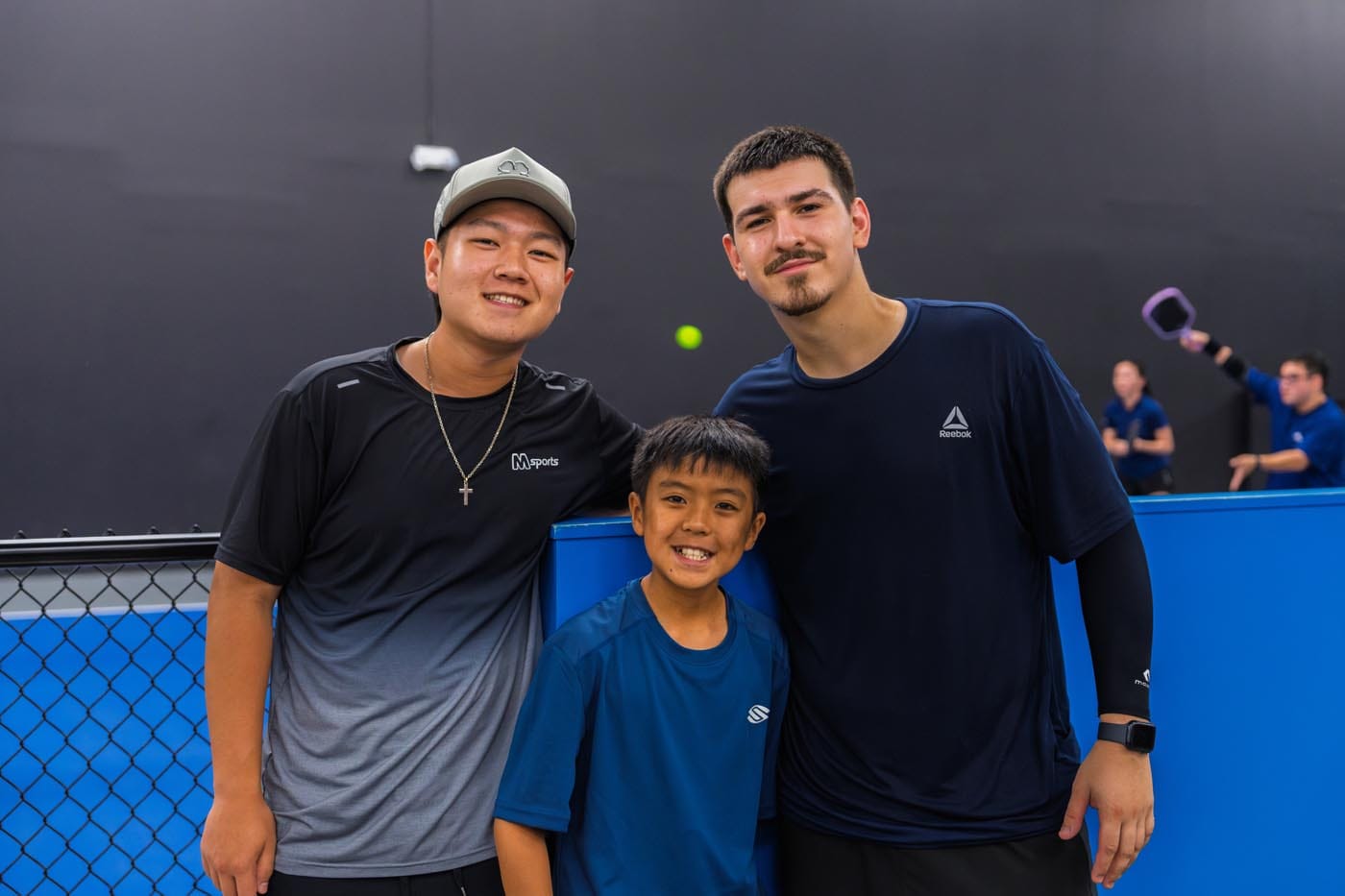
Finding a sport your child can start enjoying before they’ve mastered dozens of complicated skills isn’t always easy. Pickleball offers a relatively simple way to get moving, learn basic racket skills, and experience the fun of rallies and games without needing years of training first.
Pickleball for kids can be adapted to different ages and ability levels with appropriately sized equipment, simple drills, shorter practice sessions, and rules introduced gradually. Along the way, children can practice coordination, movement, communication, and sportsmanship while staying active in a social setting.
For parents wondering where to begin, a little preparation can make that first trip to the court much easier. Understanding the basic equipment, rules, safety considerations, and beginner-friendly activities can help children learn at a comfortable pace while keeping the focus where it belongs: having fun.
Pickleball for Kids: Why It’s a Great Sport to Start Young
Why Is Pickleball Growing Among Kids and Families?
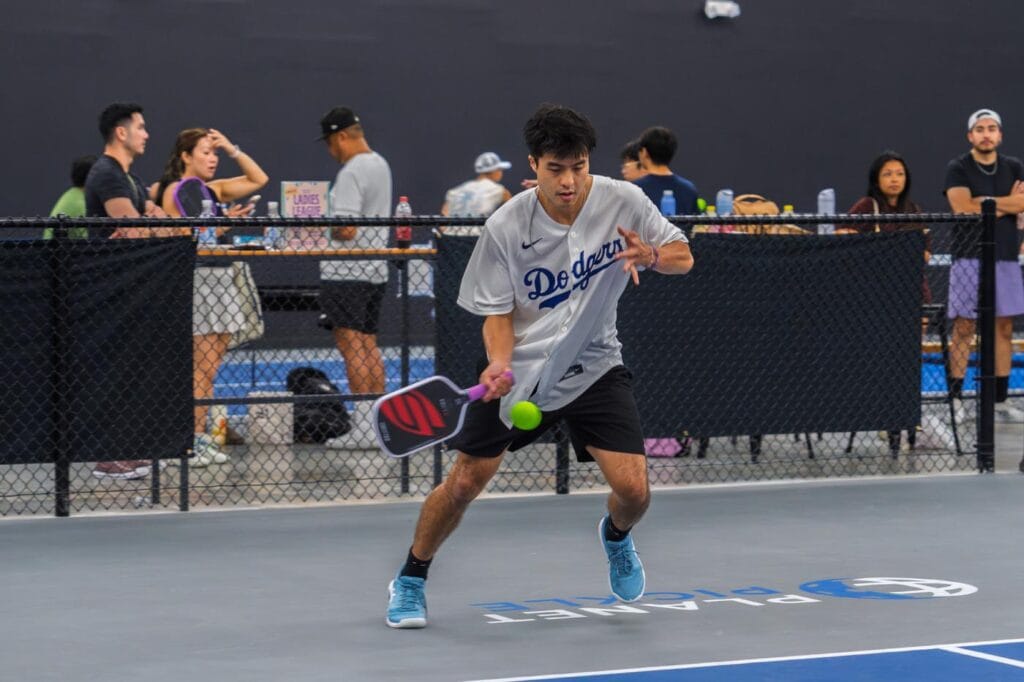
Pickleball has expanded well beyond its reputation as a sport mainly played by older adults. National participation has continued to rise, and younger players are increasingly part of that growth, giving families more opportunities to find clinics, leagues, school programs, and recreational play designed for beginners.
Part of the appeal of pickleball for kids is that the basic game can be introduced without requiring advanced technique from the start.
The court is smaller than a tennis court, doubles limits how much ground each player must cover, and beginner instruction can be adapted with slower recreational balls, shorter rallies, and simplified scoring while children learn the fundamentals.
Why Can Pickleball Feel Approachable for Beginners?
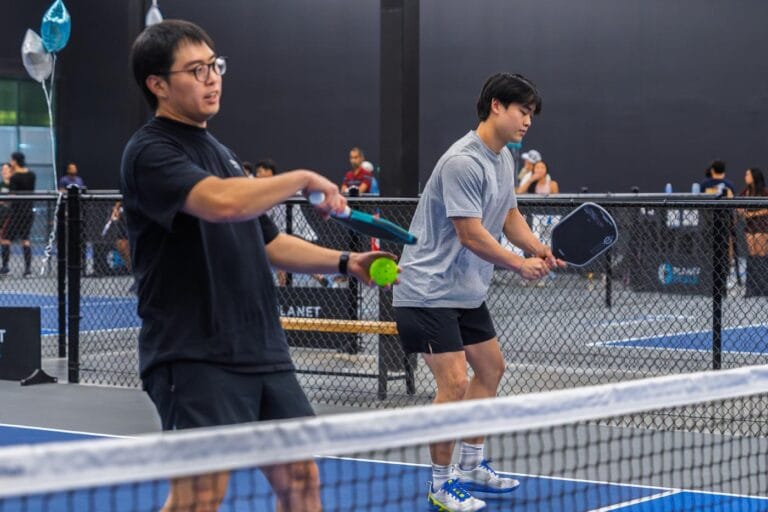
Young players can start by learning a few manageable skills rather than trying to master the entire game at once. Serving underhand, returning the ball, moving toward the non-volley zone, and keeping a short rally going all provide clear goals that can be practiced individually before being combined into full games.
USA Pickleball’s youth teaching guidance even recommends modifying drills, court length, and ball choice for new players before progressing to standard full-court play.
That flexibility makes pickleball for kids easier to scale to age, coordination, and experience instead of expecting every beginner to immediately play by adult competitive standards.
The sport also gives children frequent opportunities to make contact with the ball. Shorter distances and controlled drills can keep beginners involved in the point rather than spending most of a session chasing missed shots or waiting for another turn.
What Skills Can Kids Develop Through Pickleball?
Pickleball involves more than learning paddle technique. Players practice balance, lateral movement, hand-eye coordination, reaction time, spatial awareness, and the ability to control force rather than simply hit the ball as hard as possible.
Doubles introduces another layer because children have to communicate with a partner and understand where each player should move. That can support teamwork and court awareness while still giving each child repeated opportunities to participate directly.
There is also room for strategic thinking as skills improve. Children begin learning when to play a softer shot, when to move forward, where open space is developing, and how their own positioning affects what happens next.
Is Pickleball a Good Cross-Training Sport for Kids?
It can be, particularly for children who already participate in sports that depend on coordination, balance, footwork, or quick decision-making.
Soccer players, basketball players, tennis players, and other young athletes may recognize familiar movement concepts even though pickleball requires its own technique and rules.
Parents do not necessarily need to treat pickleball as a replacement for another sport. It can work as a recreational activity, a social option between competitive seasons, or a sport a child chooses to pursue more seriously once they develop an interest in it.
That flexibility may also appeal to children who have not connected with traditional team sports. Because pickleball can be played in singles or doubles and practiced through small-group drills, there are several ways to participate without requiring a large roster or committing immediately to a highly competitive environment.
How Should Kids Learn Pickleball Safely?
Beginner instruction should match the child’s age, size, coordination, and current ability. Coaches can introduce movement, paddle control, serving, and rallying progressively rather than putting a new player straight into fast games against more experienced opponents.
Appropriate court shoes, hydration, warm-ups, and attention to technique matter as well. Young players should be encouraged to build skills gradually instead of repeatedly swinging harder, overreaching for difficult balls, or continuing through pain simply to keep a rally alive.
Programs that separate players by ability can make that progression easier. Planet Pickle’s youth pickleball development program places players into beginner, intermediate, and advanced groups based on evaluation, with foundational skills introduced to newcomers before more competitive training is added.
Why Does the Social Side Matter for Young Players?
For many children, enjoying the activity matters more than immediately becoming good at it. Small-group drills, doubles games, and youth sessions create opportunities to learn alongside other players rather than making every practice feel like an individual performance test.
That social element can help children stay engaged while they develop the patience needed for serving, rallying, positioning, and scoring. Pickleball for kids works best when early sessions balance instruction with enough actual play for children to understand why they are practicing each skill.
The broader growth of youth pickleball also means children now have more room to choose how far they want to take the sport.
Some may enjoy occasional family games, while others may progress into structured coaching, tournaments, or long-term competitive development, and both paths can begin with the same basic goal: learning to keep the ball in play and enjoying time on the court.
Is Pickleball Easy for Beginners to Learn?
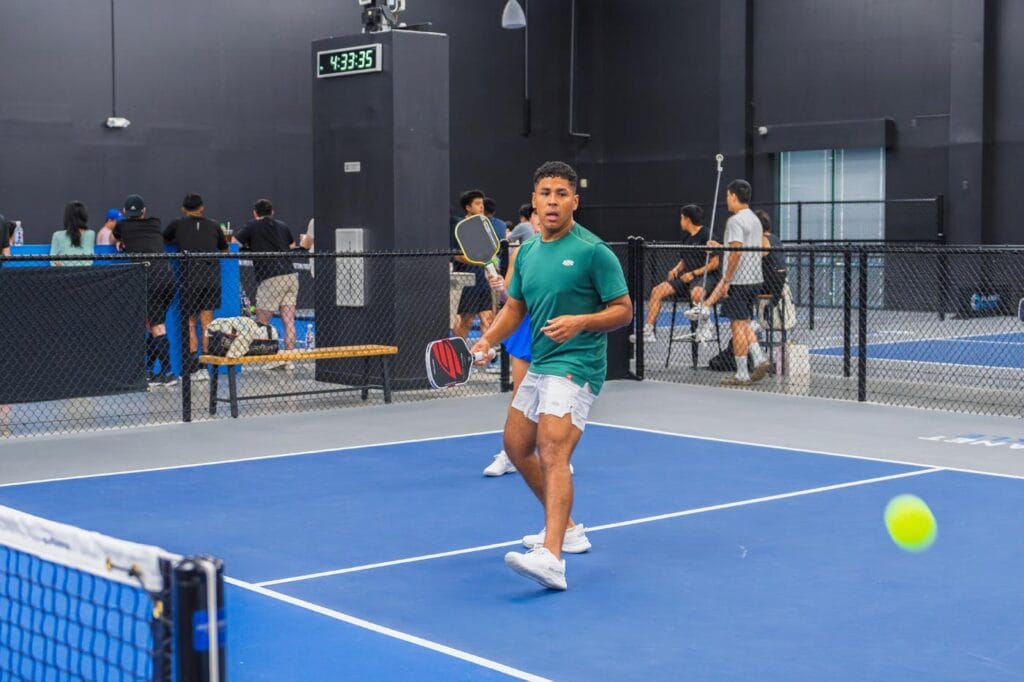
Pickleball is relatively approachable for beginners because children can start participating before they have mastered every rule or technique.
A first session can focus on making contact with the ball, serving legally, keeping a short rally going, and understanding a few basic court boundaries rather than expecting a new player to learn advanced strategy immediately.
That makes pickleball for kids accessible to children with different levels of sports experience. A smaller court than tennis also means players have less distance to cover, although beginners still need time to develop paddle control, footwork, timing, and an understanding of where to stand during a point.
Do Kids Need Racquet-Sport Experience to Start?
No previous tennis, badminton, or other racquet-sport experience is required. Children who have played those sports may already be familiar with tracking a ball and controlling a racquet or paddle, but complete beginners can learn the same skills through simple drills.
Early instruction should prioritize control over power. Learning to send the ball over the net consistently is more useful at first than swinging hard, and short cooperative rallies can help children become comfortable with timing before scoring or competition becomes the focus.
Some children will pick up paddle control quickly, while others need more time to judge the bounce or coordinate their feet with the swing. Neither pace is unusual, so parents should be cautious about judging whether a child is “good at pickleball” after a single session.
What Should Kids Learn in Their First Pickleball Session?
A beginner lesson does not need to cover every rule in the sport. The most useful first session introduces enough information for a child to move safely around the court and begin participating in simple rallies.
A typical beginner progression may include:
- How to hold and control the paddle
- Basic ready position and court movement
- How an underhand serve starts the point
- Returning a serve and allowing the required bounces
- Keeping the ball inside the court boundaries
- Understanding the non-volley zone, often called the kitchen
- Simple forehand and backhand contact
- Short cooperative rallies before competitive scoring
Scoring can be added gradually instead of becoming the main focus immediately. Children usually benefit more from understanding how a point flows first, then learning how serving order and scoring fit into that sequence.
Players who want a clearer idea of how those pieces come together can also review what to expect during a first pickleball match, including serving, returns, kitchen-line movement, and beginner-friendly drills.
Which Pickleball Rules Usually Take Beginners Longer to Learn?
The non-volley zone is often one of the first unfamiliar concepts. Beginners need to learn that they cannot volley the ball while standing in the kitchen or allow their momentum to carry them into that area after a volley, even though they can enter the zone at other times when the ball has bounced.
The two-bounce rule can also take practice. After the serve, the receiving team must let the ball bounce before returning it, and the serving team must then let that return bounce before either side can begin volleying.
Scoring is another area where young beginners may need reminders, particularly in doubles. Rather than teaching every scoring detail before play begins, coaches can introduce it alongside short games so the numbers have an immediate context.
How Long Does It Take a Child to Learn Pickleball?
There is no useful universal answer because age, coordination, previous sports experience, confidence, and frequency of practice all affect the learning curve. Some children may rally during their first session, while others need several practices before serving and returning consistently.
Parents can get a better sense of progress by watching for specific skills rather than counting sessions. A child who is making cleaner contact, keeping more balls in play, remembering court boundaries, and recovering to a ready position is improving even if full games still feel confusing.
Structured instruction can help because a coach can isolate one skill at a time instead of asking a beginner to process serving, scoring, movement, and strategy simultaneously.
Planet Pickle offers pickleball training and lessons for different skill levels, which can provide a more guided route for players who benefit from direct feedback.
What Equipment Do Kids Need to Get Started?
Beginners need surprisingly little equipment. A suitable paddle, pickleball, athletic clothing, water, and court shoes that provide stable traction are enough for most introductory sessions.
The paddle should also be comfortable for the child to hold and control. Buying an advanced or expensive model is unlikely to compensate for a paddle that feels too heavy or awkward, so fit and handling matter more than selecting equipment based on competitive-level features.
How Can Parents Make the First Few Sessions More Enjoyable?
Keep expectations centered on participation rather than winning. A child who leaves knowing how to serve, returning a few balls, or completing a longer rally than they managed at the start has already made meaningful progress.
Pickleball for kids is most beginner-friendly when instruction leaves room for mistakes and actual play. Short drills, achievable targets, and games adapted to the child’s ability can make the rules easier to understand while giving young players a reason to keep practicing.
What Physical Benefits Does Youth Pickleball Offer?
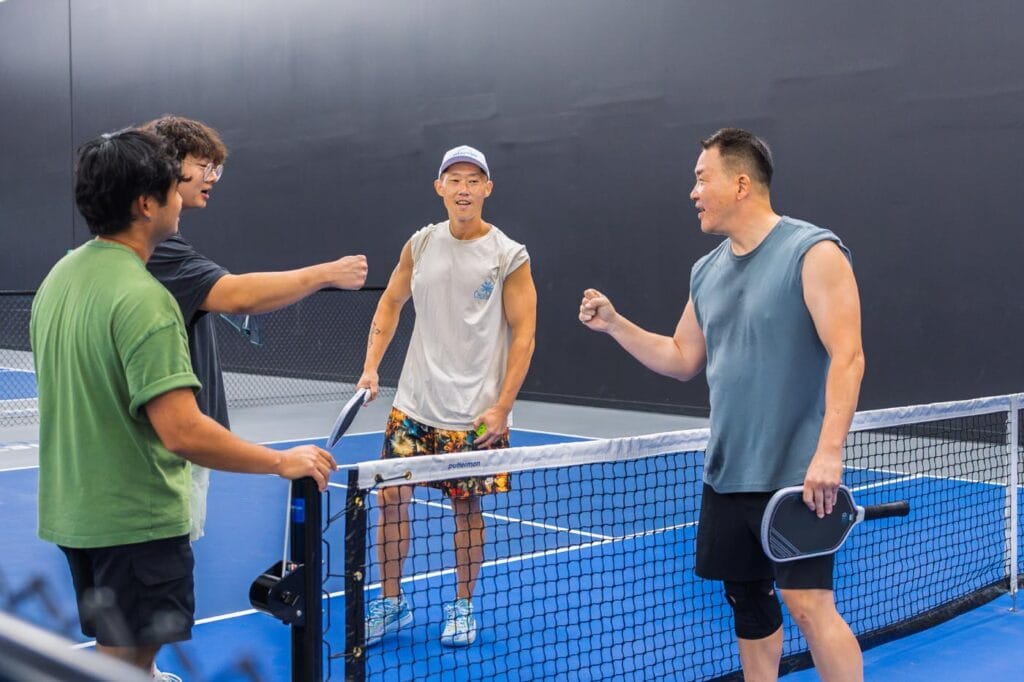
Pickleball gives kids a reason to move in ways that combine short bursts of activity with balance, coordination, and quick decision-making.
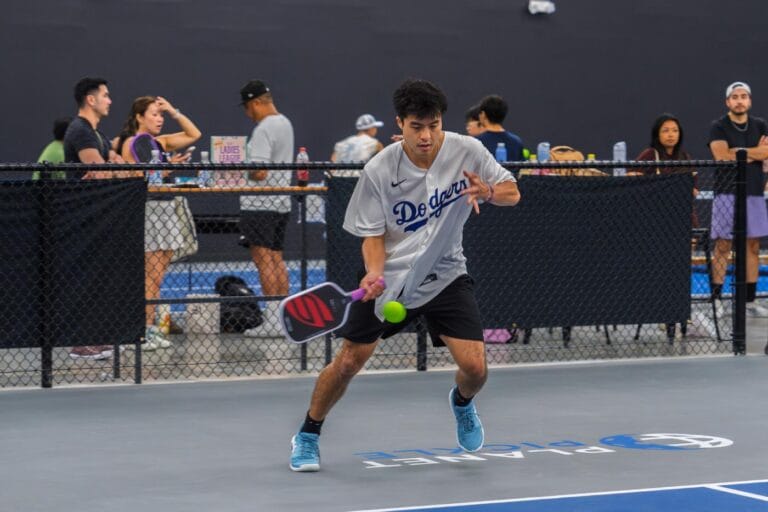
During a game, young players may shuffle sideways, move forward toward the kitchen line, recover toward the baseline, reach for angled shots, and adjust their body position as the ball changes direction.
That variety is one reason pickleball for kids can work well as an active recreational sport. How physically demanding a session feels will depend on the child’s age, skill level, rally length, singles or doubles format, and how much active play is mixed with instruction or rest.
What Physical Skills Can Kids Practice Through Pickleball?
Pickleball challenges several movement skills at the same time. Players have to track the ball visually, coordinate the paddle with its path, move their feet into position, and control how much force they use when returning different shots.
Regular play can give children opportunities to work on:
- Hand-eye coordination: tracking the ball and timing paddle contact
- Balance: staying controlled while reaching, stopping, and changing direction
- Agility: reacting to shots placed in different areas of the court
- Footwork: moving efficiently instead of reaching from an unstable position
- Reaction time: responding to faster exchanges near the net
- Movement control: learning when a shot requires touch rather than maximum force
These skills develop through repetition rather than simply appearing because a child plays pickleball. Beginner coaching should therefore emphasize stable movement and controlled contact before expecting young players to chase difficult balls or produce powerful shots.
Practicing pickleball footwork and movement skills such as lateral shuffles, split steps, and controlled positioning can help players become more balanced and efficient around the court.
Does Pickleball Provide Cardiovascular Exercise for Kids?
It can. Continuous rallies, court movement, and repeated points can raise a child’s heart rate and contribute to an active play session, particularly when downtime between points is limited.
The intensity is not identical in every game, however. Singles generally requires one player to cover more court than doubles, while a beginner lesson that includes explanation and drills may involve more pauses than a recreational match.
Parents should think of pickleball as one possible way to add movement to a child’s routine rather than assuming every session automatically provides the same level of exercise.
A child who spends much of the session actively rallying will have a different physical experience from one who spends long periods waiting in line for a drill.
Can Pickleball Help With Balance and Coordination?
Yes, because successful play depends on coordinating several actions at once. A child has to recognize where the ball is traveling, move into position, stabilize the body, and time the paddle swing well enough to send the ball back under control.
The sport also encourages frequent changes between forward, backward, and lateral movement. Learning to stop under control before striking the ball is especially important because reaching while off balance can make both the shot and the movement less stable.
For children still developing these skills, slower drills and shorter rallies can be more useful than immediately introducing fast competitive play. Pickleball for kids should progress with the player’s coordination rather than treating the adult version of the game as the only valid starting point.
Is Pickleball Safe for Young Players?
Like any sport involving running, quick direction changes, and repeated swinging, pickleball carries some risk of falls, overuse, collisions, or other injuries. A well-maintained playing area can support more predictable movement, but court quality alone does not make a session safe.
Children also need appropriate athletic shoes, enough space to move, access to water, and instruction that matches their current ability. A simple pickleball pre-game routine that includes warming up, checking equipment, and preparing for movement can help young players start a session more deliberately rather than going straight into full-speed rallies.
Warm-ups, sensible breaks, and learning not to chase every ball at full speed can matter just as much as the surface underfoot. Adults should also watch for fatigue, changes in technique, or complaints of pain instead of encouraging children to keep playing through discomfort.
Does Indoor Pickleball Change the Training Experience?
An indoor court does not automatically create greater fitness benefits, but consistency can make regular participation easier to plan. Practices are less likely to depend on outdoor heat, cold, rain, or court conditions caused by changing weather.
That can be particularly useful for children who benefit from a predictable activity schedule. Families can focus more on skill development and active play rather than deciding whether conditions are suitable each time they want to practice.
Climate control also does not eliminate the need for hydration or rest. Young players can still become tired during longer rallies or extended sessions, so adults should pay attention to fatigue, technique changes, and complaints of pain rather than assuming an indoor environment removes those concerns.
How Can Parents Keep the Physical Benefits Age-Appropriate?
The best starting point is a session that matches the child’s current ability. Younger or inexperienced players may benefit from shorter drills, more frequent breaks, and exercises that emphasize balance and ball control, while older or more experienced players may be ready for longer rallies and more demanding movement patterns.
Progress should come from gradually increasing skill and activity, not from asking children to play through pain or exhaustion. If a child develops persistent discomfort, swelling, or an injury that affects normal movement, rest and appropriate medical guidance matter more than finishing another game.
For many families, the physical appeal of pickleball is its mix of movement and play. Children can practice coordination, balance, agility, and active court movement while learning a game, which can make exercise feel like part of the activity rather than a separate workout.
Can Pickleball Build Social and Emotional Skills?
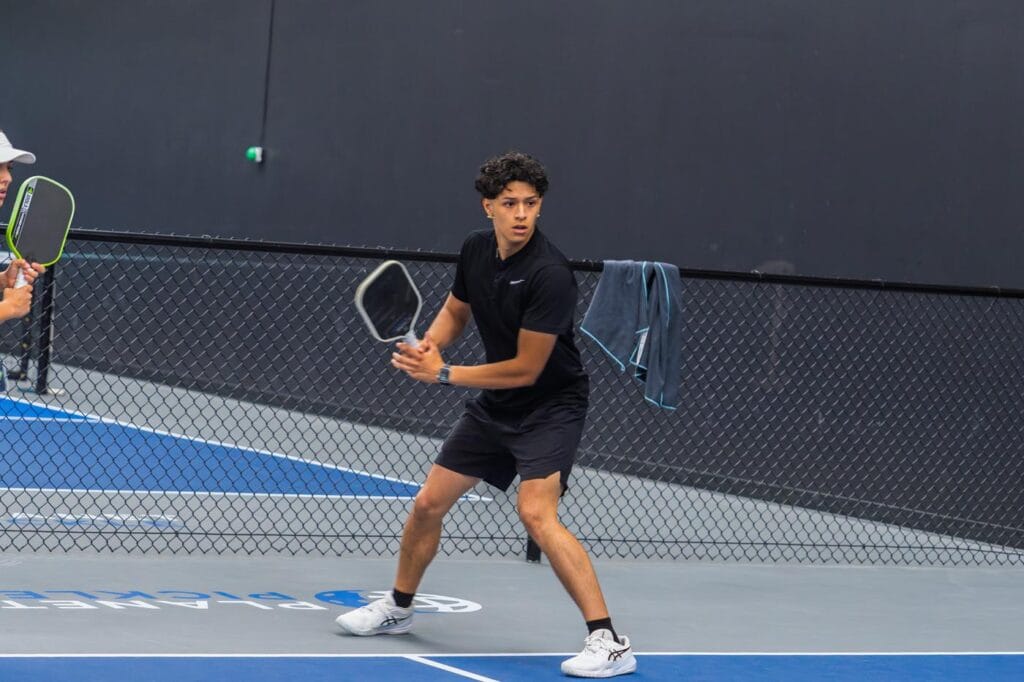
Pickleball gives kids frequent opportunities to communicate, cooperate, make decisions, and recover from mistakes while playing with other people.
Those experiences can support social and emotional development, particularly when coaches and parents keep the focus on learning, participation, and respectful competition rather than treating every point as a test of performance.
Doubles makes those interactions especially visible. Partners have to decide who will take a ball, communicate about positioning, adjust after missed shots, and keep playing after points do not go their way.
For children learning pickleball for kids, those small exchanges can become useful practice in teamwork and self-management without needing a separate lesson about either skill.
How Can Pickleball Help Kids Build Confidence?
Confidence tends to grow when children can see evidence of their own progress. Learning to serve consistently, completing a longer rally, remembering the score, or making a shot that once felt difficult gives a young player something concrete to build on.
That kind of confidence is different from simply telling a child they are talented. Skill-based encouragement connects praise to effort, practice, and improvement, which can make mistakes feel like part of learning rather than proof that the child is not good at the sport.
Coaching style matters here. A supportive pickleball coaching approach that combines clear instruction with repetition and age-appropriate challenges can give young players room to improve without making every session feel overly competitive.
What Social Skills Does Doubles Pickleball Encourage?
Doubles requires two players to share the same side of the court, which naturally creates opportunities for communication. Partners may call a ball, decide who covers the middle, encourage each other after an error, and adjust their positioning based on what is happening during the point.
Children also learn that successful teamwork does not mean both players making identical decisions. One partner may be stronger at a particular shot or better positioned for a return, so effective play involves noticing what another person is doing and responding rather than acting independently every time.
Sportsmanship is part of that interaction too. Saying the score clearly, making fair line calls, respecting opponents, and moving on after a lost rally all give children practical opportunities to experience rules and cooperation in a social setting.
Can Pickleball Help Kids Handle Mistakes?
Pickleball creates plenty of small mistakes, which can actually be useful for learning emotional regulation. A serve may land out, an easy return may hit the net, or a player may misjudge who should take a ball, but the next point usually begins quickly.
That short reset gives children repeated chances to practice recovering rather than dwelling on one error. Coaches can reinforce this by helping young players identify what happened, make one adjustment, and return their attention to the next rally instead of turning every mistake into a lengthy correction.
Parents can support the same process by asking about effort, decisions, or something the child learned rather than focusing only on the final score. That keeps improvement visible even on days when the child does not win.
Does Pickleball Help Kids Make Friends?
It can create opportunities for connection, particularly when children attend recurring clinics, leagues, open play sessions, or family events where they see some of the same players regularly. Sharing a court immediately gives participants something to do together, which can make interaction feel more natural than asking children to socialize without a shared activity.
That does not mean every child will automatically become more outgoing or form close friendships through the sport. Personality, group dynamics, coaching, and the atmosphere of the program all matter, so the more realistic benefit is that pickleball provides repeated chances to interact around a common interest.
Family-oriented play can broaden that social experience beyond same-age peers. Planet Pickle’s community and family activities include family play opportunities and partnerships intended to make participation more inclusive, giving children additional ways to experience the sport outside a strictly competitive setting.
What Should Parents Look for in a Youth Pickleball Environment?
A good youth program should make children feel challenged without making them afraid to make mistakes.
Coaches should explain expectations clearly, group players appropriately when possible, and create enough actual playing time for children to practice communication and decision-making rather than spending most of the session waiting.
Watch how adults respond when a child misses a shot, becomes frustrated, or needs extra instruction. An environment that treats mistakes as normal parts of skill development is more likely to keep young players engaged than one where winning receives all the attention.
Parents should also pay attention to whether their child actually enjoys returning. The social and emotional benefits of pickleball for kids are more likely to develop through consistent, positive participation than through pressure to continue an activity a child no longer finds enjoyable.
For many young players, that combination of movement, skill-building, teamwork, and frequent fresh starts is part of the appeal.
Pickleball can give kids a structured place to practice communicating with others, handling frustration, and recognizing their own improvement while still keeping the main purpose simple: playing a game they enjoy.
Why Pickleball Works Well for Families
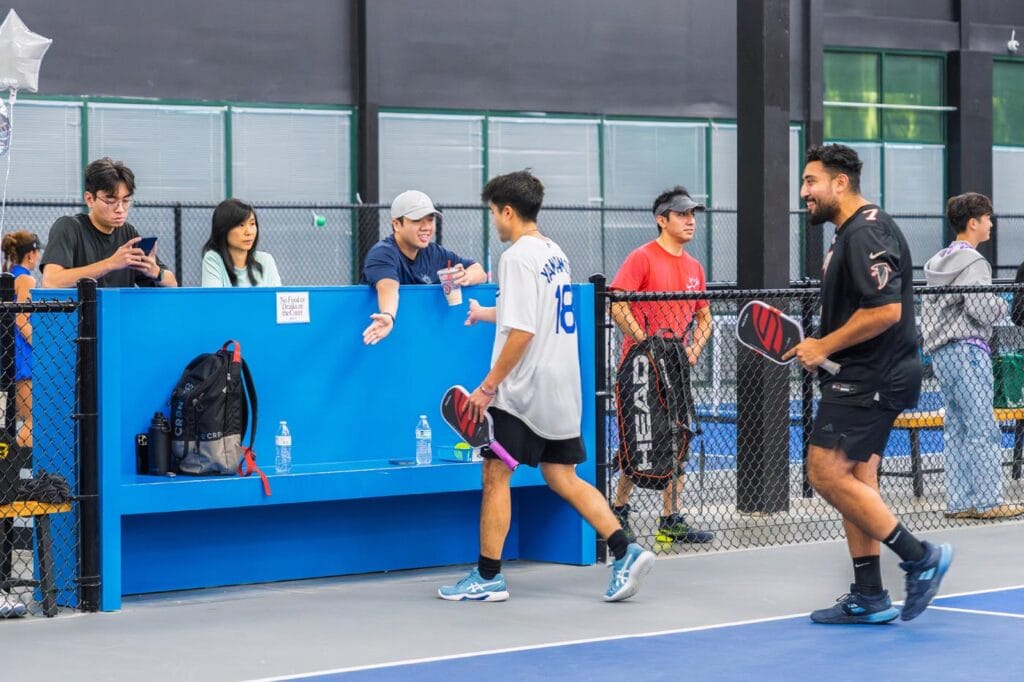
Pickleball works well as a family activity because people of different ages and experience levels can share the same court without needing identical athletic ability.
A parent, child, teenager, and grandparent may approach the game differently, but doubles, shorter games, and adjustable pacing make it easier to create a format everyone can participate in.
That flexibility is especially useful for families exploring pickleball for kids without wanting another activity that separates everyone by age. Children can learn alongside adults, parents can practice the same basic skills, and casual games can be adapted when one player is significantly newer or less mobile than another.
Why Does Pickleball Work for Different Generations?
Raw speed and power are not the only ways to win a pickleball point. Placement, consistency, communication, and softer shots near the kitchen can matter just as much, which gives family members with different physical strengths meaningful ways to contribute.
Families can also modify the game when skill gaps are large. More experienced players can slow down the pace, focus on controlled placement, or play cooperative rallies instead of treating every session as a competitive match.
That adaptability is one reason pickleball works well for multigenerational players. A family does not have to wait until everyone reaches the same skill level before enjoying time on the court together.
What Can Families Do Besides Play Competitive Matches?
Not every family session needs to end with a winner. Cooperative rallies, serving challenges, target games, parent-child doubles, and short point-based games can keep younger beginners involved while giving experienced players something specific to practice.
Rotating partners can also change the experience without requiring different equipment or courts. A child might play with a parent for one game, against that parent in another, and then join a sibling or grandparent for a doubles round.
This variety can be particularly helpful when introducing pickleball for kids. Younger players get opportunities to participate without every outing feeling like formal practice, while adults can still work on their own consistency and strategy.
Can Pickleball Fit Into a Busy Family Schedule?
Pickleball can be relatively easy to scale around the time a family has available. A casual outing might involve a short court session, while families who become more interested can add lessons, youth training, open play, or longer recreational games.
That flexibility makes it possible to treat the sport as occasional family recreation rather than immediately committing everyone to a competitive schedule. If one child becomes more serious about playing, that player can pursue structured training while other family members continue participating casually.
Indoor courts can also make scheduling more predictable because play is less dependent on rain, excessive outdoor heat, or other weather conditions. Families still need to consider school, work, rest, and other sports, but fewer weather interruptions can make a planned court session easier to keep.
Is Family Pickleball Expensive to Start?
Families do not need high-end equipment to try the sport. Beginners mainly need suitable paddles, balls, athletic clothing, court shoes, and access to a place to play, so it makes sense to start simply before investing in premium gear.
The cost of regular play depends on the facility, how often the family participates, and whether they choose drop-in play, court rentals, lessons, or membership.
Families comparing options should calculate the cost based on how often each person will realistically play rather than assuming a membership is automatically the least expensive choice.
Planet Pickle currently offers family membership pricing that varies by age, including reduced rates for younger household members. Looking at the age breakdown and expected playing frequency can help families compare membership with occasional visits before committing to a recurring plan.
How Can Parents Keep Family Games Enjoyable?
Avoid turning every family outing into a coaching session. Children may enjoy learning from a parent, but constant correction can quickly change shared recreation into another structured lesson, particularly when the adult is also trying to play.
A better approach is to agree on the purpose of the session. Some days might focus on practicing serves or rallies, while others can simply be about playing together and laughing through imperfect points.
Adults should also adjust competition to the child rather than expecting younger beginners to keep up with experienced players immediately. Short games, mixed teams, handicaps, and cooperative challenges can keep everyone involved without pretending skill differences do not exist.
The strongest family benefit is ultimately the shared activity itself. Pickleball gives children and adults something they can learn together, revisit over time, and adapt as everyone’s abilities change, making it a sport that can fit more than one stage of family life.
Conclusion
Pickleball can give kids an approachable way to stay active, build coordination, learn sportsmanship, and enjoy time on the court without needing years of experience to get started.
Keeping early sessions simple and fun can help young players develop their skills at a comfortable pace while discovering what they enjoy about the game.
When your family is ready to explore pickleball for kids beyond the basics, Planet Pickle offers opportunities to keep playing and growing. Call 678-404-5792 to learn more and choose Planet Pickle for quality courts, programs, leagues, and amenities.