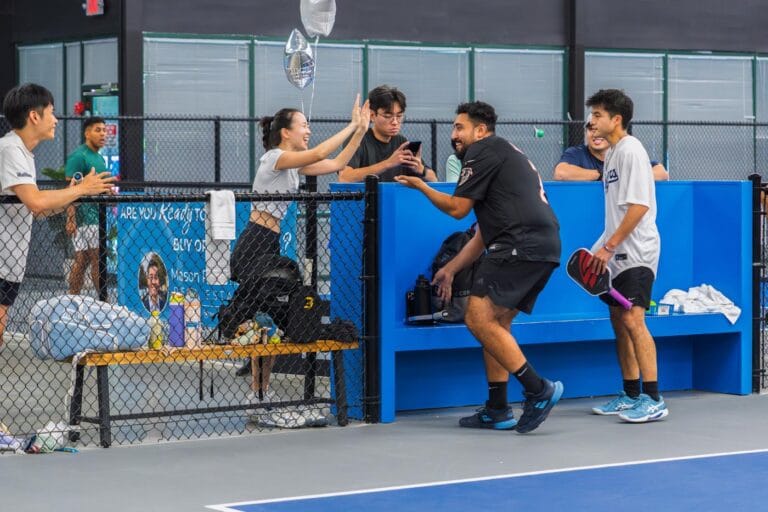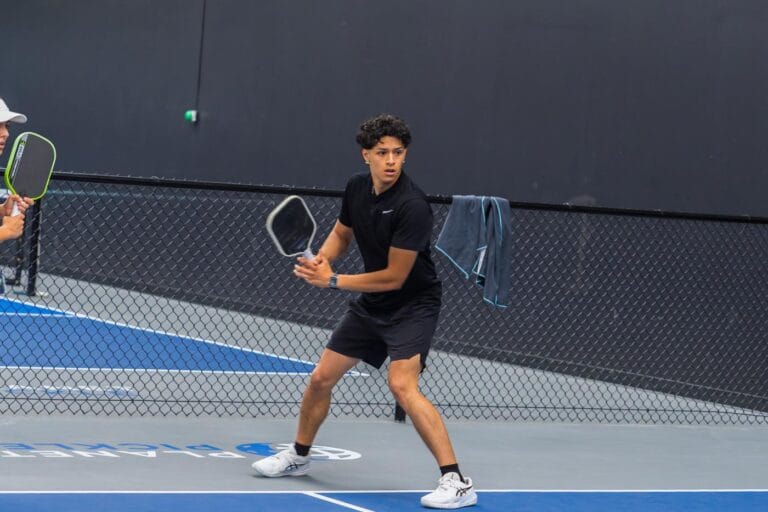

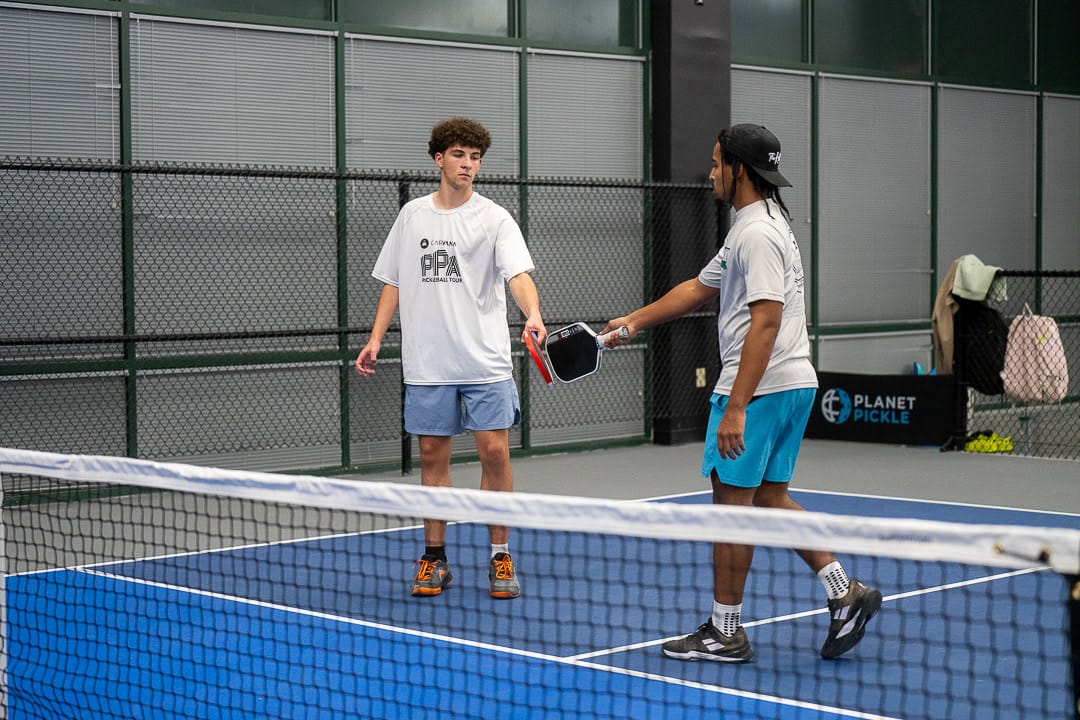
Doubles pickleball is about more than individual skill. Success often comes down to communication, positioning, timing, and how well you work with your partner. Even strong players can struggle in doubles if they haven’t developed those habits together through focused practice.
Partner drills to boost your pickleball game help build the coordination and consistency that doubles teams need to perform at a higher level. Working through two-player exercises allows partners to improve shot placement, movement, court coverage, and decision-making in game-like situations.
These drills also help create trust and familiarity, making it easier to react as a team during competitive play. With regular practice, the right partner drills can strengthen teamwork, reduce unforced errors, and help turn two individual players into a more effective doubles unit.
How Partner Drills Help Improve Doubles Performance
Dinking Drills
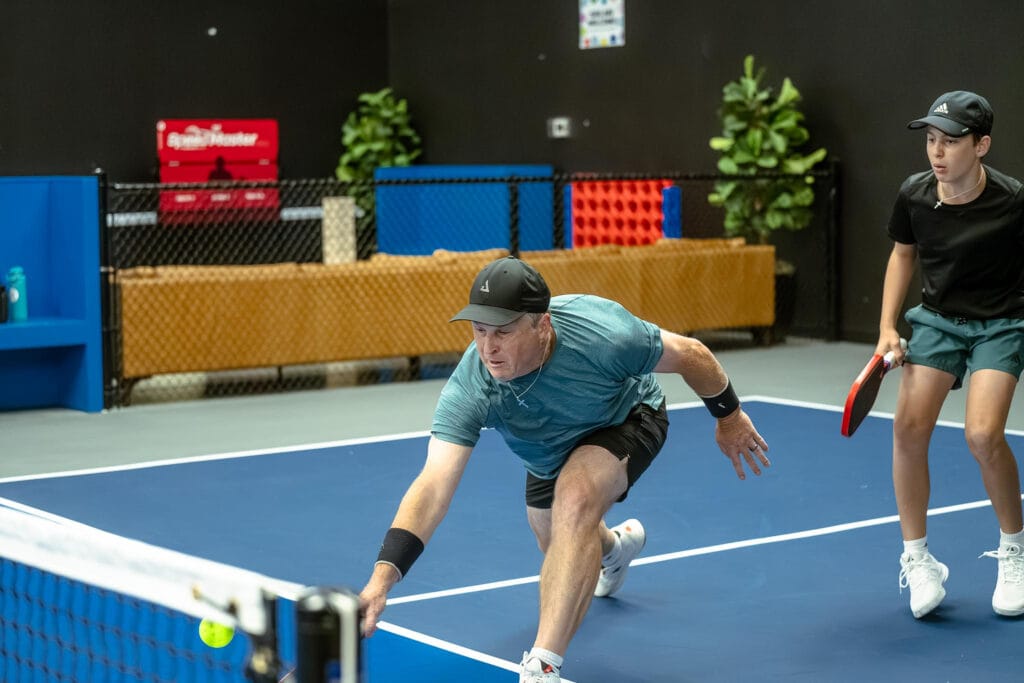
Among all partner drills in pickleball, dinking exercises are some of the most effective for building consistency, communication, and control.
While powerful shots often grab attention, many doubles points are won through patience, placement, and the ability to sustain soft exchanges at the kitchen line. Dinking drills help partners develop touch and accuracy while learning how to work together during extended rallies.
These exercises encourage players to focus on ball placement rather than power, making them especially valuable for improving doubles strategy. Regular practice can lead to better shot selection, fewer unforced errors, and greater confidence during competitive play.
How Do Dinking Drills Improve Control And Placement In Doubles?
The primary goal of dinking is to place the ball in challenging locations while keeping it low enough to prevent aggressive attacks from opponents. Through consistent repetition, players learn how small adjustments in paddle angle, swing speed, and contact point can influence where the ball lands.
As partners exchange controlled shots across the net, they develop a better feel for pace and trajectory. This allows them to place the ball with greater precision, whether targeting an opponent’s backhand, creating difficult angles, or forcing movement around the kitchen line.
One of the reasons partner drills centered on dinking are so effective is that they provide immediate feedback. Players can quickly recognize when a shot is too high, too deep, or lacking control and make adjustments on the next exchange.
Over time, this process builds consistency and helps players become more comfortable under pressure. Cross-court dinking is particularly valuable because it creates a longer path over the net and offers a larger margin for error.
Straight-ahead dinking, on the other hand, challenges players to maintain precision in a narrower target area. Practicing both variations helps create a more complete skill set that translates directly to match play.
What Footwork Techniques Improve Court Coverage For Two Players?
Strong dinking skills depend on more than paddle control alone. Proper footwork allows players to reach the ball comfortably, maintain balance, and recover quickly for the next shot.
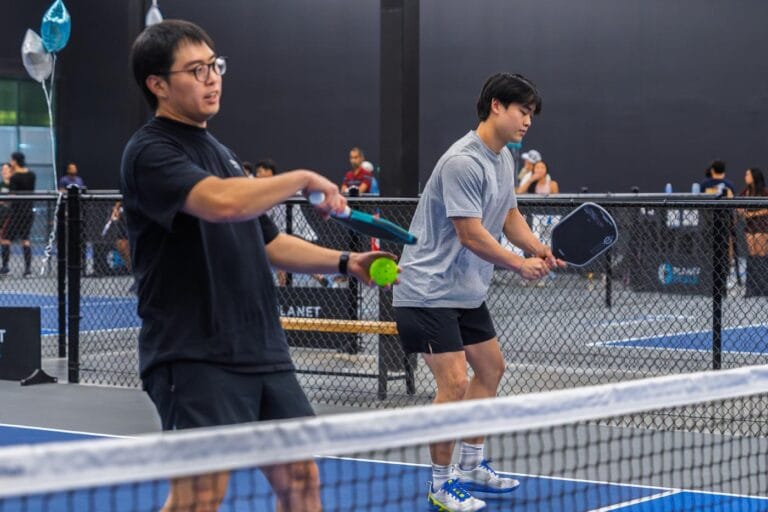
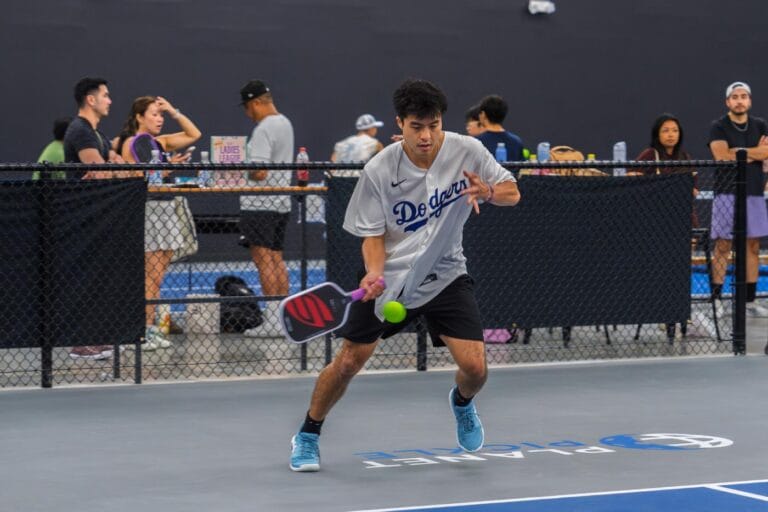
When performing dinking-focused partner drills, players should stay in an athletic stance with their knees slightly bent and their weight balanced on the balls of their feet. This position makes it easier to react to changing ball placement and move efficiently along the kitchen line.
Lateral movement is especially important in doubles. Rather than crossing their feet, players should use short shuffle steps to stay balanced while covering the court. This technique allows them to remain ready for quick exchanges and reduces the likelihood of being caught out of position.
Another key element is moving together as a team. In doubles, partners should shift side-to-side in coordination rather than moving independently.
When one player slides to cover a wide dink, the other should adjust accordingly to maintain proper court positioning. Practicing this movement pattern during partner drills helps improve communication and creates stronger defensive coverage.
Combining Dinking And Movement For Better Doubles Play
The most productive practice sessions combine shot execution with movement. Instead of standing still and exchanging dinks, partners can gradually increase the challenge by directing shots wider, varying placement, or incorporating movement goals into the drill.
This approach simulates real match conditions while helping players improve both technical skills and court awareness. As consistency develops, partners become more comfortable maintaining long rallies and creating opportunities to move opponents out of position.
Ultimately, dinking-focused partner drills help players develop the control, patience, and teamwork needed for successful doubles play. By refining placement and improving movement along the kitchen line, partners can strengthen one of the most important aspects of the modern pickleball game.
Footwork Drills
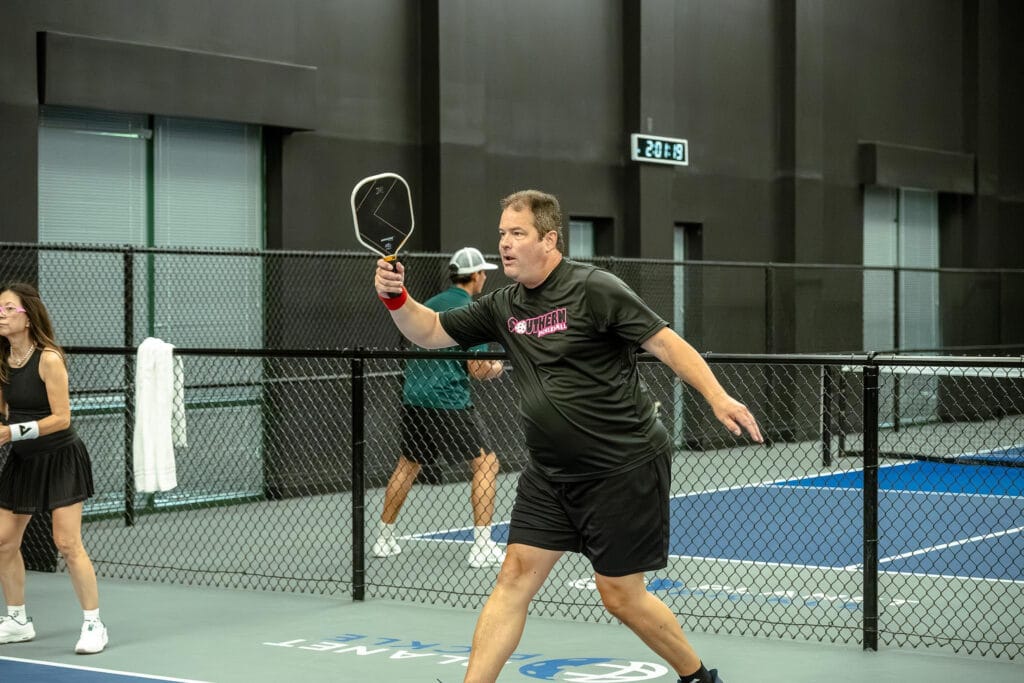
Strong footwork is often the difference between reaching a difficult shot and watching it land out of reach.
While many players focus heavily on stroke mechanics, movement is what allows those skills to be used effectively during a match. That is why footwork-focused partner drills are an important part of any pickleball training routine.
These exercises help players move more efficiently, recover faster between shots, and maintain proper positioning throughout a rally. In doubles play, good footwork also improves teamwork by helping partners move together as a unit rather than reacting independently.
Many footwork drills focus on agility, balance, and directional changes. Exercises such as agility ladder work, side-step movement drills, and T-drills challenge players to stay light on their feet while maintaining control.
Over time, these movements become more natural, allowing players to react quickly without sacrificing balance or shot quality.
Which Coordination Exercises Boost Reaction Time Between Partners?
Coordination drills are designed to improve how well partners read and respond to one another’s movements. In doubles pickleball, success often depends on anticipation rather than reaction alone.
The better partners understand each other’s positioning and tendencies, the more efficiently they can cover the court. One effective exercise is the mirror drill. In this activity, one player acts as the leader while the other mirrors every movement.
As the leader moves side-to-side, forward, or backward, the partner follows while maintaining the same spacing and posture. This simple drill builds awareness and encourages players to pay close attention to movement patterns.
Another valuable option involves shadow movement exercises along the kitchen line. Partners move together as if responding to an imaginary rally, practicing coordinated positioning without hitting a ball. This develops court awareness and reinforces the habit of moving as a team during live play.
These types of partner drills help players develop nonverbal communication skills. As familiarity grows, teammates become better at predicting where support is needed, reducing gaps in court coverage and improving overall efficiency.
How Do Reaction Time Exercises Enhance Partner Synchronization?
Reaction time training focuses on helping players process information and respond quickly under pressure. In doubles play, every fraction of a second matters, especially during fast exchanges at the net.
When partners regularly practice reaction-based exercises, they become more comfortable responding to unexpected situations. For example, one player may call out a direction or signal a movement while the other reacts immediately. Over time, these drills sharpen awareness and improve decision-making speed.
Reaction training also strengthens trust between partners. As players learn how their teammate moves and responds, they can make quicker decisions without hesitation. Instead of worrying about covering the entire court themselves, they gain confidence that their partner will be in the right position when needed.
The benefits extend beyond physical movement. Improved reaction time often leads to better communication, fewer positioning errors, and more consistent teamwork during competitive matches. These gains become especially noticeable during fast-paced rallies where coordinated movement is essential.
Turning Better Movement Into Better Doubles Results
Footwork and reaction training may not be the most exciting parts of practice, but they often produce some of the biggest improvements on the court. Players who move efficiently can reach more balls, recover faster, and maintain stronger positioning throughout a point.
By incorporating movement-focused partner drills into regular training sessions, doubles teams can improve both individual athleticism and overall court chemistry.
Better footwork leads to smoother movement, while stronger coordination helps partners work together more effectively. The result is a more confident and synchronized doubles team that can handle pressure, cover the court efficiently, and compete at a higher level.
Serve And Return Practice
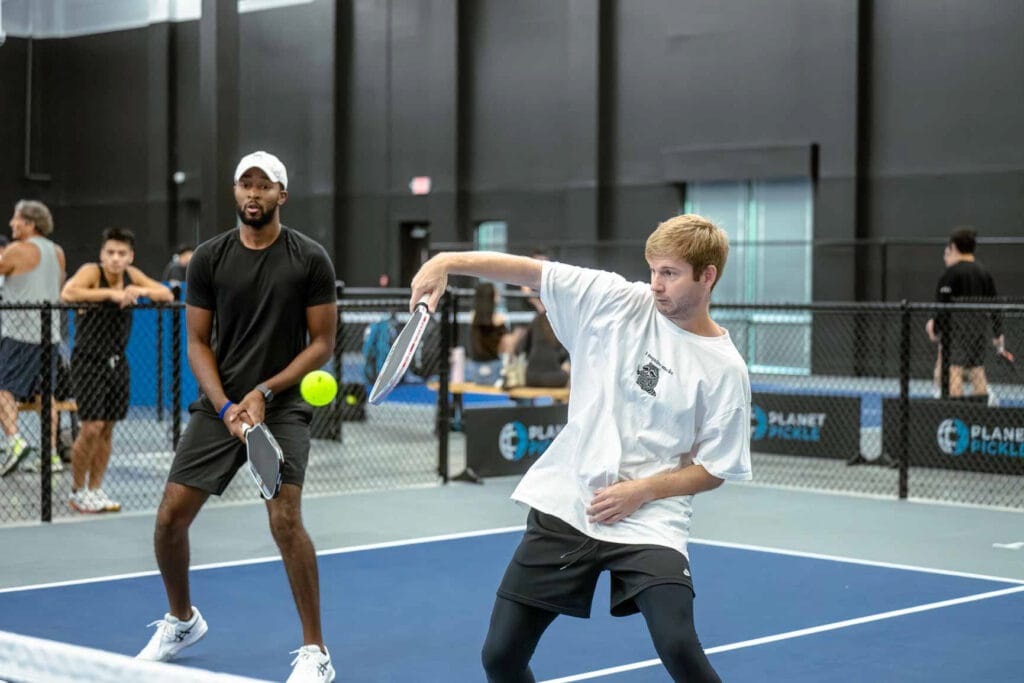
The serve begins every point, and the return often determines how the rally unfolds. Because of this, serve and return training should be a regular part of any doubles practice routine.
While many players spend time working on dinks and volleys, consistent partner drills focused on serving and returning can create a significant competitive advantage.
Effective serve and return practice helps players develop accuracy, consistency, and confidence. It also allows partners to refine their positioning and communication immediately after the ball is put into play.
Since doubles pickleball is often won through smart positioning rather than sheer power, mastering these opening shots can have a lasting impact on match performance.
One of the most effective ways to practice is by selecting specific target areas within the service box. Aiming for different locations helps players improve placement while learning how to keep opponents from settling into a predictable rhythm.
On the return side, practicing deep, controlled shots can make it more difficult for the serving team to advance to the kitchen line quickly.
How Can Footwork And Positioning Drills Elevate Your Pickleball Partner Practice?
Strong serves and returns are most effective when combined with proper movement. After serving, players must quickly recover into a defensive position. After returning, they need to transition efficiently toward the non-volley zone while maintaining awareness of their partner’s location.
This is where movement-focused partner drills become valuable. Instead of practicing serves and returns in isolation, partners can rehearse the entire sequence of a point.
For example, one player serves, both teammates move into position, and the rally continues for several shots. This approach teaches players how to connect technical skills with real-game decision-making.
Positioning is especially important in doubles because both partners must move together. When one player advances or shifts laterally, the other should adjust accordingly to maintain proper court coverage. Practicing these transitions repeatedly helps create habits that carry over into competitive play.
Footwork drills can also be incorporated into serve-and-return exercises by emphasizing quick recovery steps, balanced movement, and efficient court positioning. These small details often make the difference between reacting to a shot and being prepared for it.
Building Better Strategy Through Serve And Return Drills
Serve and return training is not just about hitting the ball accurately. It is also an opportunity to develop tactical awareness. Players can experiment with different serve locations, return depths, and positioning strategies to understand what creates the most favorable situations during a match.
For example, a deep return may give the returning team more time to approach the kitchen line, while a well-placed serve can force an opponent into a difficult opening shot. Practicing these scenarios together allows partners to develop strategies they can rely on during competition.
These partner drills also encourage communication. Discussing shot selection, positioning adjustments, and recovery patterns helps teammates stay aligned and build confidence in one another’s decisions.
What Equipment Tips Optimize Your Pickleball Partner Practice Sessions?
While technique and repetition are the most important factors in skill development, equipment can influence the quality of practice. A paddle that provides a comfortable balance of control and power can help players execute serves and returns more consistently.
Using the same equipment during practice and match play is often beneficial because it creates familiarity and consistency. Players become more comfortable with paddle response, touch, and shot execution, allowing them to focus on strategy and technique rather than equipment adjustments.
Ultimately, serve-and-return partner drills provide much more than repetition. They help players develop stronger opening shots, improve court positioning, and build teamwork.
By combining technical practice with movement and strategy, doubles partners can create a more complete training routine that translates directly into better match performance.
Game Simulation Drills
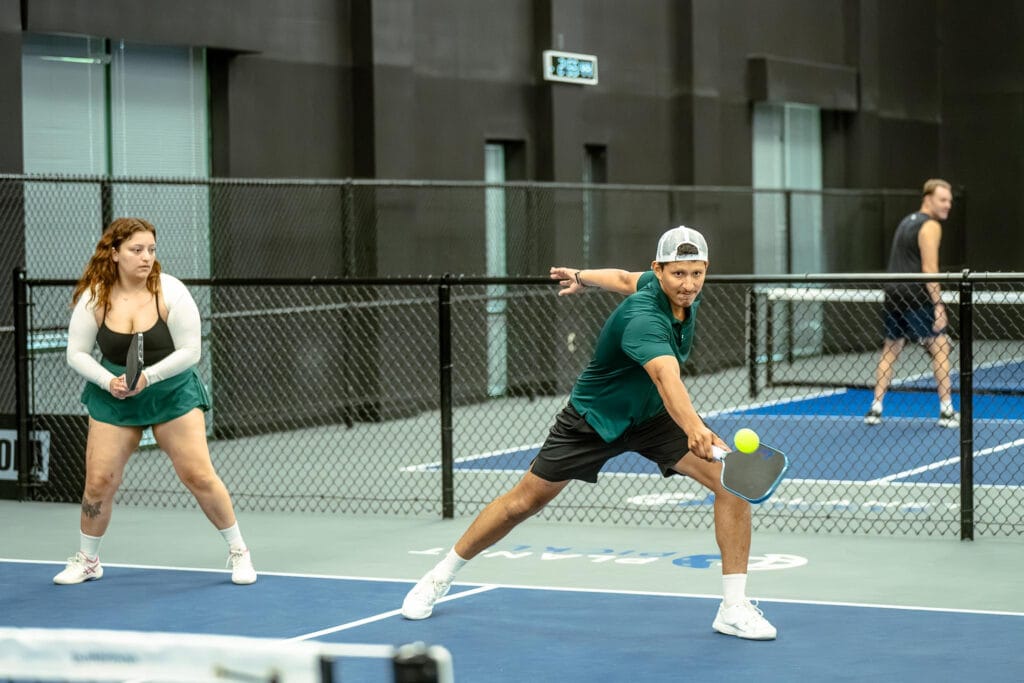
Practicing individual skills is important, but there comes a point when players need to bring everything together. That is where game simulation drills become valuable.
These exercises are designed to recreate the pace, decision-making, and pressure of actual match play, allowing partners to apply the skills they have developed through other partner drills in realistic situations.
Unlike isolated drills that focus on a single technique, game simulations combine serving, returning, movement, shot selection, and teamwork into one continuous practice environment. This helps players develop a better understanding of how individual skills connect during competitive play.
A typical simulation may begin with a serve and return, followed by a live rally that continues until the point is finished. By repeating this process, players gain experience handling common match situations while building confidence in their ability to execute under pressure.
Why Are Match-Like Scenarios Important For Improvement?
Many players perform well during structured drills but struggle when faced with the unpredictability of a real game. Game simulation exercises bridge that gap by introducing elements of competition, decision-making, and pressure that are difficult to replicate in traditional practice.
These partner drills encourage players to think strategically rather than simply focus on technique. Participants must decide when to attack, when to reset a rally, and how to work with their partner to create scoring opportunities.
The result is a more complete understanding of the game and improved adaptability during matches.
Simulated points also expose weaknesses that may not be apparent during isolated drills. For example, a player may discover that their positioning after a return needs improvement or that communication breaks down during fast exchanges.
Identifying these areas during practice allows teams to make adjustments before competition.
How Should You Set Up The Court For Effective Two-Player Exercises?
Creating a realistic practice environment is essential for productive game simulation training. Whenever possible, the court should be set up exactly as it would be during a match. Using regulation court dimensions and standard equipment helps players develop habits that transfer directly to competitive play.
A well-organized setup allows practice to flow smoothly and keeps players focused on performance rather than logistics. Having enough pickleballs available reduces interruptions and maintains the pace of training.
It can also be helpful to establish specific goals for each simulation session. One practice may focus on serving and third-shot execution, while another emphasizes kitchen-line play or defensive positioning. This approach keeps training purposeful while still maintaining a match-like structure.
Adding Competitive Elements To Practice
Introducing scoring systems can make partner drills more engaging and realistic. Rather than simply rallying, players can play shortened games, assign points to specific objectives, or create challenges based on shot accuracy and consistency.
Competition encourages players to manage nerves and execute skills when outcomes matter. These situations closely resemble the mental demands of actual matches and help build confidence under pressure.
The goal is not necessarily to win every practice game but to learn how to make effective decisions when points are on the line. Over time, players become more comfortable competing and more resilient when facing difficult situations during tournaments or recreational play.
How Can You Measure the Progress And Effectiveness Of Partner Drills In Pickleball?
Improvement is easier to achieve when progress is measured consistently. Tracking results from game simulation drills can provide valuable insight into what is working and where additional practice may be needed.
Players might monitor serving accuracy, return consistency, successful kitchen exchanges, or the number of points won during specific scenarios. Comparing these results over time can reveal meaningful improvements and help guide future training sessions.
Regular evaluation also keeps practice sessions focused and productive. Instead of guessing whether skills are improving, players can rely on measurable outcomes to assess performance.
When combined with technical training, game simulation partner drills provide one of the most effective ways to prepare for real competition.
They bring together strategy, communication, movement, and execution, helping doubles teams develop the confidence and consistency needed to perform at a higher level when match day arrives.
Communication Drills
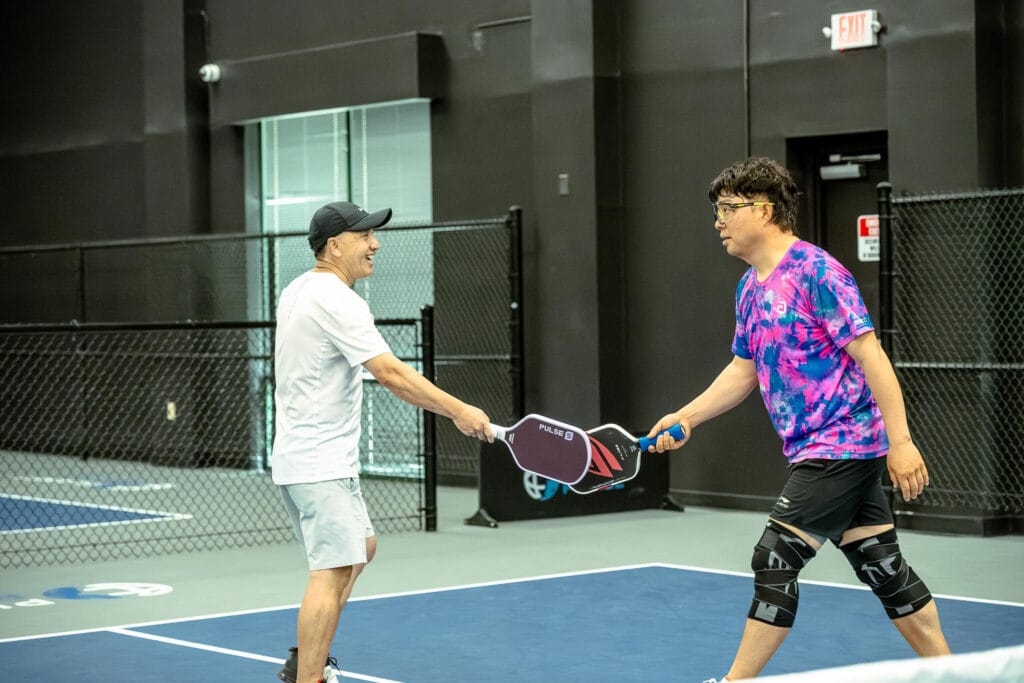
Skill and strategy are important in doubles pickleball, but even talented teams can struggle if communication is inconsistent.
Effective communication helps partners stay organized, avoid confusion, and react more confidently during fast-paced rallies. For this reason, communication-focused partner drills deserve a place in every doubles practice session.
The goal of these exercises is not simply to talk more during points. Instead, players learn how to communicate clearly, efficiently, and at the right moments.
Whether calling a ball, coordinating movement, or signaling intentions before a serve, strong communication creates a smoother and more unified partnership.
Many teams benefit from developing simple call systems and consistent verbal cues. Clear communication reduces hesitation and allows both players to focus on execution rather than wondering who should take the next shot.
How Do Communication Drills Enhance Teamwork In Pickleball Doubles?
One of the biggest advantages of communication drills is that they strengthen trust between partners. When players know what to expect from each other, they can move more confidently and make quicker decisions during a rally.
Partner drills that focus on communication often involve calling every shot, announcing movement, or identifying ball placement before contact.
These exercises help teammates become more aware of each other’s positioning and intentions. Over time, communication becomes more natural and requires less conscious effort.
As partners practice together, they begin to recognize patterns in each other’s play styles. One player may prefer to take shots in the middle, while the other may be more comfortable covering wide angles. Communication helps define these responsibilities and prevents unnecessary overlap.
Strong communication also supports better court coverage. Rather than reacting independently, teammates can coordinate their movements and maintain proper positioning. This allows the pair to function as a single unit instead of two separate players sharing the same side of the court.
Developing Reliable Call Systems
Successful doubles teams often rely on simple and consistent communication systems. The most effective calls are easy to understand and quick to deliver, even during intense rallies.
For example, players may use straightforward commands to indicate who is taking the ball or to alert a partner about a shot heading out of bounds. The exact words are less important than consistency. When both players understand and trust the system, decision-making becomes faster and more efficient.
Hand signals can also be useful, particularly before serves and returns. Many doubles teams use subtle signals to indicate planned strategies without revealing their intentions to opponents. Practicing these signals during partner drills helps ensure they become second nature during competition.
The key is to keep communication simple. Overly complicated systems can create confusion and slow reactions when quick decisions are required.
How To Address Communication Breakdowns During Partner Practice?
Even experienced teams occasionally experience communication lapses. Missed calls, uncertainty over shot responsibility, or inconsistent signals can all lead to errors that might otherwise be avoided.
The best time to address these issues is during practice rather than during competition. When a communication breakdown occurs, partners should briefly discuss what happened and determine how to prevent similar situations in the future. Small adjustments can often resolve recurring problems.
Communication-focused partner drills provide a controlled environment where players can test and refine their systems. By repeating common game situations, teams can identify weak points and develop more effective habits before they face pressure in a match.
Building Long-Term Chemistry Through Practice
Strong doubles teams are built on more than technical ability. Chemistry, trust, and communication play a major role in consistent success. The more time partners spend practicing communication skills, the easier it becomes to anticipate each other’s actions and respond effectively during competition.
Over time, these improvements create a smoother playing experience. Players move together more naturally, make decisions with greater confidence, and recover from difficult situations more effectively.
By incorporating communication-based partner drills into regular training sessions, doubles teams can strengthen their coordination and gain an advantage that extends far beyond individual shot-making ability.
What Are Common Challenges In Pickleball Partner Drills And How To Overcome Them?
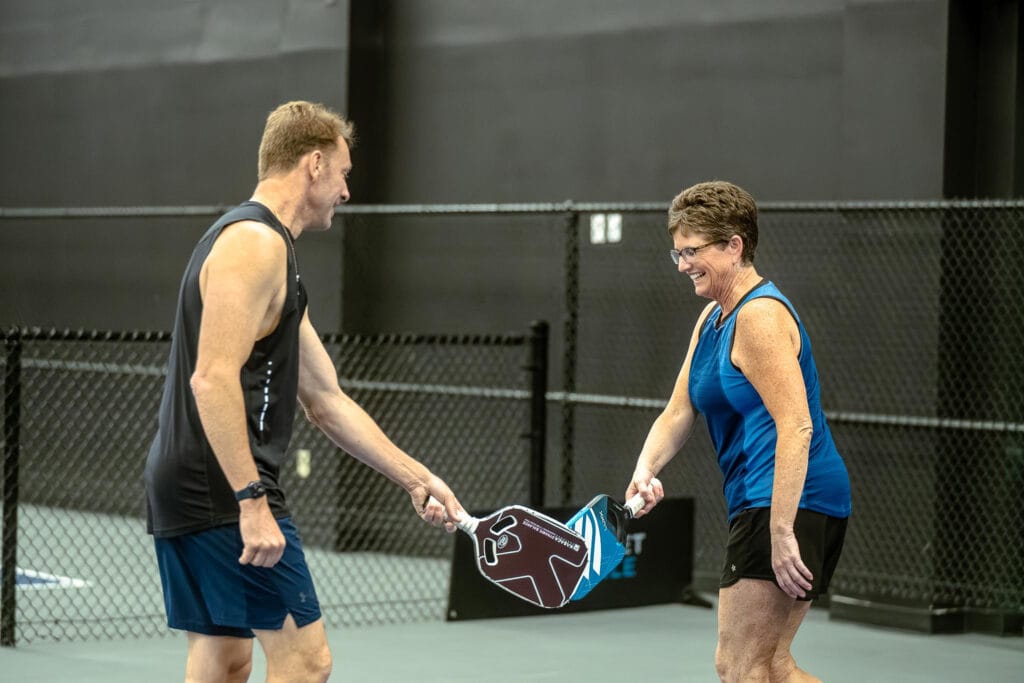
Even the most productive practice sessions can present challenges. While partner drills are one of the best ways to improve doubles performance, they often reveal weaknesses in communication, positioning, timing, and teamwork.
Recognizing these obstacles is an important part of the learning process, as it gives players the opportunity to make adjustments before those issues affect match results.
The good news is that most common problems can be corrected through consistent practice and a willingness to work together. Rather than viewing mistakes as setbacks, successful doubles teams use them as opportunities to strengthen their partnership and improve overall performance.
Managing Communication And Synchronization Issues
One of the most common challenges during partner drills is miscommunication. Uncertainty about who should take a shot or where each player should be positioned can lead to missed opportunities and avoidable errors.
These issues often become more noticeable during faster drills or competitive simulations when players have less time to think. The solution is to establish clear communication habits and practice them consistently.
Calling shots early, communicating movement, and using simple, agreed-upon signals can help reduce confusion and improve decision-making.
Synchronization is equally important. Doubles partners should learn to move together rather than independently. When one player shifts to cover a wide ball, the other should adjust accordingly to maintain balanced court coverage.
Practicing coordinated movement through dedicated partner drills helps develop this awareness and creates stronger on-court chemistry.
Building Consistency Through Repetition
Another challenge many players face is inconsistency. A drill may start well, but performance can decline as fatigue or distractions set in. Inconsistent shot execution often stems from rushing, poor preparation, or a lack of focus on fundamentals.
To overcome this issue, players should prioritize quality over speed. Slowing down a drill initially allows both partners to develop proper mechanics and establish reliable patterns. Once consistency improves, the pace can gradually increase without sacrificing technique.
Setting clear goals for each practice session can also help maintain focus. Whether the objective is improving dinks, serve accuracy, or transition shots, having a specific purpose keeps training productive and measurable.
What Footwork Mistakes Should Partners Avoid?
Footwork problems can undermine even the strongest technical skills. Players who struggle with movement often find themselves reaching for shots, losing balance, or arriving late to the ball.
One common mistake is crossing the feet while moving laterally. Although it may seem faster, this movement can reduce balance and make it harder to change direction quickly. Shuffle steps are generally more effective because they allow players to stay balanced and ready for the next shot.
Another frequent issue is standing too upright. A higher posture limits mobility and slows reaction time. Maintaining a slight bend in the knees and a low center of gravity helps players move more efficiently and stay prepared for quick exchanges.
Partners should also avoid becoming stationary after hitting a shot. Good doubles players are constantly making small adjustments to maintain proper positioning. Practicing movement-focused partner drills reinforces these habits and helps players recover more quickly between shots.
Turning Challenges Into Opportunities For Improvement
Every doubles team encounters obstacles during practice. Communication breakdowns, positioning errors, and footwork mistakes are all part of the development process. What separates improving teams from stagnant ones is their ability to identify problems and address them consistently.
Regular feedback between partners can be extremely valuable. Discussing what worked, what felt uncomfortable, and what needs improvement helps create a collaborative learning environment. These conversations strengthen trust and make future practice sessions more effective.
Ultimately, the purpose of partner drills is not just to improve individual skills but to develop a stronger doubles partnership. By addressing common challenges head-on and practicing with intention, players can build better communication, cleaner movement, and greater confidence.
Over time, these improvements translate into stronger teamwork and more consistent performance when it matters most.
Where Can You Find Additional Resources And Coaching For Pickleball Partner Drills?
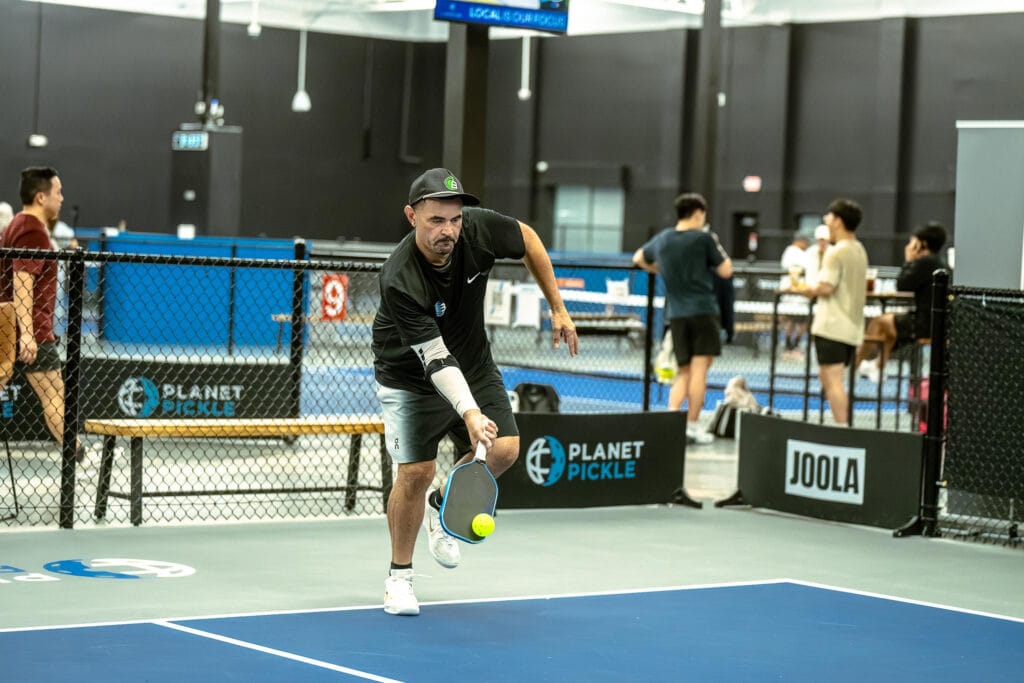
Consistent practice is the foundation of improvement, but additional learning resources can help players refine their technique and accelerate their development.
Whether you’re new to doubles play or looking to sharpen advanced skills, outside instruction can provide fresh perspectives and structured training methods that complement your on-court practice.
From online tutorials to professional coaching, there are many ways to continue improving beyond regular partner sessions. The key is finding resources that align with your current skill level and specific goals.
Which Online Platforms Offer Video Tutorials And Drill Guides?
Online learning has made it easier than ever to access quality pickleball instruction. Many platforms offer detailed video lessons that break down technique, strategy, and practice routines in a way that is easy to follow.
Video tutorials can be especially valuable when learning new partner drills because they allow players to see proper positioning, movement patterns, and shot execution in real time.
Many instructors also provide progressive drill sequences, helping players build skills step by step rather than attempting advanced techniques too soon.
When choosing instructional content, look for resources that focus specifically on doubles play. Since communication, court coverage, and teamwork are critical to success, doubles-focused training often provides more practical value than lessons centered solely on individual skills.
How Often Should Partners Practice To Maximize Skill Gains?
Improvement comes from consistency rather than occasional long practice sessions. For most recreational and competitive players, practicing together two to three times per week provides enough repetition to develop skills while allowing time for recovery and reflection.
Each session should have a clear objective. One day might focus on dinking and kitchen play, while another centers on serves, returns, and transition shots. Rotating practice themes keeps sessions engaging and ensures balanced development across all aspects of the game.
Regular partner drills also help build familiarity between teammates. The more often players practice together, the better they become at reading each other’s movements, anticipating decisions, and responding effectively during competitive matches.
What Metrics Indicate Improvement In Team Communication And Coordination?
While wins and losses provide some feedback, they do not always tell the full story. Measuring specific aspects of performance can offer a clearer picture of how a doubles partnership is progressing.
One useful indicator is the reduction of unforced errors caused by confusion or poor positioning. As communication improves, partners typically experience fewer collisions, fewer missed balls between players, and more confident shot selection.
Another valuable measure is rally consistency. If partners can sustain longer dink exchanges, execute more successful third-shot sequences, or maintain stronger court coverage, it often reflects improved coordination and teamwork.
Observing how efficiently both players move together during rallies can also reveal meaningful progress.
How Can You Measure Progress And Effectiveness Of Partner Drills In Pickleball?
Tracking results over time helps ensure that partner drills are producing meaningful improvements rather than simply becoming routine exercises. Simple performance benchmarks can make progress easier to evaluate.
For example, players can record serve accuracy percentages, count successful dink exchanges, or monitor how many transition shots are completed without error. Comparing these numbers over several weeks provides a clear indication of growth and highlights areas that may need additional attention.
Video recordings can also be extremely helpful. Watching practice footage often reveals habits that players do not notice during live play, such as positioning mistakes, delayed reactions, or communication gaps. Reviewing footage together encourages constructive feedback and helps partners make targeted adjustments.
Continuing To Develop As A Doubles Team
The most successful doubles teams treat improvement as an ongoing process. Regular practice, quality instruction, and thoughtful performance evaluation all contribute to long-term growth.
By combining structured partner drills with educational resources and measurable goals, players can continue developing their skills while strengthening their partnership.
Over time, these efforts lead to better communication, smoother movement, and greater confidence during matches. Whether your goal is recreational enjoyment or competitive success, investing in consistent learning and practice will help you get the most from every session on the court.
Conclusion
Partner drills are one of the most effective ways to improve communication, consistency, court awareness, and teamwork in doubles pickleball.
By practicing with purpose and focusing on specific skills such as dinking, volley control, positioning, and transition play, players can build stronger on-court chemistry and gain a competitive edge during matches.
Consistent practice in a high-quality facility can help players of all skill levels continue developing their game while enjoying the sport with others. For top-tier pickleball courts, instructional programs, leagues, tournaments, and player amenities, choose Planet Pickle.
If you’re ready to take your pickleball game to the next level, call 678-404-5792 to learn more about Planet Pickle or visit our facility for exceptional courts, programs, leagues, and amenities designed for players of all experience levels.