
Consistent practice is one of the fastest ways to improve your pickleball game, but finding a partner isn’t always possible. That’s where a ball machine can make a real difference.
By delivering steady, repeatable shots, it allows you to sharpen specific skills, build muscle memory, and practice at your own pace whenever it fits your schedule.
Practice smart by utilizing pickleball ball machines to create effective solo drills that target footwork, shot placement, reaction time, and consistency.
Modern machines offer adjustable speed, spin, and feed patterns, making it easy to simulate a variety of match situations and gradually increase the challenge as your skills improve.
With a structured training routine and the right drills, a pickleball ball machine can help you maximize every practice session and accelerate your development on the court.
How to Practice Smarter With a Pickleball Ball Machine
What Is a Pickleball Ball Machine and Is It Worth It?
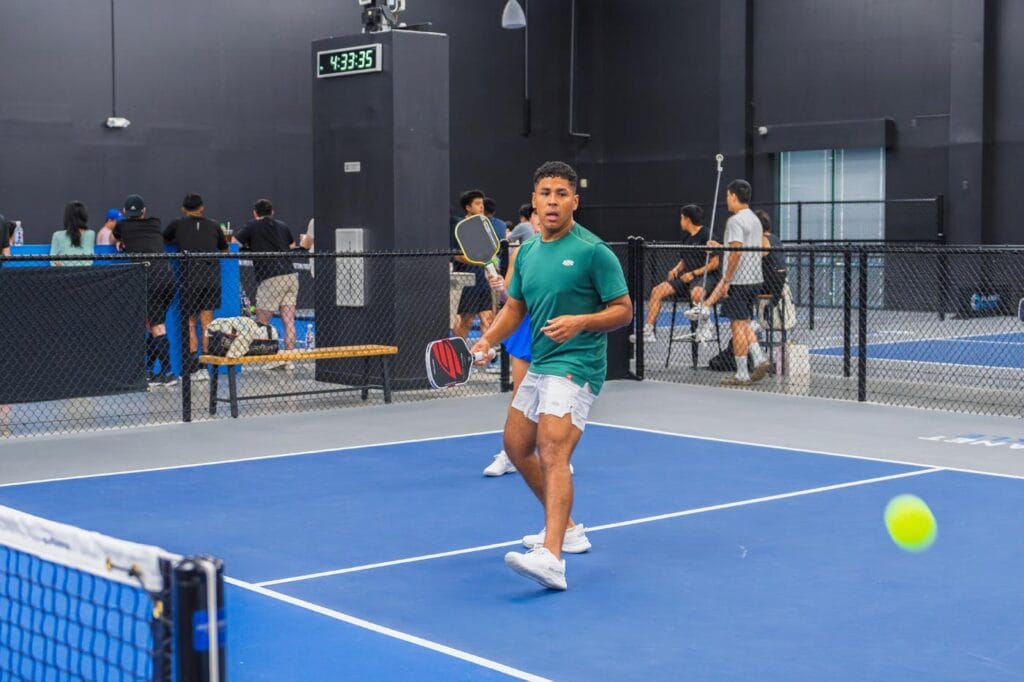
A pickleball ball machine is one of the most effective training tools for players who want to improve without relying on a practice partner. Whether you’re learning the basics or refining advanced shot placement, a machine delivers consistent, repeatable feeds that make every practice session more productive.
Unlike rallying with another player, where every shot is slightly different, a pickleball ball machine can repeatedly send the same ball at the same speed, height, and location. This consistency allows you to focus on one skill at a time, build muscle memory, and track your progress more effectively.
For players with busy schedules, a ball machine also makes solo practice possible, giving you the flexibility to train whenever a court is available.
Why a Pickleball Ball Machine Improves Solo Practice
One of the biggest challenges in pickleball is getting enough quality repetitions. During a casual game, you may only hit a handful of serves, volleys, or third-shot drops before the point ends. A ball machine eliminates that limitation by feeding dozens or even hundreds of identical shots in succession.
This allows you to:
- Develop more consistent stroke mechanics.
- Practice difficult shots without interruption.
- Improve footwork through repetitive movement.
- Build confidence before applying new skills in match play.
- Maximize court time by spending less time collecting balls between rallies.
Because every feed is controlled, you can isolate specific aspects of your game instead of constantly adapting to unpredictable returns.
How Pickleball Ball Machines Work
Most modern machines use a motorized feeding system that launches balls at adjustable speeds, heights, and trajectories. Depending on the model, you can customize nearly every aspect of the drill to match your training goals.
Common adjustments include:
| Feature | Training Benefit |
|---|---|
| Ball speed | Practice everything from soft dink exchanges to fast-paced drives. |
| Ball frequency | Control the pace of each drill to improve rhythm or increase intensity. |
| Spin settings | Train against topspin, backspin, or flat shots to prepare for different opponents. |
| Launch angle | Simulate groundstrokes, volleys, lobs, and overhead opportunities. |
| Oscillation | Randomly distribute shots across the court to improve footwork and court coverage. |
Many advanced pickleball ball machine models also include programmable drills, allowing players to recreate realistic point patterns and game situations.
Features to Look for Before Buying
Not every machine is designed for the same type of player. Before investing in a pickleball ball machine, think about your skill level, training goals, and how often you expect to use it.
Some of the most valuable features include:
Adjustable Speed and Spin
The ability to change both speed and spin creates more realistic practice sessions. Beginners may prefer slower, predictable feeds, while advanced players benefit from practicing against faster balls with varying spin.
Oscillation and Random Ball Placement
Machines with horizontal or vertical oscillation prevent practice from becoming repetitive. Instead of standing in one spot, you’ll move around the court much like you would during a real match, improving balance, recovery, and footwork.
Ball Capacity
A larger hopper means fewer interruptions to reload balls. Players working on endurance or extended drill sessions often prefer machines with higher ball capacities to maximize practice time.
Portability and Battery Life
If you frequently train at public courts, portability matters. Look for a machine with durable wheels, a manageable weight, and a battery that can support several hours of continuous use.
Choosing the Right Machine for Your Training Goals
The best pickleball ball machine isn’t necessarily the one with the most advanced features. It’s the one that supports the type of practice you need.
For example:
- Beginners often benefit most from consistent, slower feeds that build confidence and proper technique.
- Intermediate players may prioritize oscillation and adjustable spin to improve movement and shot variety.
- Competitive players typically look for programmable drills, random shot sequences, and advanced customization to simulate tournament conditions.
Matching the machine to your current ability ensures you’ll continue benefiting from it as your skills develop.
Is a Pickleball Ball Machine a Good Investment?
If you’re serious about improving your game, a pickleball ball machine can dramatically increase the quality of your practice sessions. Instead of waiting for a partner or relying solely on recreational games, you gain complete control over your training environment.
By delivering consistent shots, customizable drills, and realistic match simulations, a pickleball ball machine helps players develop stronger fundamentals, better footwork, and greater confidence on the court.
Whether your goal is mastering the basics or preparing for competitive play, the right machine can become one of the most valuable tools in your training routine.
Pickleball Ball Machine Drills That Improve Every Part of Your Game
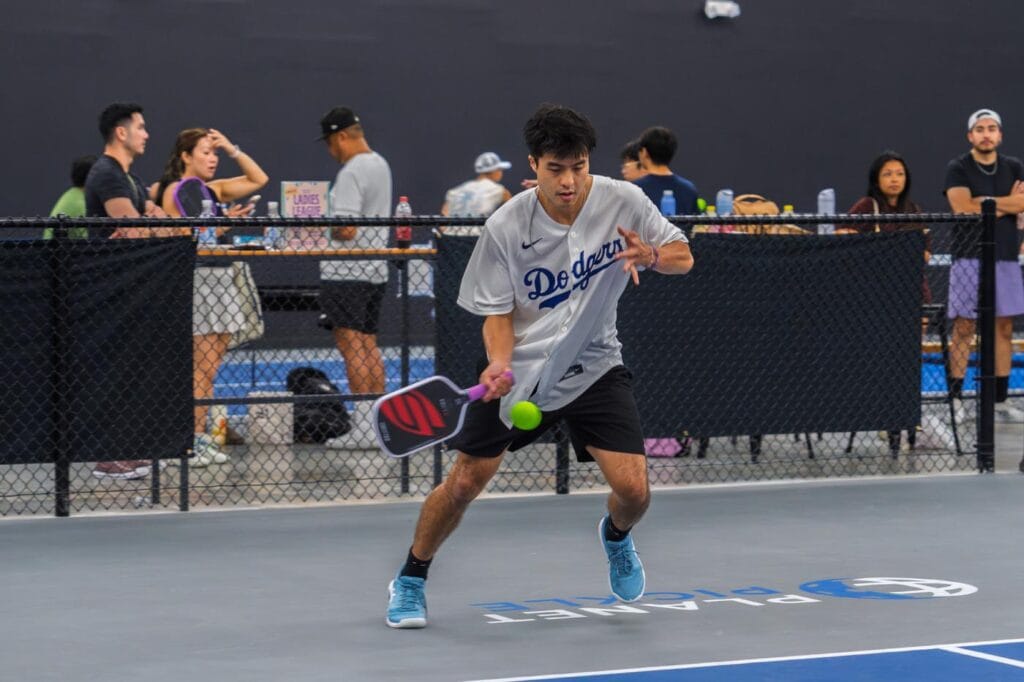
One of the biggest advantages of using a pickleball ball machine is the ability to practice with purpose. Instead of simply hitting balls back and forth, you can build drills around specific skills, repeat them hundreds of times, and gradually increase the level of difficulty as your technique improves.
Because every feed is consistent and customizable, a pickleball ball machine allows you to isolate weaknesses, refine mechanics, and develop confidence in situations that commonly occur during match play.
Whether you’re working on groundstrokes, net play, or movement, structured drills help you get far more out of each practice session.
Build Stronger Groundstrokes With Repetition
Forehand and backhand consistency forms the foundation of every player’s game. A ball machine makes it easy to repeat the same shot until proper technique becomes second nature.
Start by setting the machine to feed balls to one side of the court before progressing to alternating forehand and backhand shots.
Focus on:
- Maintaining balanced footwork.
- Making clean contact in front of your body.
- Recovering quickly after every shot.
- Hitting with consistent depth rather than maximum power.
Once you’re comfortable, increase the feed speed or add side-to-side oscillation to simulate real rallies.
Improve Your Volleys and Net Play
Quick hands are essential at the kitchen line, and repetitive volley drills are one of the best ways to develop faster reactions.
Position yourself near the non-volley zone and configure the pickleball ball machine to deliver medium-speed shots directly in front of you. As your confidence grows, increase the pace or alternate ball placement to challenge your movement.
During volley practice, concentrate on:
- Keeping the paddle out in front.
- Using compact swings.
- Controlling placement rather than hitting hard.
- Recovering to a ready position after every volley.
Regular net drills improve both reaction time and touch, making you more confident during fast exchanges.
Practice Dinks With Better Control
Many recreational players spend too little time practicing dinks, even though they’re one of the most important shots in competitive pickleball.
If your machine allows softer feeds or adjustable launch angles, create a drill that simulates cross-court or straight-on dink exchanges.
Rather than focusing on speed, aim to:
- Keep the ball low over the net.
- Control depth consistently.
- Develop softer hands.
- Alternate forehand and backhand dinks.
This type of deliberate practice helps improve patience and precision during real matches.
Develop Better Footwork With Movement Drills
Good positioning often matters more than perfect technique. A pickleball ball machine with oscillation features can help improve court coverage by forcing you to move before every shot.
Try programming the machine to feed balls across different areas of the court while maintaining proper recovery after each return.
Common footwork drills include:
| Drill | Primary Skill Developed |
|---|---|
| Side-to-side baseline movement | Court coverage and balance |
| Forehand-backhand alternation | Recovery speed and positioning |
| Random oscillation | Reaction time and anticipation |
| Short-to-deep ball sequences | Forward and backward movement |
| Wide-angle shots | Lateral quickness and body control |
These drills build endurance while preparing you for the unpredictable movement required during competitive play.
Use Ball Machines to Improve Serves and Returns
Although a pickleball ball machine doesn’t hit serves for you, it can still help you practice the shots immediately following the serve.
Configure the machine to simulate common return trajectories so you can work on:
- Third-shot drops.
- Third-shot drives.
- Return consistency.
- Transitioning from the baseline toward the kitchen line.
You can also alternate between deep and short feeds to practice decision-making and improve your ability to recognize different shot opportunities.
Create Progressive Practice Sessions
One mistake many players make is practicing the same drill at the same speed every time. To continue improving, gradually increase the challenge as your consistency develops.
A productive session might follow this progression:
- Warm up with controlled forehand and backhand groundstrokes.
- Add side-to-side movement using oscillation.
- Transition to volley drills at the kitchen line.
- Finish with randomized feeds that combine multiple shot types.
This progression closely resembles real match situations while reinforcing proper technique under increasing pressure.
Make Every Practice Session More Productive
A pickleball ball machine is much more than a tool for hitting repetitive shots. When paired with structured drills, it becomes an effective training partner that helps develop consistency, footwork, shot selection, and confidence.
By combining groundstroke practice, volley work, movement drills, and realistic point simulations, a pickleball ball machine allows players of every skill level to train with greater purpose and see measurable improvement every time they step onto the court.
How to Adjust a Pickleball Ball Machine for More Effective Training
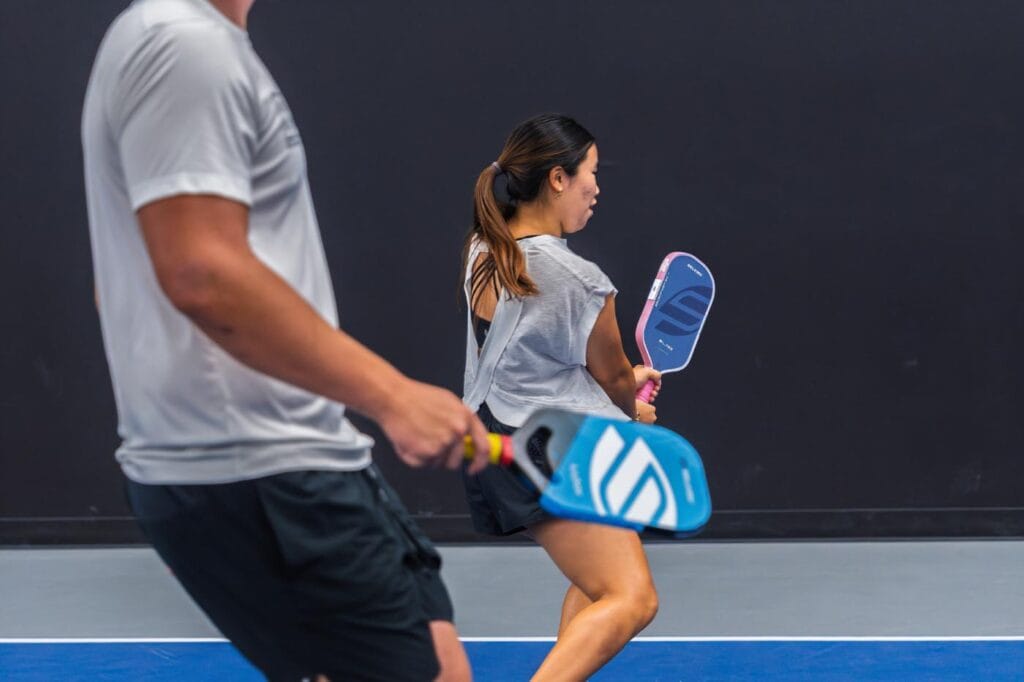
A pickleball ball machine is only as effective as the drills you create with it. While most machines offer a wide range of settings, simply increasing the ball speed isn’t always the best way to improve.
The most productive practice sessions come from adjusting the machine to match your current skill level and the specific technique you’re trying to develop.
By learning how speed, spin, ball frequency, launch angle, and oscillation work together, you can turn every session into purposeful practice instead of repetitive ball hitting.
Start With the Right Speed for Your Skill Level
Speed is often the first setting players adjust, but faster isn’t always better. If the machine feeds balls too quickly, you may reinforce poor mechanics instead of improving your stroke.
As a general rule:
| Skill Level | Recommended Speed |
|---|---|
| Beginner | Slow, predictable feeds that allow time to focus on technique and footwork. |
| Intermediate | Moderate speeds that encourage quicker preparation and recovery. |
| Advanced | Match-like pace that challenges timing, decision-making, and consistency. |
Begin each practice session at a comfortable speed before gradually increasing the difficulty. This progression helps maintain proper form while building confidence under pressure.
Use Spin Settings to Prepare for Real Match Play
One advantage of a modern pickleball ball machine is the ability to practice against different types of spin. Recreational rallies often involve relatively flat shots, but competitive players regularly use topspin, backspin, and varying ball trajectories.
Training with different spin settings helps you:
- Read the flight of the ball more effectively.
- Improve paddle angle at contact.
- Adjust your footwork for different bounce patterns.
- Develop confidence against a wider variety of opponents.
Rather than practicing with the same spin every session, alternate between settings to create more realistic scenarios.
Add Oscillation to Improve Footwork
Practicing stationary shots has its place, but pickleball is a game of movement. Once your stroke mechanics become more consistent, introducing oscillation helps simulate actual points by forcing you to move before every shot.
Most pickleball ball machine models offer horizontal oscillation, while some also include vertical or random shot placement.
Oscillation drills improve:
- Court coverage.
- Recovery after each shot.
- Balance during movement.
- Shot preparation under changing conditions.
Instead of simply reacting to the next feed, you’ll begin developing movement patterns that transfer directly to competitive play.
Match Machine Settings to Your Training Goals
Different drills require different machine settings. Adjusting the machine based on the skill you’re practicing creates far more productive sessions than using the same configuration every time.
| Training Goal | Recommended Machine Settings |
|---|---|
| Groundstroke consistency | Medium speed, minimal oscillation, consistent ball placement. |
| Third-shot drops | Moderate speed with lower launch angles for softer incoming balls. |
| Volleys | Faster ball speed with shorter intervals between feeds. |
| Footwork | Horizontal oscillation with varied shot placement. |
| Defensive drills | Higher speeds and random oscillation to simulate pressure situations. |
Making small adjustments throughout your practice keeps training challenging while preventing it from becoming repetitive.
Increase Difficulty Gradually
Many players make the mistake of immediately choosing the hardest settings available. A better approach is progressive overload, where the difficulty increases as your consistency improves.
For example, you might begin with:
- Slow, stationary feeds.
- Moderate speed with alternating forehand and backhand shots.
- Side-to-side oscillation.
- Random ball placement.
- Faster feeds with varying spin.
This gradual progression allows you to build solid fundamentals before challenging yourself with more demanding drills.
Review and Adjust During Practice
Don’t hesitate to change settings during a session if a drill feels too easy or too difficult. If you’re consistently making clean contact, increase the challenge slightly. If your technique begins to break down, reduce the speed or simplify the drill until proper mechanics return.
A pickleball ball machine should adapt to your development rather than forcing you into one style of practice.
Get More Value From Every Training Session
Learning to adjust your pickleball ball machine correctly can make a dramatic difference in how quickly you improve. By combining appropriate speed, realistic spin, strategic oscillation, and drill-specific settings, you’ll create practice sessions that closely resemble real match situations.
Instead of simply hitting hundreds of balls, you’ll develop better movement, cleaner technique, and greater confidence. Over time, these purposeful adjustments help transform a pickleball ball machine from a convenient practice tool into one of the most effective investments you can make in your game.
Advanced Pickleball Ball Machine Training Techniques for Faster Improvement
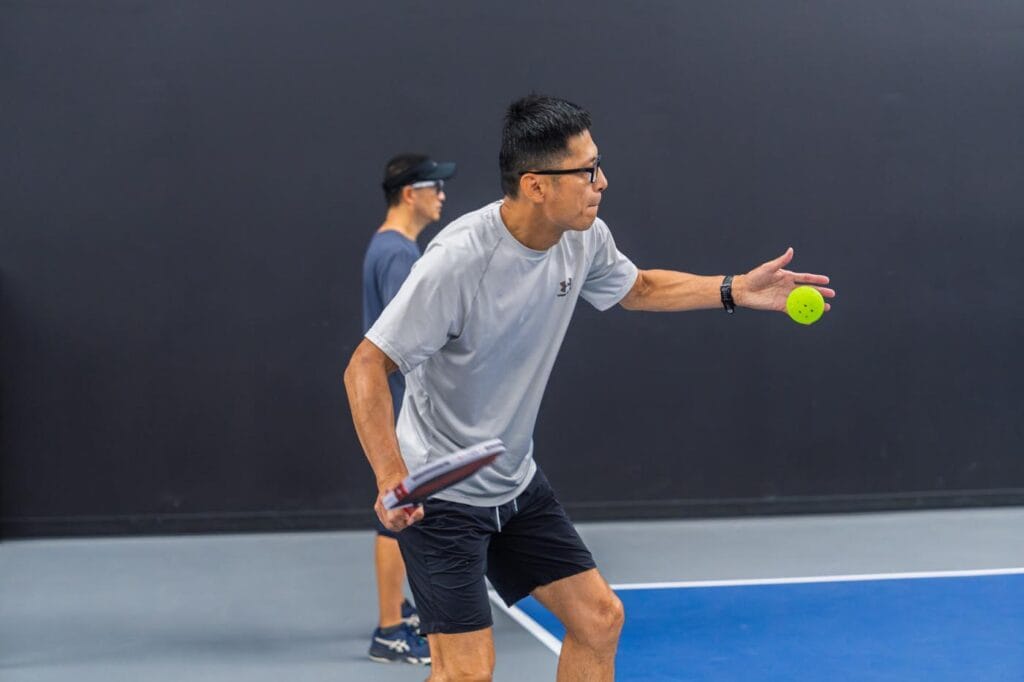
Once you’ve mastered the basics, a pickleball ball machine can do much more than feed repetitive shots. By creating structured practice sessions and gradually increasing the level of difficulty, you can simulate match situations, improve decision-making, and build the consistency needed for competitive play.
Advanced training isn’t about hitting harder or practicing longer. It’s about practicing with intention. Every drill should have a specific objective, whether that’s improving footwork, increasing shot accuracy, or preparing for common point patterns you’ll face in real matches.
Set a Clear Goal Before Every Practice Session
One of the biggest mistakes players make is walking onto the court without a plan. Instead of randomly hitting balls, identify one or two skills you want to improve before turning on your pickleball ball machine.
For example, you might dedicate a session to:
- Improving third-shot drops.
- Increasing forehand consistency.
- Developing quicker reactions at the kitchen line.
- Moving more efficiently between shots.
- Practicing offensive transition play.
Having a clear objective keeps your practice focused and makes it easier to measure improvement over time.
Build Progressive Drills Instead of Repeating the Same Exercise
Improvement happens when drills become progressively more challenging. Rather than practicing one shot repeatedly for an entire session, build drills that evolve as your confidence grows.
A simple progression might look like this:
| Stage | Focus |
|---|---|
| Stage 1 | Stationary forehand and backhand groundstrokes. |
| Stage 2 | Alternate forehand and backhand shots using oscillation. |
| Stage 3 | Add movement by recovering to the center after every shot. |
| Stage 4 | Introduce faster feeds or varied spin. |
| Stage 5 | Finish with randomized ball placement to simulate live points. |
This gradual increase in difficulty helps reinforce proper mechanics while preparing you for unpredictable match situations.
Use Programmable Drills to Simulate Real Play
If your pickleball ball machine includes programmable training modes, take advantage of them. Instead of repeating identical shots, you can create sequences that closely resemble actual rallies.
For example, a programmed drill might include:
- A deep groundstroke to the baseline.
- A shorter ball that requires moving forward.
- A fast volley at the kitchen line.
- A wide shot that forces lateral movement.
These combinations improve court awareness, recovery speed, and shot selection while making practice feel much more like competitive play.
Focus on Quality Instead of Volume
Hitting 500 balls with poor technique is far less valuable than hitting 100 with proper mechanics. As fatigue sets in, it’s easy for footwork and swing fundamentals to break down.
Throughout each session, pay attention to:
- Paddle position before every shot.
- Balanced footwork.
- Controlled follow-through.
- Consistent contact point.
- Quick recovery after each stroke.
If you notice your form slipping, slow the machine down or take a short break before continuing.
Track Your Progress Over Time
One of the biggest advantages of training with a pickleball ball machine is consistency. Because the machine can reproduce identical drills, it’s easy to measure improvement from one session to the next.
Consider recording:
- Successful shots out of every 20 or 50 feeds.
- Number of consecutive volleys completed.
- Accuracy when aiming for specific court targets.
- Ball speed or drill difficulty used.
- Areas that still need improvement.
Tracking performance helps you identify trends and adjust future practice sessions based on measurable results instead of guesswork.
Keep Practice Challenging and Engaging
Even the best drill loses its value if repeated unchanged for weeks. Rotate your practice sessions regularly to continue developing different aspects of your game.
A balanced weekly routine might include:
- Groundstroke consistency.
- Third-shot drops and drives.
- Dinking and touch shots.
- Volley reaction drills.
- Footwork and conditioning.
- Randomized match simulation.
Varying your practice not only prevents boredom but also prepares you for the wide range of situations you’ll encounter during actual matches.
Train Smarter With a Pickleball Ball Machine
A pickleball ball machine becomes significantly more valuable when you move beyond basic repetition and adopt a structured training plan. Setting clear goals, building progressive drills, using programmable features, and tracking your results can accelerate improvement while making every session more efficient.
Whether you’re preparing for tournament play or simply looking to become a more consistent recreational player, a pickleball ball machine provides the flexibility to practice with purpose. Over time, this deliberate approach helps transform individual drills into stronger performance on the court.
How to Maintain a Pickleball Ball Machine for Long-Lasting Performance
A pickleball ball machine is an investment in your training, and like any piece of sports equipment, it performs best when it’s properly maintained. Regular care not only extends the life of the machine but also ensures consistent ball delivery, reliable operation, and fewer interruptions during practice.
Fortunately, maintenance doesn’t require specialized tools or technical expertise. A few simple habits after each session can help prevent common problems and keep your machine operating smoothly for years.
Clean the Machine After Regular Use
Every practice session exposes your pickleball ball machine to dust, dirt, ball residue, and outdoor debris. Over time, these particles can accumulate inside the feeding mechanism or around moving parts, affecting ball consistency and overall performance.
After each use:
- Wipe the exterior with a soft, dry cloth.
- Remove dirt, leaves, or loose debris from the hopper.
- Clean the wheels and feeding area if dirt or ball dust has collected.
- Check that air vents remain free of obstructions.
Avoid spraying water directly onto the machine or using harsh cleaning chemicals that could damage electronic components or protective finishes.
Store Your Machine in the Right Environment
Proper storage plays a major role in protecting your equipment between practice sessions. While many pickleball ball machine models are designed for outdoor use, they shouldn’t be left exposed to the elements for extended periods.
For the best protection:
| Storage Tip | Why It Matters |
|---|---|
| Store indoors whenever possible | Protects electronic components from moisture and temperature extremes. |
| Use a protective cover | Prevents dust buildup during long periods of storage. |
| Keep the machine dry | Reduces the risk of corrosion and electrical damage. |
| Avoid prolonged direct sunlight | Helps preserve plastics, rubber components, and battery life. |
If you frequently transport the machine, secure it properly during travel to prevent unnecessary impacts or vibration.
Inspect Moving Parts Regularly
Routine inspections help identify small issues before they become larger repairs. Every few weeks, or more often with frequent use, take a few minutes to examine the machine.
Check for:
- Loose screws or fasteners.
- Worn or damaged feeding wheels.
- Cracked or broken plastic components.
- Frayed cables or damaged electrical connections.
- Smooth movement of adjustable parts.
Catching wear early helps maintain reliable performance and reduces the likelihood of unexpected breakdowns during practice.
Care for the Battery
Many modern pickleball ball machine models operate on rechargeable batteries, making battery maintenance an important part of long-term ownership.
To maximize battery life:
- Fully charge the battery before extended practice sessions.
- Recharge it according to the manufacturer’s recommendations.
- Avoid storing the battery completely discharged for long periods.
- Keep the battery in a cool, dry environment when not in use.
Proper battery care helps maintain consistent performance and extends the lifespan of the power system.
Troubleshoot Common Performance Issues
If your pickleball ball machine isn’t operating as expected, many problems can be resolved with a few simple checks before assuming a mechanical failure.
| Problem | Possible Solution |
|---|---|
| Balls aren’t feeding correctly | Check for jams, damaged balls, or debris inside the hopper. |
| Ball speed seems inconsistent | Inspect the feeding wheels and confirm the speed settings haven’t changed. |
| Machine won’t power on | Verify the battery is charged or check the power connection. |
| Ball placement is inaccurate | Confirm oscillation and launch angle settings are properly adjusted. |
| Unusual noises during operation | Stop using the machine and inspect for loose components or foreign objects. |
If basic troubleshooting doesn’t resolve the issue, consult the manufacturer’s maintenance guide or contact customer support before attempting major repairs.
Use Quality Pickleballs
One often-overlooked aspect of maintenance is the condition of the balls themselves. Cracked, warped, or heavily worn pickleballs can affect feeding consistency and place unnecessary strain on the machine’s internal mechanisms.
Inspect your practice balls regularly and replace damaged ones as needed. Using clean, high-quality pickleballs helps maintain more consistent performance while reducing wear on the feeding system.
Protect Your Investment With Routine Maintenance
A pickleball ball machine is designed to provide thousands of quality practice shots, but consistent performance depends on regular care. Cleaning the machine after use, storing it properly, inspecting moving parts, maintaining the battery, and addressing small issues early can significantly extend its lifespan.
With a simple maintenance routine, your pickleball ball machine will continue delivering reliable, consistent practice sessions, allowing you to focus on improving your skills instead of dealing with preventable equipment problems.
The Best Pickleball Training Aids to Use With a Pickleball Ball Machine
A pickleball ball machine is one of the most effective tools for solo practice, but combining it with a few well-chosen training aids can make each session even more productive. Accessories that improve footwork, shot placement, and consistency help create more realistic drills while allowing you to measure progress over time.
Rather than relying on endless repetition alone, adding complementary equipment introduces clear objectives into every practice session.
Whether you’re a beginner developing fundamentals or a competitive player refining advanced techniques, the right training aids can help you get more value from every ball the machine feeds.
Use Target Markers to Improve Shot Accuracy
One of the easiest ways to make practice more intentional is by placing visual targets around the court. Instead of simply returning every ball, you’ll have a specific landing area to aim for.
Target markers can be positioned to practice:
- Deep baseline shots.
- Cross-court dinks.
- Third-shot drops.
- Passing shots.
- Wide-angle groundstrokes.
As you become more consistent, reduce the size of your target area or alternate between multiple targets to improve precision and decision-making.
Add Cones for Footwork and Movement Drills
Good pickleball isn’t just about hitting quality shots. Reaching the ball efficiently is equally important. Training cones provide visual reference points that encourage proper movement and recovery between shots.
Common cone drills include:
| Training Aid | Skill Developed |
|---|---|
| Cones | Footwork, recovery, and court positioning. |
| Target markers | Shot placement and consistency. |
| Agility ladder | Speed, balance, and coordination. |
| Resistance bands | Strength and movement preparation during warm-ups. |
When paired with a pickleball ball machine using oscillation mode, these drills closely simulate the movement patterns required during real matches.
Choose a Paddle That Matches Your Training Goals
Your paddle plays a major role in how productive your practice sessions will be. While a ball machine provides consistency, the right paddle allows you to develop the type of shots you intend to use during competition.
When selecting a paddle, consider:
- Beginners: Lightweight paddles with larger sweet spots that promote control and confidence.
- Intermediate players: Balanced paddles that offer a combination of power and touch.
- Advanced players: Models designed for greater spin potential, precision, and faster hands at the net.
Practicing with the same paddle you use during matches creates consistency between training and competition.
Incorporate Agility and Conditioning Into Practice
A pickleball ball machine naturally improves repetition, but adding conditioning tools creates more complete workouts that develop athletic movement alongside shot execution.
For example, you can:
- Perform ladder drills before hitting each sequence.
- Sprint to designated cone markers between feeds.
- Practice split-step timing before every shot.
- Combine footwork exercises with volley drills.
This type of integrated training improves endurance, reaction time, and balance while making practice sessions more dynamic.
Track Performance With Structured Drills
One advantage of combining training aids with a pickleball ball machine is the ability to measure improvement objectively.
Instead of simply counting how many balls you hit, record metrics such as:
- Shots landing inside designated targets.
- Successful third-shot drops.
- Consecutive volleys completed.
- Time needed to complete movement drills.
- Accuracy from different court positions.
Tracking these benchmarks helps identify strengths, reveal areas for improvement, and provide motivation as your consistency increases.
Create Match-Like Practice Sessions
The most effective training combines multiple skills into realistic scenarios. Rather than spending an entire session on one drill, build sequences that challenge movement, accuracy, and decision-making.
For example:
- Move through an agility ladder.
- Recover to the baseline.
- Return a deep feed from the pickleball ball machine.
- Advance to the kitchen line.
- Finish with a controlled volley into a target zone.
This type of progression mirrors actual points much more closely than isolated repetition and helps prepare you for competitive play.
Build a Complete Training System
A pickleball ball machine provides the foundation for consistent solo practice, but combining it with thoughtfully chosen training aids creates a more complete development program.
Target markers improve accuracy, cones sharpen footwork, agility equipment enhances movement, and the right paddle reinforces proper technique.
Together, these tools transform ordinary practice sessions into structured, goal-oriented training. By building a complete system around your pickleball ball machine, you’ll improve not only your shot consistency but also the movement, precision, and confidence needed to perform at a higher level during matches.
Pickleball Ball Machine FAQs for Better Solo Training
A pickleball ball machine is one of the most effective training tools for players who want to practice consistently without relying on a partner.
Whether you’re purchasing your first machine or trying to get more from your current one, it’s natural to have questions about how often to train, what drills to use, and how to fit it into your overall development plan.
Below are answers to some of the most common questions players ask about using a pickleball ball machine effectively.
How Often Should You Practice With a Pickleball Ball Machine?
Consistency matters more than marathon practice sessions. For most recreational players, using a pickleball ball machine two to four times per week provides enough repetition to improve technique without leading to fatigue or burnout.
A typical 45 to 60-minute session can include:
- A short dynamic warm-up.
- Groundstroke drills.
- Volley or dink practice.
- Footwork exercises.
- Serve or return-focused drills.
- A brief cooldown and performance review.
If you’re preparing for tournaments or competitive league play, you may choose to increase training frequency while varying the intensity to avoid overuse injuries.
Can You Practice Doubles Skills With a Ball Machine?
Although a pickleball ball machine is designed primarily for solo practice, it can still help you develop many of the skills needed for doubles.
For example, you can practice:
- Third-shot drops from the baseline.
- Transition shots while moving toward the kitchen.
- Soft dinks into designated target zones.
- Quick volley exchanges at the non-volley line.
- Defensive blocks against faster feeds.
Many machines also include oscillation settings that force you to move laterally, closely replicating the positioning and recovery required during doubles matches.
While no machine can fully recreate the decision-making involved in live play, it allows you to build the muscle memory and consistency that translate directly to competitive games.
What’s the Best Way to Add a Ball Machine to Your Training Routine?
The most effective practice sessions have a clear objective rather than simply hitting hundreds of balls.
A simple structure might look like this:
- Warm up with slower feeds to establish timing.
- Practice one technical skill, such as forehand consistency or backhand control.
- Increase difficulty by adjusting speed, spin, or oscillation.
- Finish with match-style drills that combine movement, shot selection, and recovery.
- Track your results so you can measure improvement over time.
Using your pickleball ball machine with a purpose helps each session build on the previous one instead of becoming repetitive.
Can Beginners Benefit From a Pickleball Ball Machine?
Absolutely. Beginners often improve quickly because the machine delivers consistent feeds that remove the unpredictability of practicing with another player.
Start with slower ball speeds and minimal spin while focusing on:
- Proper swing mechanics.
- Footwork fundamentals.
- Contact point.
- Paddle positioning.
- Basic shot placement.
As confidence grows, gradually introduce faster speeds and more challenging shot patterns.
How Long Does It Take to See Improvement?
Results depend on practice quality and consistency, but many players notice better timing, cleaner contact, and increased confidence after just a few weeks of structured training.
The biggest improvements usually come when players focus on one or two specific skills during each practice session instead of trying to work on everything at once.
Is a Pickleball Ball Machine Worth the Investment?
For players who enjoy practicing independently, a pickleball ball machine can be one of the most valuable training investments available. It provides thousands of consistent repetitions that would be difficult to achieve with occasional recreational play alone.
Beyond convenience, it allows you to customize every practice session by adjusting speed, spin, trajectory, and ball placement to match your current skill level and long-term goals.
Whether you’re learning the fundamentals, preparing for tournament play, or simply looking to become a more confident player, incorporating a pickleball ball machine into your training routine offers a flexible and efficient way to accelerate improvement.
Conclusion
Pickleball ball machines are an excellent tool for building consistency, improving shot accuracy, and developing confidence through focused solo practice.
By incorporating structured drills into your training routine, you can refine your technique, strengthen your footwork, and prepare more effectively for competitive play.
Pairing dedicated practice with access to quality courts and a vibrant pickleball community can help accelerate your progress and make every session more rewarding. For premier pickleball courts, instructional programs, leagues, tournaments, and player amenities, choose Planet Pickle.
If you’re ready to take your game to the next level, call 678-404-5792 to learn more about Planet Pickle or visit us for exceptional courts, programs, leagues, and amenities designed for players of all skill levels.