
Pickleball’s explosive growth has brought not only fun and community but also a rise in common, preventable injuries that can sideline players for weeks. From shoulder strains and pickleball elbow to ankle sprains and knee issues, understanding how these injuries occur is the first step to playing safely and enjoying the game long-term. In this guide, we’ll explore the top pickleball injuries, their causes, and practical strategies—like proper warm-ups, strength training, and smart on-court movement—to help you stay active, healthy, and on the court where you belong.
Top Pickleball Injuries That Catch Players Off Guard
The Top Pickleball Injuries And Why They Happen
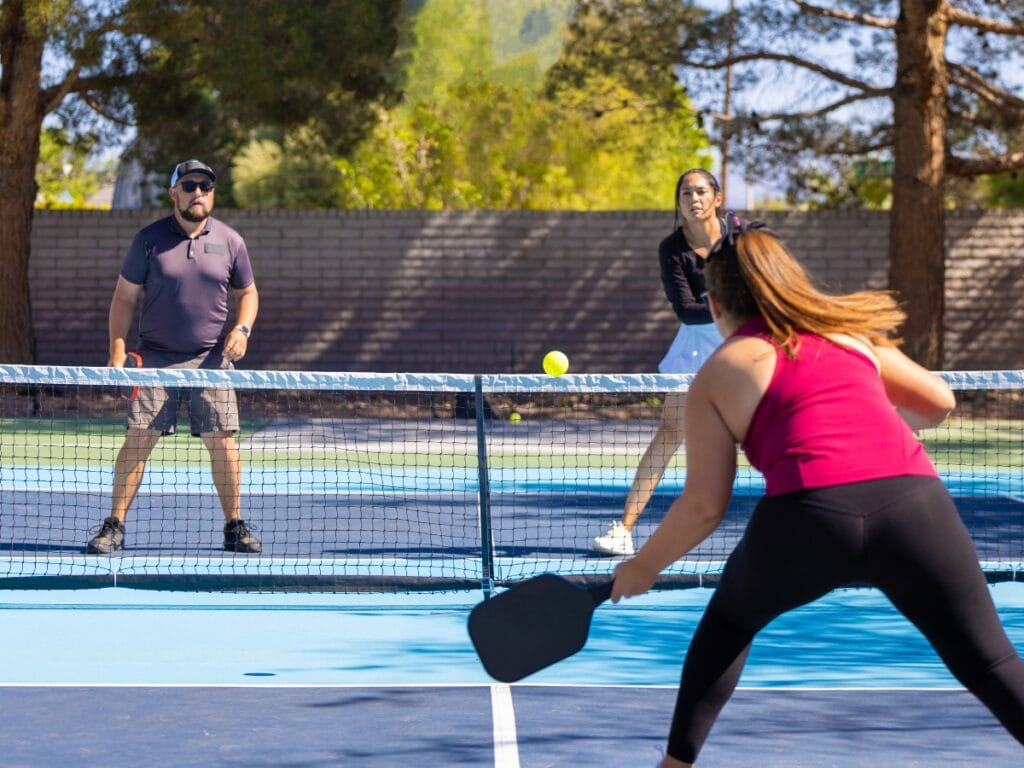
As the sport grows, the top pickleball injuries tend to follow the same pattern: a mix of sudden, acute problems and slower, building overuse issues. Quick lateral movements, repeated swings, and last-second reaches put stress on joints, tendons, and soft tissue. Most problems start with rapid direction changes, awkward landings, or the constant load that travels through the wrist, elbow, and shoulder during volleys and serves.
Symptoms can show up as sharp pain after a single incident or as gradual stiffness, weakness, and aching that builds over several weeks of play. Understanding these patterns helps you focus on simple changes such as better footwear, smarter warm-ups, and small technique adjustments. When you know how the top pickleball injuries usually start, it becomes easier to protect yourself before pain forces you off the court.
Which Injuries Affect Pickleball Players Most Often?
For many recreational players, the most common complaints involve the elbow, ankles, shoulders, Achilles tendon, and wrists. One of the top pickleball injuries is lateral epicondylitis, often called pickleball elbow, which affects the outside of the elbow after repeated backhands or tense grip pressure. Players feel tenderness on the outer elbow, reduced grip strength, and pain when lifting or swinging the paddle.
Ankle sprains are also frequent, especially when players push off hard for wide balls or land on an unstable foot after a quick pivot. Pain, swelling, and a feeling of giving way can follow a single misstep. Rotator cuff strains tend to show up after overhead serves and smashes, with pain when lifting the arm and difficulty sleeping on the affected side.
Achilles tendinitis usually develops in players who sprint or lunge repeatedly without enough calf strength or mobility. It feels like a burning or stiffness at the back of the heel, often worse first thing in the morning or at the start of play. Wrist fractures are a less common but serious problem that often occurs when players fall forward and reach out a hand to break the fall. Together, these patterns show why planning for joint support, balance, and strength is essential for regular play.
What Causes These Common Pickleball Injuries?
Most of these injuries have two sets of causes: mechanical and situational. On the mechanical side, fast lateral moves can overload ankle ligaments, especially when the foot lands at an awkward angle. Repeated forehand and backhand swings stress the extensor tendons at the elbow, particularly when grip size or grip tension is off. Poor overhead mechanics put extra strain on the rotator cuff, especially if players muscle the ball with the arm instead of using the legs and core. Sudden accelerations with tight calves place more load on the Achilles tendon, while an unsteady base or loss of balance during a reach can send a player to the ground and increase the risk of a wrist injury.
Situational factors make these mechanical risks more likely. Common examples include wearing running shoes that are not designed for lateral support, skipping a proper warm-up, jumping from occasional play to several long sessions per week, and playing through early warning signs such as mild pain or stiffness. Age-related changes in balance, past injuries, and general deconditioning also raise the odds that a small mistake becomes a larger problem.
Matching each cause to a specific prevention step is where players get the most benefit. Court shoes with good side support, a short dynamic warm-up that includes light shuffles and arm circles, gradual increases in weekly playing time, and simple strength work for the shoulders, forearms, and calves all help reduce risk. When you view the top pickleball injuries through this lens, they become less random and more manageable, giving you a clear plan to stay healthy and keep improving your game.
How Warm-Ups and Stretching Lower Pickleball Injury Risk
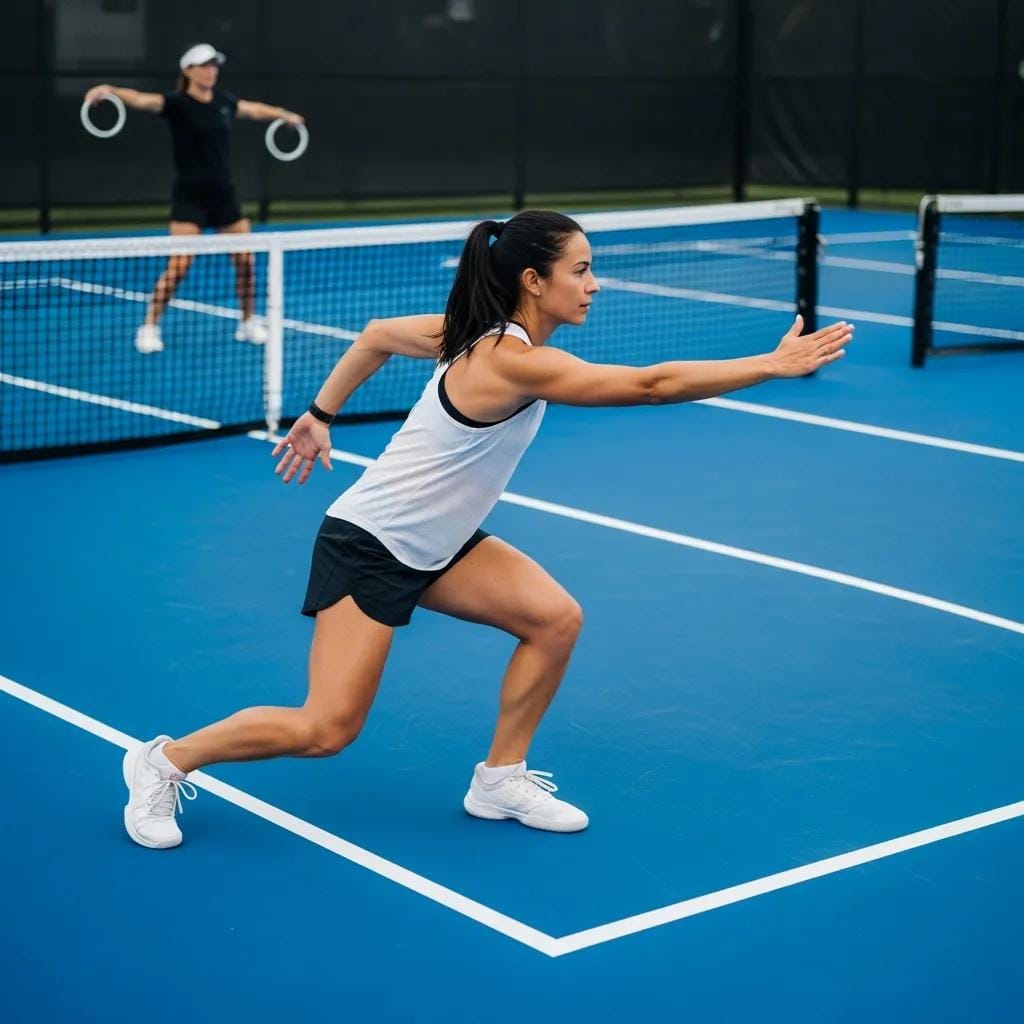
Warm-ups and stretching are one of the easiest ways to reduce the top pickleball injuries that come from quick starts, sudden stops, and repeated swings. A good warm-up blends light movement with simple mobility drills so muscles are warmer, joints glide more easily, and your nervous system is ready for quick reactions. Physiologically, you get better blood flow, improved balance and body awareness, and smoother muscle activation, which lowers the chances of strains, sprains, and awkward falls.
For most players, a 6-8 minute dynamic routine before play is enough to sharpen reaction time and reduce the risk of the top pickleball injuries without leaving you tired before the first serve. Dynamic work is more effective than long static holds before games, because it prepares the same patterns you will use on court. A short cooldown afterward, with slower breathing and longer holds, supports tendon and joint health and helps your body recover between playing days.
What Are Effective Warm-Up Routines For Pickleball Players?
An effective pre-game routine starts with light cardio and then moves into motions that look and feel like real points. Begin with about 2 minutes of easy movement, such as a relaxed jog, marching in place, or light skipping, just to raise your heart rate and warm your legs. Follow that with roughly 1 minute of controlled lateral shuffles to wake up hips, knees, and ankles for side-to-side coverage.
Next, spend about a minute on arm circles in both directions and simple band pulls or light resistance work to activate the shoulder and upper back muscles that stabilize your paddle arm. After that, add 2 minutes of court-specific actions: short forward and backward sprints, recovery steps, and a few low volleys or gentle groundstrokes with your paddle to connect the warm-up to real shot patterns. Finish with 30 to 60 seconds of quick reaction work, such as responding to a partner’s ball drops or random directional calls, so your feet and eyes are tuned in before the first rally.
This sequence progresses smoothly from general to specific, raises your temperature without fatigue, and prepares the exact movements that drive performance and help prevent injuries.
Which Stretching Techniques Help Seniors And Beginners Avoid Injuries?
For seniors and newer players, the goal is a comfortable range of motion and balance, not extreme flexibility. Gentle mobility and stretching done regularly are more useful than long, aggressive sessions done once in a while. Before play, keep stretches light and active: slow ankle circles, easy leg swings within a pain-free range, and controlled shoulder rolls can all help joints feel ready without over-stressing tissues.
After play, shift to slower, longer holds. Seated hamstring and calf stretches held for 20-30 seconds at a time, cross-body shoulder stretches, and gentle chest-opening positions can ease tightness from serving and volleying. Short balance drills, such as supported single-leg stands that gradually progress to less support, build the stability that helps prevent falls and awkward landings. Aim to add this type of work two or three times a week, so gains are steady.
Coaches and players should watch for warning signs like sharp pain, numbness, or lingering soreness and avoid bouncing or forcing joints beyond their current range. When warm-ups, cooldowns, and simple mobility are built into your routine, you protect joints and tendons, move more confidently on court, and give yourself a better chance to enjoy pickleball with fewer interruptions from preventable injuries.
Which Strengthening Exercises Cut Your Pickleball Injury Risk?
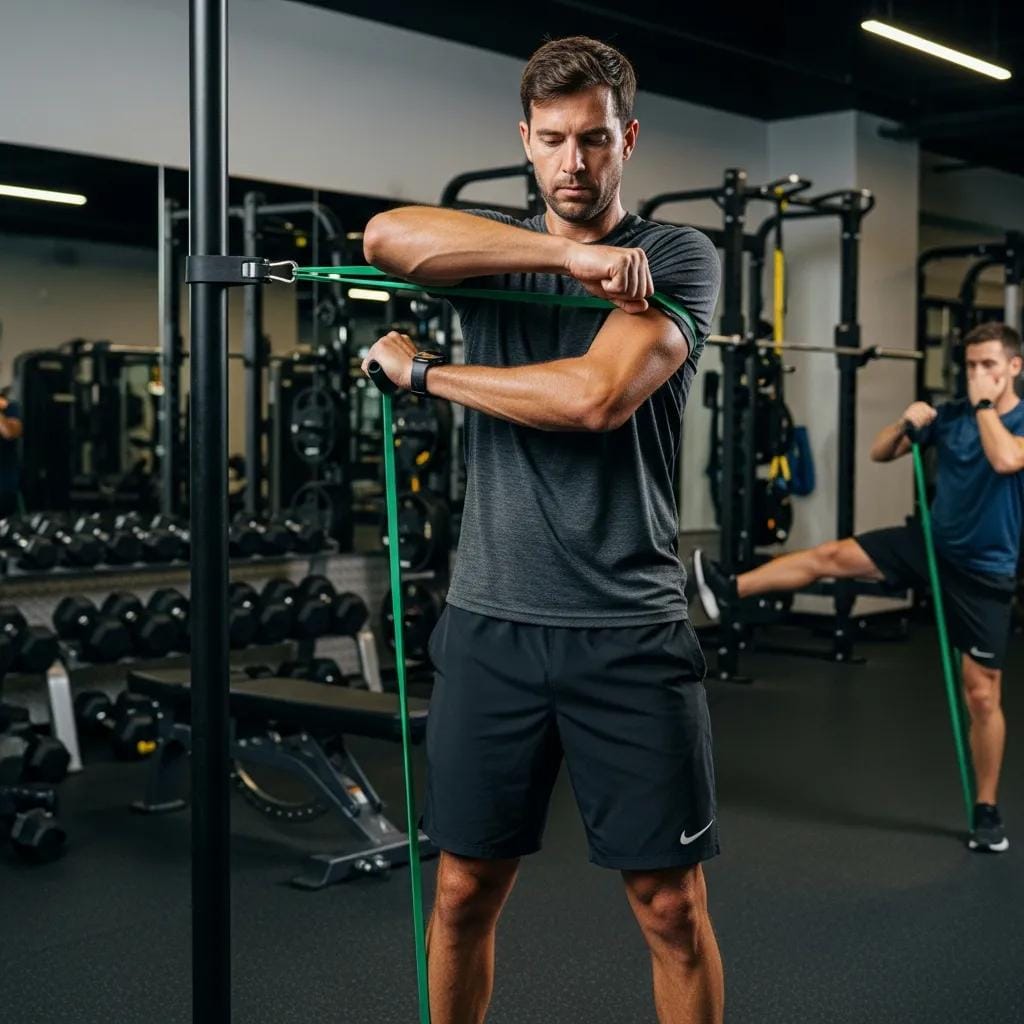
Targeted strength training is one of the most reliable ways to prevent the top pickleball injuries that come from quick lateral moves, sudden stops, and repetitive swings. When you build strength in the rotator cuff, shoulders, core, hips, and ankles, you give your joints more stability and your tendons better support. That means less stress on vulnerable areas during serves, overheads, and scramble points. A simple, consistent routine that starts with low resistance and gradually progresses over time can noticeably reduce overuse problems and cut the risk of acute sprains and strains.
Which Strengthening Exercises Cut Your Pickleball Injury Risk?
Shoulder and upper back strength are especially important for avoiding many of the top pickleball injuries. The small muscles of the rotator cuff and the scapular stabilizers help keep the shoulder centered and controlled when you swing, serve, or reach for a high ball. When these muscles are weak, more load shifts to the tendons and joint structures, which increases the chance of irritation or strain.
Band external rotations, for example, target the infraspinatus and teres minor, which are key for keeping the shoulder stable during backhands and overheads. Prone Y and T raises build control around the shoulder blade, which improves posture and stroke mechanics. Slow, controlled overhead pressing with light resistance trains the shoulder to handle deceleration, not just power. Start with 2 to 3 sets of 10 to 15 repetitions, focusing on smooth movement and a full, pain-free range of motion before you increase resistance or speed.
These upper-body exercises work best when they are part of a broader program that also trains balance and lower-body strength. The goal is to create a system where the shoulder is not forced to compensate for weak hips, glutes, or ankles during hard changes of direction.
Below is a simple guide to key exercises, the muscles they target, and a practical starting volume.
| Exercise | Target Muscle(s) | Recommended Sets/Reps |
|---|---|---|
| Band external rotation | Rotator cuff (infraspinatus, teres minor) | 2–3 sets of 10–15 reps |
| Prone Y/T raises | Scapular stabilizers | 2 sets of 10–12 reps |
| Single-leg RDL | Hamstrings, glutes, ankle stabilizers | 2–3 sets of 8–12 reps per leg |
| Lateral band walks | Hip abductors (glute medius) | 2 sets of 15–20 steps each way |
| Heel raises (eccentric) | Calf and Achilles tendon | 3 sets of 12–15 reps |
Use this table as a starting framework and progress gradually as your control and comfort improve.
Which Core And Lower-Body Workouts Improve Stability And Prevent Falls?
Core and lower-body strength directly influence how safely you move on court. Strong hips and legs help you push off, stop, and change direction without relying on awkward trunk twists or off-balance lunges that stress the ankles and knees. A stable core keeps your upper body stacked over your base, which protects the shoulder and elbow from taking on forces they were not meant to handle.
Simple exercises go a long way when they are performed consistently. Single-leg balance holds teach your feet, ankles, and hips to coordinate under load. As that becomes easy, you can progress to brief eyes-closed holds or add light upper body movement to challenge control. Glute bridges and hip-hinge drills train the larger posterior chain muscles that power your movement and help you recover quickly after a shot. Controlled single-leg Romanian deadlifts blend balance with strength and closely mimic the demands of reaching for wide balls while staying stable.
Aim for 2 to 3 strength sessions per week, leaving at least a day between them for recovery. Focus on smooth, controlled repetitions rather than rushing through sets, and stop if you feel sharp pain or joint discomfort. Over time, this kind of balanced strength routine can reduce missteps, help you recover from wide balls more safely, and cut down on the strains and sprains that frequently sideline players.
When shoulder, core, and lower-body training all work together, you build a more resilient body that is better prepared for the pace and demands of pickleball. That preparation is one of the most effective ways to lower your risk of the top pickleball injuries and stay on court longer with more confidence.
How The Right Pickleball Equipment Improves Safety
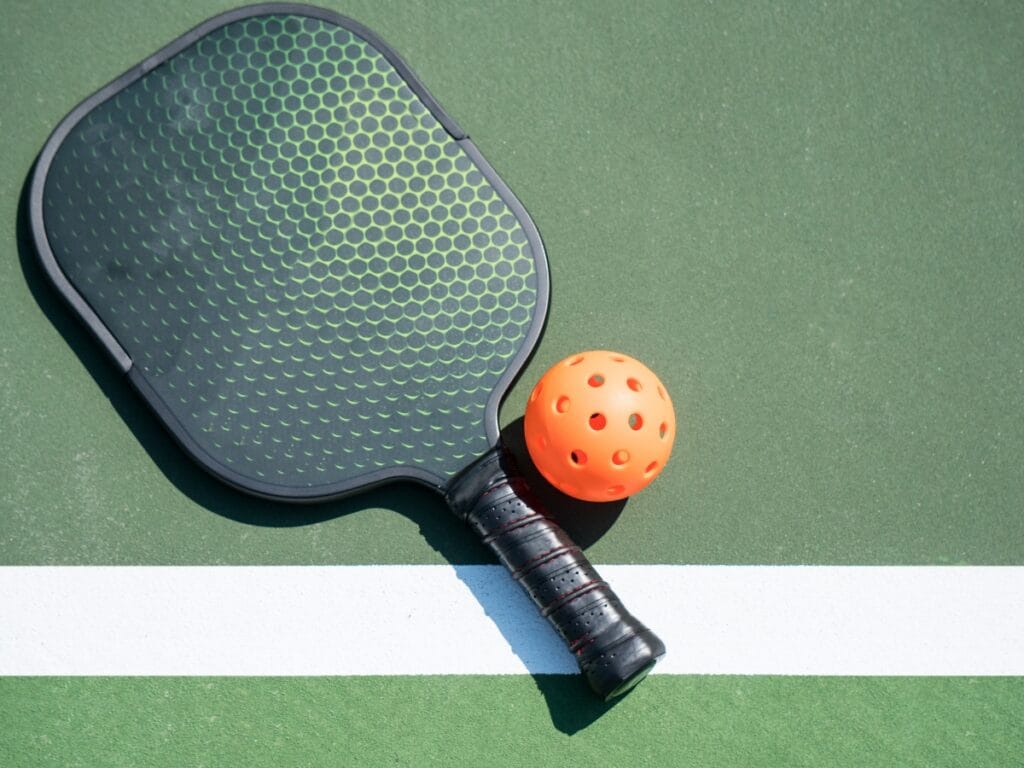
The gear you use in pickleball does more than affect power and spin. It changes how force moves through your body, how stable you feel on the court, and how likely you are to slip or overreach. Shoes, paddle grip size, and even how well your equipment matches the court surface all influence your risk for some of the top pickleball injuries.
Supportive court shoes help control lateral movement and protect your ankles during quick changes of direction. The right paddle grip size can limit unnecessary torque at the wrist and elbow, which is critical if you want to avoid overuse problems that build up over time. When your equipment fits your body and the way you move, it becomes easier to maintain good mechanics, stay balanced, and play longer without nagging pain.
Paying attention to fit, wear, and comfort is a simple way to lower your risk for several of the top pickleball injuries before they start. If your shoes are breaking down or your grip feels awkward, treat that as useful feedback rather than something to push through. Replacing or adjusting gear early usually costs less than dealing with an injury later.
What Are The Best Court Shoes To Prevent Falls And Ankle Injuries?
Good pickleball shoes are built for side-to-side work, not just straight-line running. Look for models with solid lateral support, a stable midsole, and a non-marking outsole that grips the court without feeling sticky. Reinforced side panels help keep your foot from rolling when you plant and push off. A lower, stable platform lets you change direction quickly while staying connected to the court instead of teetering on soft cushioning.
Fit is just as important as features. When you try shoes on, move the way you actually play. Shuffle laterally, take a few short sprints, and practice quick stops. Your heel should stay locked in with very little lift, and you want about a thumb’s width of space at the front of the shoe so your toes do not jam on hard decelerations. If you feel your foot sliding inside the shoe, that slight movement can become a rolled ankle or sore knee after a long session.
Shoes do not last forever, even if the upper still looks fine. Once the tread is worn or the midsole feels flat, stability drops, and your risk climbs. Many players only notice this when ankle or knee discomfort appears, so it is worth checking the sole and cushioning regularly and replacing shoes before they reach that point.
How Can Proper Paddle Grip And Gear Reduce Overuse Injuries?
Upper limb issues, especially elbow and wrist pain, are among the top pickleball injuries for frequent players. Paddle grip size, grip condition, and how the paddle transmits vibration all influence how much stress travels through your forearm with every shot. A grip that is too small forces you to squeeze harder and use more wrist motion, which increases load on the tendons. A grip that is too large makes it harder to control fine movements and can also fatigue the forearm.
A simple way to check size is to hold the paddle in your usual playing grip and place the index finger of your other hand between your fingertips and palm. If there is no space at all, the grip is likely too small. If there is a large gap, it is probably too big. Aim for a size that lets you maintain relaxed control with minimal extra tension. Overgrips can fine-tune the fit and add a bit of vibration damping if you are sensitive to sting on hard hits.
Grip condition matters as well. As grips wear down, they become slick and compressed, which encourages you to squeeze harder and subtly alters your stroke path. That added tension can contribute to the same kind of tendon irritation seen in other racquet sports. Replacing grips at regular intervals keeps the paddle secure in your hand, supports cleaner mechanics, and works alongside proper shoes and smart training habits to reduce your risk of the top pickleball injuries over the long term.
How Proper Pickleball Technique Keeps You Safer
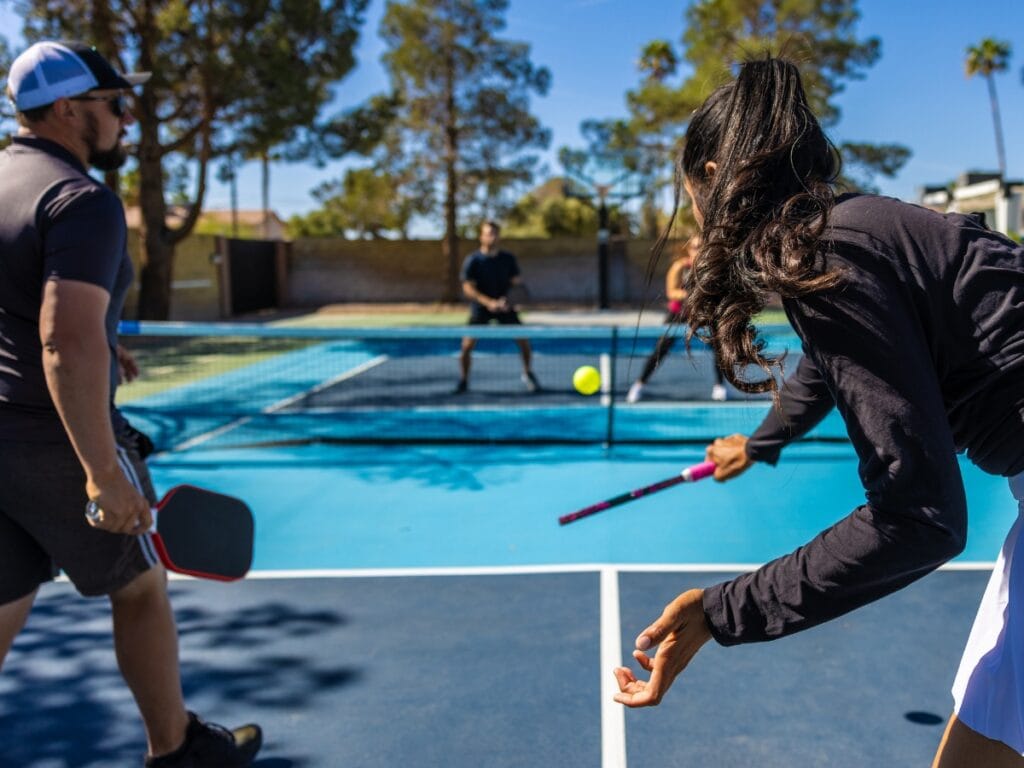
Playing with solid fundamentals is one of the easiest ways to avoid many of the top pickleball injuries that sideline new and experienced players. When your movement, stroke mechanics, and practice schedule are intentional, you place less strain on vulnerable joints and tendons and stay in better balance during fast exchanges. Technique will not remove all risk, but it can significantly lower the chances of elbow pain, shoulder strain, and ankle sprains that show up most often in lists of top pickleball injuries.
How Proper Pickleball Technique Keeps You Safer
Small technique adjustments add up to a big difference in how your body handles the demands of the game. Using a consistent split step before your opponent hits keeps you light on your feet and ready to move in any direction, rather than reacting from a static stance. A neutral wrist at contact limits excessive bend through the forearm, which is a key factor behind recurring elbow and wrist pain.
Good technique also improves how power flows through your body. When you learn to rotate from the hips and core instead of arming every shot, larger muscle groups share the load and single joints are less likely to be overloaded. Clear coaching cues that focus on paddle face control, balanced posture, and safe reaching mechanics help you repeat efficient patterns instead of reinforcing stressful habits. Over time, that consistency protects tendons and ligaments even as your level of play improves.
What Footwork And Swing Mechanics Reduce Injury Risk?
Footwork is often the hidden link between enjoyable play and preventable injury. Sound footwork focuses on balance and recovery rather than just speed. A well timed split step keeps your weight centered so you can push off either foot without stumbling. Short, controlled lateral shuffles are safer than long lunges that pull you off balance and increase the chance of ankle rolls. When you need to move back, using small backward recovery steps instead of backpedaling while twisted reduces the risk of falls.
Swing mechanics work hand in hand with that base. Holding a neutral wrist and using a compact swing that finishes under control lowers torque on the elbow and shoulder. Rotating your torso into the shot rather than reaching with the arm alone spreads the effort through your trunk and legs. Practicing these patterns slowly at first, then building speed, allows your nervous system to learn efficient movement without adding unnecessary stress. Feedback from a coach or experienced partner can help you spot common errors, such as overreaching, leaning instead of stepping, or muscling the ball with the arm.
How Does Gradual Skill Progression Support Safe Play?
Technique is most protective when it is paired with a sensible progression in how often and how hard you play. Tendons and joints adapt to changes in load over time. When you suddenly increase the number of games per week or add intense drilling without preparation, the small microtears that come with practice can accumulate faster than your body can repair them. That pattern is behind many overuse problems in pickleball, especially around the elbow, shoulder, and Achilles.
A safer approach is to treat your schedule like a training plan. Start with two well-structured sessions per week that emphasize skills, footwork, and mobility rather than all out competition. After a few weeks of feeling solid and pain free, add a third session that includes more live play. Pay attention to early warning signs such as persistent soreness that does not resolve between days, stiffness that limits your range of motion, or a drop in your usual control. Those are signals to back off slightly, rest, or ask a coach to help you adjust technique before issues progress.
When gradual progression supports good mechanics and appropriate equipment choices, you give yourself the best chance to enjoy the sport while avoiding many of the top pickleball injuries that can otherwise cut a season short.
How Planet Pickle Helps Prevent Injuries Through Training and Community
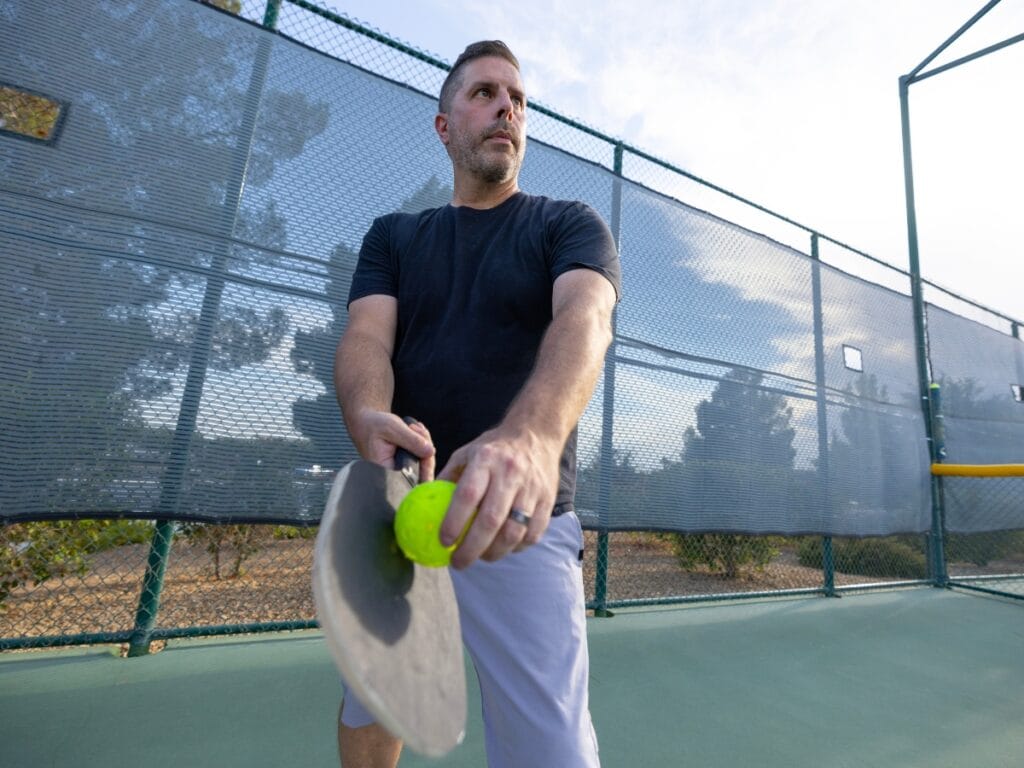
Planet Pickle is a year-round indoor facility in Suwanee (north Atlanta) built around community and coached development. Our certified coaches teach safe warm-ups, technique corrections, and gradual drill progressions that reduce injury risk. Weekly classes and clinics intentionally include footwork, shoulder activation, and balance work so adults and families form safer habits before they push intensity. Indoor courts mean consistent practice without weather interruptions, which supports steady conditioning and lowers overuse problems. The facility’s social approach also boosts accountability and practice consistency—two big factors in safer long-term play.
Which Planet Pickle Programs Focus on Safe Play and Injury Avoidance?
Planet Pickle runs a range of inclusive programs—Kids Clinics, Intermediate Bootcamp, and Advanced Live Ball Drills—each tied to specific prevention goals: foundational movement and safe falls for kids, footwork and conditioning for intermediate players, and controlled high-speed exchanges for advanced players. Kids Clinics teach balanced movement and fall-safety to prevent early risky habits. The Intermediate Bootcamp improves footwork, court positioning, and endurance to protect ankles and knees. Advanced Live Ball Drills rehearse high-speed exchanges under coach supervision to limit shoulder and elbow overuse. These program descriptions help you pick sessions that match your safety and skill goals.
How Does Expert Coaching at Planet Pickle Improve Player Safety?
Our certified coaches give immediate, evidence-informed feedback on swing mechanics, grip sizing, and recovery steps to correct movement patterns that cause tendon overload or increase fall risk. Coaching typically includes supervised warm-ups, progressive drill structures that respect tissue adaptation, and one-on-one cues—like adjusting wrist angle or split-step timing—to reduce harmful joint torque. Regular coach check-ins also help players spot early pain signals and adjust load or technique before small issues become bigger. For local adults and families, coached sessions at Planet Pickle provide a safe, structured path to better play through guided progression and peer support.
If you’re ready to act, book a coached session or clinic at Planet Pickle to practice these warm-ups, strength progressions, and technique corrections under expert supervision in our climate-controlled courts. It’s a practical next step toward safer, longer-lasting play.
Frequently Asked Questions
1. What are the signs that I might be experiencing a pickleball injury?
Look for local pain, swelling, loss of motion, or weakness in the affected area. You might notice stiffness after play or pain during specific moves like serving or volleying. If discomfort persists despite rest or gets worse with play, see a healthcare professional. Early attention usually means a quicker, safer return to the court.
2. How can I improve my balance to prevent falls while playing pickleball?
Work single-leg stands, heel-to-toe walks, and balance-board drills into your routine. Add dynamic movements such as lateral shuffles and controlled pivots, and include lower-body strength work for the hips and core. A coach or trainer can tailor a balance program to your level and goals.
3. Are there specific warm-up exercises recommended for older pickleball players?
Yes. Older players should lean on gentle mobility and low-impact dynamic drills: seated hamstring stretches, ankle circles, slow shoulder rolls, and slow lateral shuffles. Gradually increase intensity and avoid sudden, forceful moves. A tailored, gentle warm-up can improve safety and performance.
4. How often should I replace my pickleball equipment to ensure safety?
Inspect gear regularly. Replace court shoes every 6–12 months depending on wear, since worn shoes reduce stability. Check paddles for cracks and replace grips when they’re slick or compressed. Keeping gear in good condition protects your body and your game.
5. What role does hydration play in preventing pickleball injuries?
Hydration matters. Dehydration can cause cramps, fatigue, and slower reactions, which raises fall and injury risk. Drink water before, during, and after play; in long or hot sessions consider electrolyte drinks to maintain performance and safety.
6. Can I play pickleball if I have a previous injury?
Often yes, but proceed with care. Check in with a healthcare provider or physical therapist to confirm readiness and get tailored exercises. Reintroduce play gradually, prioritize warm-ups and technique, and don’t push through pain.
7. How can I find a pickleball coach to help with injury prevention?
Look for local clubs and facilities like Planet Pickle that list certified coaches and injury-prevention-focused programs. Community boards and online listings can help too. When choosing a coach, ask about experience with injury prevention and their approach to teaching safe technique and progression.
Conclusion
Staying injury-free is essential to enjoying pickleball for years to come. By focusing on proper warm-ups, strengthening key muscle groups, and using correct form, you can prevent common issues like tendonitis and ankle sprains while improving your overall game. For the safest and most supportive playing environment, choose Planet Pickle. Our well-maintained courts, professional clinics, and community-focused programs are all designed with player safety and longevity in mind. Play smart, stay safe, and keep having fun. Call 678-404-5792 today to book your court time or explore our injury-prevention programs. Your best—and healthiest—games are ahead.