

In pickleball, proper score calling etiquette is about more than just announcing numbers—it’s a fundamental part of the game that ensures clarity, maintains pace, and upholds sportsmanship on the court. A clear, correct, and consistent call eliminates confusion, prevents disputes, and allows all players to focus on strategy and play.
In this guide, we’ll break down the official protocol for calling the score, including the proper sequence and volume, while also addressing common mistakes and tips for handling disagreements gracefully, so you can contribute to a smooth and enjoyable match for everyone.
Score Calling Etiquette in Pickleball That Improves Game Flow
What Are The Three Numbers In Pickleball Score Calling?

In doubles pickleball, score calling usually includes three numbers, and each one has a specific job. The first number is the serving team’s score. The second number is the receiving team’s score. The third number tells you which server is serving for that team, either one or two. This is the standard format for score calling because it gives everyone the same quick snapshot: where the score stands and whose turn it is to serve.
If you are new to doubles, that third number can feel unnecessary at first. In reality, it is what keeps the game organized. Pickleball moves fast, points change quickly, and it is easy to lose track after a long rally or a short break. Clear score calling prevents most of the confusion that happens at rec games.
How Does The Score Sequence Work In Doubles Vs. Singles?
In doubles, the score is called as serving team score, receiving team score, then the server number. For example, if the serving team has three points, the receiving team has two points, and the first server is about to serve, you would call “three, two, one.” If the same score is happening but the second server is up, you would call “three, two, two.” That last number is not about which player is standing on the right or left. It is simply the order of servers for that team’s service turn.
In singles, score calling is simpler because there is only one server per side. Most players call two numbers: the server’s score first, then the receiver’s score. Because there is no partner rotation, there is no need for a server number. This is why people who switch between singles and doubles sometimes forget the third number. The habit from singles carries over and creates confusion in doubles.
One of the most common mistakes in doubles is skipping the server number, especially when the game is close or the pace is fast. Another common mistake is flipping the first two numbers and calling the receiving team’s score first. Both errors can lead to a wrong server, wrong position, or a replayed point. Consistent score calling reduces all of that.
Why Is Understanding The Server Number Important?
The server number is what keeps the serving rotation straight in doubles. Each team gets two chances to serve, one for each player, before the serve switches to the other team. The “one” and “two” in score calling indicate whether the first server or second server is currently serving during that service turn.
This matters for positioning and strategy. If you know you are server one, you know you are starting the service turn. If you know you are server two, you know it is the final serve for your team before the serve changes sides. That affects how teams communicate, how they manage risk, and how they stay organized between points.
It also helps prevent serving out of turn, which is one of the fastest ways to derail a game. If there is any doubt, a quick confirmation before the serve clears it up. In doubles, solid score calling is less about being formal and more about keeping the game fair, smooth, and enjoyable for everyone on the court.
When And How Should You Announce The Pickleball Score?
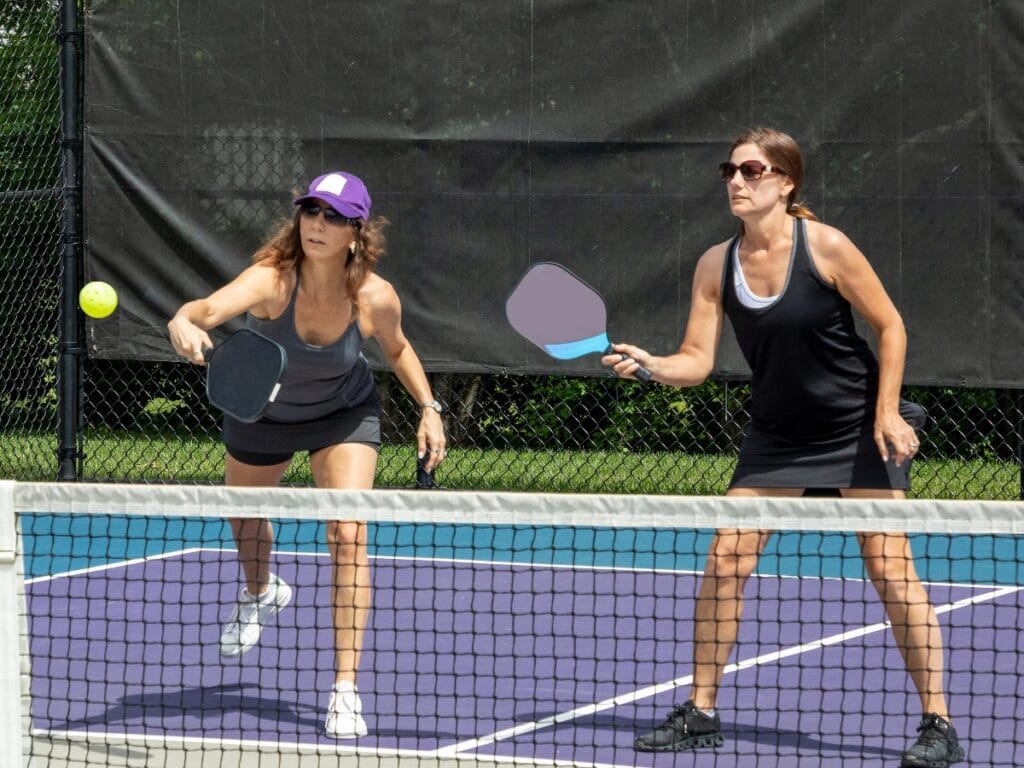
Good score calling does more than keep the pickleball game organized. It sets a clear starting point for every rally, helps both teams stay in the correct rotation, and cuts down on unnecessary disputes. The goal is not to over-explain or slow the pace. It is simply to make sure everyone hears the same information at the same time.
In most games, the score should be called before every serve. That moment is the natural reset, and it is when players are already pausing, setting feet, and getting ready for the next point. If the score is called consistently, the game flows better because there is less stopping to ask, “What’s the score?” or “Who’s serving?”
What Is The Proper Timing For Calling The Score?
The standard timing for score calling is right before the serve motion starts. Ideally, the server calls the score once both teams are set and the receiver is ready. If you call it too early, players may still be moving into position and miss it. If you call it while starting the serve, someone may not hear it clearly and you end up replaying the point.
It is also smart to repeat score calling after any interruption long enough to throw people off. Timeouts, a ball rolling onto the court, a brief conversation with another court, or a delay while someone retrieves a ball can all break concentration. When play resumes, a clear score call helps avoid confusion about the correct server or the correct side.
In more casual games, players sometimes skip calling the score when they feel the game is obvious. That is usually when mistakes happen. Consistency matters more than perfection. If you make score calling a habit on every point, you rarely have to argue about it later.
How Can Players Confirm The Score With Partners And Opponents?
Score calling works best when it is audible, calm, and easy to understand. The server calls the score and then gives a short pause to let anyone speak up if something sounds off. Most of the time, confirmation is as simple as a nod, eye contact, or a quick “yes.” You do not need a long discussion. You just need a shared agreement before the serve.
Partner communication helps too, especially in doubles where rotations can get mixed up after long rallies. If you are unsure, check in briefly before the score call. A simple, “I’m second server, right?” or “We’re at four, they’re at three?” keeps things clean without dragging out the point.
In louder gyms or crowded rec sessions, you may need a little extra clarity. Speak a bit louder, face the receiver when possible, and keep the score call steady. Some players also use a small hand signal to support score calling, such as holding up one finger for first server or two fingers for second server. That can help when the audio gets lost in background noise, but the verbal call should still be the main method so everyone stays on the same page.
When score disagreements happen, the quickest solution is usually to stop, confirm who served last and where the teams were positioned, then agree on the most likely score and move on. A consistent score calling routine prevents most of those moments, and it makes the game smoother for both teams.
How Should Players Handle Score Disputes and Corrections?
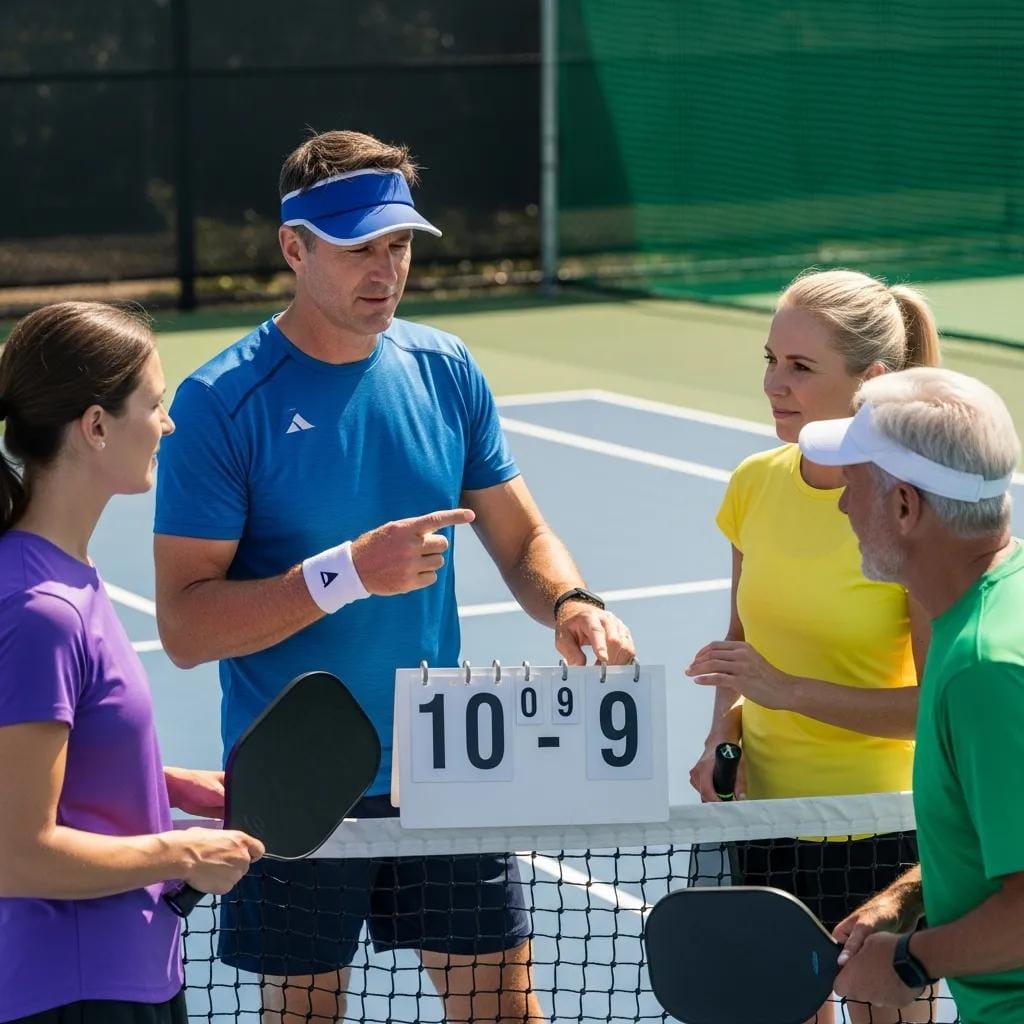
Even in well-run games, score mix-ups happen. A long rally, a quick side conversation, or a pause to retrieve a ball can be enough to throw off the count. The key is not to treat it like a confrontation. Good score calling is supposed to keep the game smooth, and when a dispute comes up, the best approach is calm, factual, and quick.
When someone questions the score, stop play before the serve and address it right away. Trying to play through uncertainty usually creates bigger problems, because the confusion tends to spread into serving order and court position. A short reset is almost always faster than arguing two points later.
What Steps Should Be Taken If The Score Is Questioned Before A Serve?
If the score is questioned before a serve, pause and talk it through immediately. Start by confirming the most objective detail first: which team is serving. From there, confirm whether it is first server or second server. Once serving order is agreed on, it becomes easier to reconstruct the score.
Next, review the last few points out loud in a straightforward way. Keep it simple and avoid adding assumptions. Many disputes resolve quickly when both teams walk through a short sequence like, “They served, we won the point, then we served and lost the next one.” In doubles, use position as a memory check. If a player is standing on the right side, that usually lines up with having an even score for that team, and standing on the left usually lines up with an odd score. It is not a perfect system if players forgot to switch, but it often helps jog the correct number.
If the group still cannot agree, the best move is to choose the score that both sides can reasonably support and move forward. You want a practical resolution, not a courtroom-level reconstruction. Good score calling going forward will prevent the same issue from happening again.
How To Correct The Score After A Point Has Been Played?
If you realize the score was wrong after a point is played, handle it as soon as it becomes clear. Do not wait until the next rally. Stop play, state the correction clearly, and make sure both teams agree before serving again. The longer you continue with the wrong score, the harder it becomes to fix, and the more likely it is that someone feels the match became unfair.
When correcting, focus on clarity. Say the corrected score once, confirm the correct server number in doubles, and then restart with a clean score call. If needed, a quick apology helps keep things friendly, but do not over-explain. The goal is to maintain trust and keep the game moving.
One of the easiest ways to avoid repeated corrections is to tighten up routine. Make sure the server calls the score every time, loudly enough to be heard, and pauses briefly before serving. That small pause gives anyone a chance to catch an error early. Consistent score calling is the best prevention, and calm corrections are the best backup when mistakes happen.
What Role Does Score Calling Play In Pickleball Etiquette And Sportsmanship?
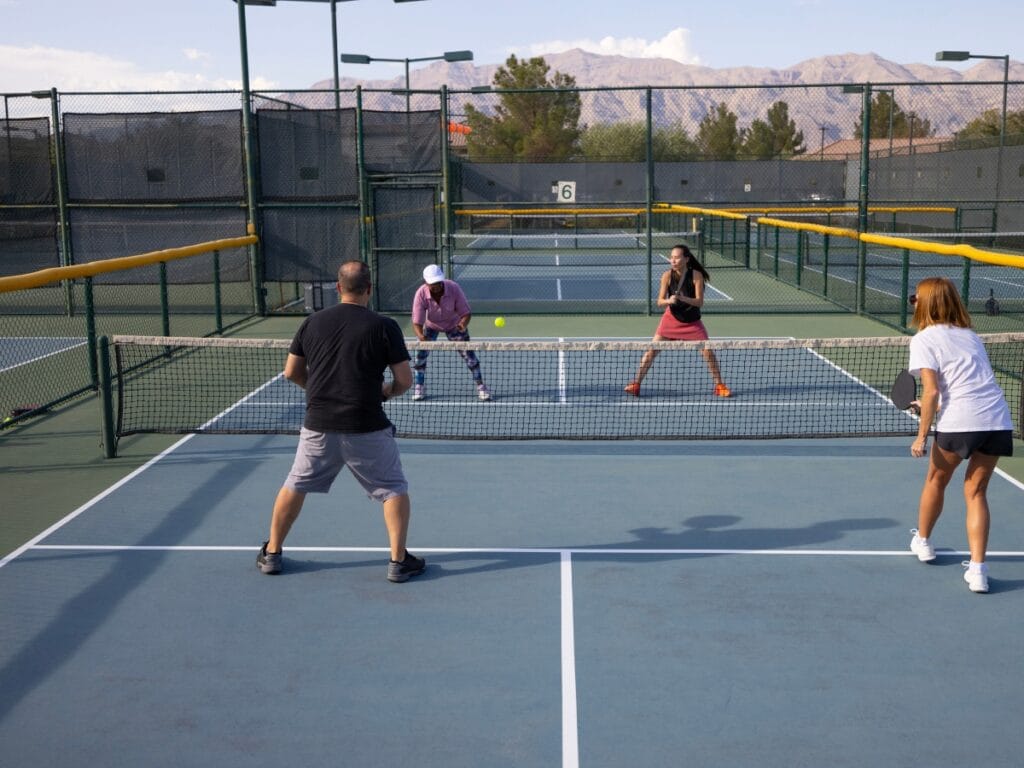
Score calling seems like a small detail, but it shapes how a game feels. When the score is called clearly and consistently, the match runs smoother and players spend more time playing instead of stopping to sort out confusion. In a sport that is often social and community-based, score calling also sends a message about how you approach the game. It shows respect for the other team, your partner, and the shared goal of keeping play fair.
Good sportsmanship in pickleball is rarely about big gestures. It is built through simple habits that reduce friction. Score calling is one of the easiest ways to keep the tone positive, especially in mixed-skill games where newer players are still learning rotation and serving order.
How Does Clear Score Calling Prevent Confusion And Build Trust?
Clear score calling removes ambiguity. When everyone hears the same score before the serve, there is less room for disagreement about what happens next. That matters because many disputes do not start as arguments. They start as uncertainty. Someone misses a point, someone forgets which server is up, and then the conversation gets tense because neither side wants to give away an advantage.
Consistent score calling reduces those moments because it creates a shared reference point. It is also a subtle way to show that you are playing in good faith. You are not trying to sneak in a serve, rush the pace, or take advantage of someone who is distracted. You are putting the information out loud for everyone to hear. Over time, that transparency builds trust, and trust makes games more enjoyable.
It also helps partners stay organized. In doubles, score calling supports rotation and positioning, which prevents accidental faults like serving out of turn. When partners trust the score call, they can focus on strategy and shot selection instead of second-guessing where they are supposed to stand.
How Is Score Calling Connected To Overall Court Etiquette?
Score calling is part of the basic rhythm of the game. It fits into the same category as waiting until a point ends to retrieve a ball, returning a stray ball calmly, or giving the receiver a moment to get set before serving. These habits keep the court running smoothly and show that you respect other people’s time on the court.
Good score calling also supports a better playing environment for newer players. Beginners often feel rushed or embarrassed when they do not know the score or server order. A steady, clear call helps them settle into the flow and learn the game faster. That improves the overall court culture because games stay friendly and inclusive instead of stressful.
Even in competitive play, score calling matters. It sets the tone for fairness and helps players avoid distractions. When the score is clear, the match stays focused on performance, not on correcting mistakes.
At the end of the day, score calling is not about being rigid. It is about being considerate. It keeps the game moving, reduces unnecessary tension, and reinforces the kind of sportsmanship that makes pickleball enjoyable for players at every level.
How Does Planet Pickle Promote Proper Score Calling Etiquette?
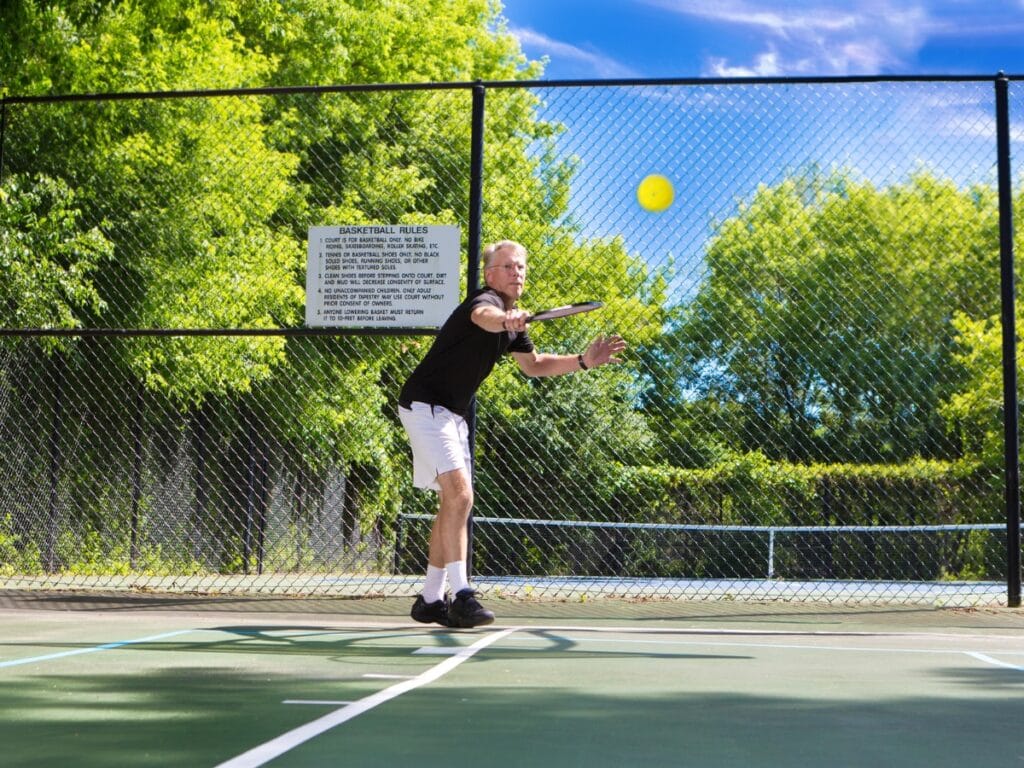
Planet Pickle focuses on more than shots and strategy. The best games happen when players communicate clearly and keep the flow moving, especially during busy open play and social events. That is why score calling is treated as a basic court skill, not an optional extra. When players learn proper score calling early, they spend less time sorting out confusion and more time playing the point.
Planet Pickle emphasizes simple habits that make games smoother for everyone. Clear score calling is one of the most important, because it supports fair play, keeps partners in the right rotation, and reduces the tension that comes from repeated stoppages. The goal is not to be overly formal. The goal is to be consistent and easy to understand.
What Programs Teach Score Calling And Court Communication?
Score calling is built into the learning process so it becomes natural. In beginner clinics, players practice the basics of doubles scoring alongside serving and positioning. That includes learning the three-number call, when to say it, and how to pause long enough for both teams to hear it before the serve.
In intermediate drills, score calling is reinforced in real-time situations, where fast pace and quick rotations can throw people off. Players get used to calling the score under mild pressure and confirming server order without slowing the game down. That is a practical skill, especially for doubles where the third number matters. The more repetitions players get, the more confident their score calling becomes.
Social play sessions and round-robin formats also create a natural place to practice. When partners rotate often, clear score calling prevents mix-ups. Players learn to call the score clearly, confirm it quickly, and move on to the next point without turning it into a discussion.
How Does Planet Pickle Foster A Community That Values Fair Play?
A strong pickleball community depends on trust and good court habits. Planet Pickle supports that culture by encouraging respectful communication during games. Score calling is part of that, because it shows you are playing in good faith and looking out for the shared experience on the court.
In group play settings, clear communication is highlighted as a positive skill, not just something you correct when mistakes happen. Players are encouraged to speak up politely if the score sounds off, and they are also encouraged to handle corrections calmly. When the tone stays respectful, disputes tend to resolve quickly and the match stays enjoyable.
Over time, that approach helps create courts where players of different skill levels feel comfortable. Newer players learn what “normal” looks like, and experienced players set an example by keeping score calling steady and consistent. That combination builds a better playing environment, especially during high-traffic sessions where confusion is more likely.
Why These Habits Matter Long-Term
Good score calling improves the quality of play because it reduces distractions. When players trust the score and know the serving order, they can focus on execution instead of second-guessing. In that sense, score calling supports both etiquette and performance.
The overall message is simple: call the score before every serve, keep it clear and steady, and treat corrections as normal parts of the game. Planet Pickle reinforces these habits through instruction and community play, so score calling becomes second nature, and games stay fair, smooth, and enjoyable.
Frequently Asked Questions

What Are The Common Mistakes Players Make When Calling Scores In Pickleball?
Most score calling problems come down to consistency. In doubles, the biggest mistake is leaving off the server number. Players will call the two team scores but forget whether it is first server or second server, which is what keeps rotations correct. Another common issue is flipping the order and calling the receiving team’s score first, especially when the game is moving quickly. Players also sometimes call the score too early, before everyone is set, so one or more people miss it, and the point starts with uncertainty. A short pause after the call, before the serve, prevents most mix-ups without slowing the game down.
How Can New Players Learn Proper Score Calling Etiquette?
New players usually learn score calling fastest through repetition in a low-pressure setting. Short drills and guided games help because they connect the score to rotation and positioning in real time. It also helps to watch experienced players and notice the rhythm: call the score, pause, then serve. In beginner clinics and structured social play, score calling becomes a routine instead of something you only remember when a disagreement happens. Facilities like Planet Pickle often include this as part of early instruction, which helps players build the habit from the start.
What Should Players Do If They Forget The Score During A Match?
If the score is unclear, stop play before the serve and talk it through calmly. The easiest way to reconstruct it is to start with what is most certain, such as which team is serving and whether it is first server or second server. From there, walk back through the last few points out loud. Keep the tone cooperative, because most score issues are honest mistakes, not disagreements about fairness. Once both teams agree on the most reasonable score, confirm it with a clear call and continue.
Are There Specific Phrases Or Terminology Used In Score Calling?
The most common format is a clean number call that everyone can hear. In doubles, you will often hear something like “three, two, one,” meaning the serving team has three, the receiving team has two, and the first server is serving. In singles, players usually call only two numbers because there is one server per side. You may also hear short confirmations such as “confirm?” or “sound right?” before the serve. The goal is clarity, not extra commentary, so concise language is usually best for score calling.
How Does Score Calling Impact The Overall Enjoyment Of The Game?
Clear score calling keeps games moving and reduces tension. When the score is called the same way every time, players spend less time stopping to sort out disputes and more time focused on the next rally. It also helps partners stay organized, which improves the quality of play, especially in doubles. Over time, good score calling makes matches feel smoother and more respectful, which is a big part of why pickleball stays fun across different skill levels.
What Role Does Sportsmanship Play In Score Calling?
Score calling is a small but meaningful part of sportsmanship because it shows honesty and respect. Calling the score clearly gives both teams the same information and helps prevent accidental advantages. When mistakes happen, good sportsmanship looks like a calm correction and a quick reset, not blame or frustration. That approach keeps the atmosphere friendly, supports fair play, and helps build a court culture where people want to keep playing together.
Conclusion
Proper score calling etiquette is more than just a rule—it’s the foundation of clear communication, smooth gameplay, and good sportsmanship in pickleball. By announcing the score loudly, in the correct order, and before you serve, you show respect for your opponents and partners alike.
To practice this essential skill and enjoy the game in a supportive, well-managed environment, visit Planet Pickle. With premier courts, organized play, and a community that values the spirit of the game, we provide the perfect setting for players of all levels. Call 678-404-5792 today to book court time, join a league, or learn more about our programs. Let’s keep the game fun, fair, and flawlessly communicated.