
While the basics of pickleball are easy to learn, mastering the strategies that win points and games is what separates recreational players from serious competitors. Moving beyond simply hitting the ball over the net involves understanding court positioning, shot selection, and smart communication with your partner. In this guide, we’ll break down essential pickleball strategies for beginners, from controlling the “kitchen” line and executing a reliable third-shot drop to exploiting your opponents’ weaknesses, helping you build a smarter, more confident game from the ground up.
Pickleball Strategies for Beginners Every New Player Should Learn
What Are the Fundamental Pickleball Serve Strategies for Beginners?
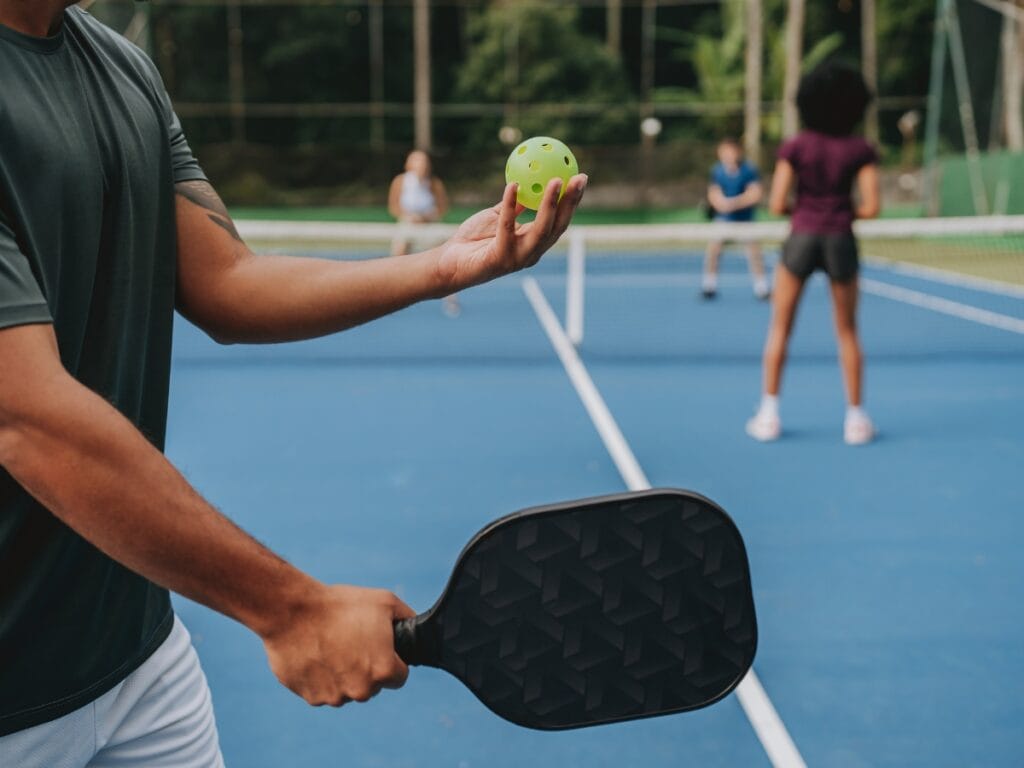
A solid serve strategy for beginners focuses on consistency and placement rather than power. The serve starts the point and helps shape the return—you want serves that limit the opponent’s third-shot options. Aim for deep serves that push opponents back, mix in soft short serves to change the tempo, and avoid risky spin until your contact is steady. Practice target zones, a repeatable toss and contact point, and a calm follow-through to serve reliably under pressure.
How Do You Execute a Deep Serve to Gain Court Advantage?
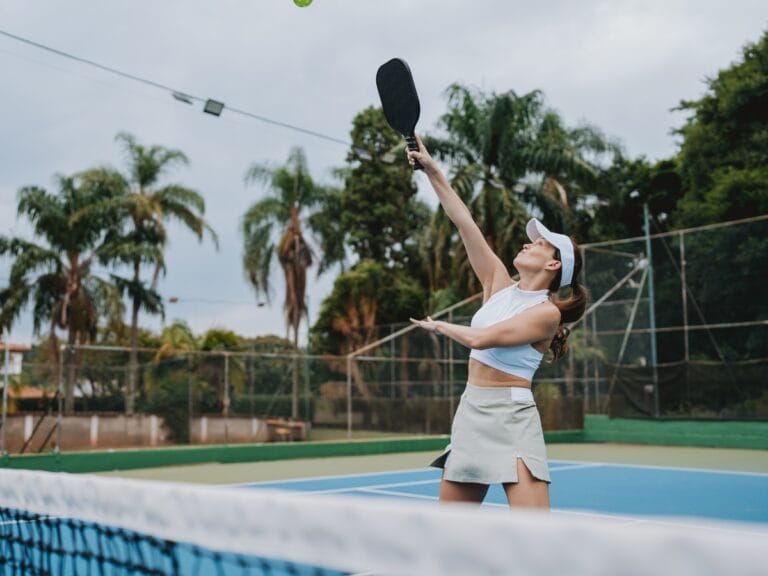
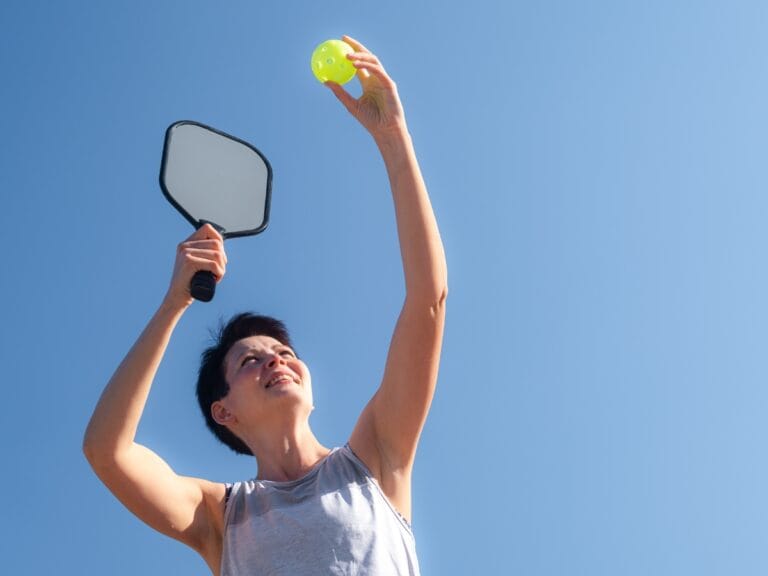
A deep serve forces the returner back and creates softer returns, giving you time to move up toward the kitchen. Start balanced with weight on your back foot and a relaxed toss slightly in front of your hitting shoulder. Make contact out in front, follow through toward your target, and aim for the baseline or deep corner away from the returner’s forehand to reduce angle openings. Progress your practice: stationary target serves, serve-to-return drills with a partner, then short-rotation live serving to simulate match pressure.
Before logging reps, dial in your contact point and follow-through so the ball keeps height and depth. Coaches stress small, repeatable motions—compact backswing, steady paddle face, and a relaxed wrist at contact. Those mechanics make it easy to track deep-serve percentage and measure improvement over time.
Intro to serve types and when to use them:
- Deep flat serve: Land near the baseline to push the opponent back and blunt their attack.
- Soft/short serve: A low-risk, shorter placement to change pace or invite predictable returns.
- Spin serve (basic): Use cautiously as you get comfortable—moves the returner laterally.
Summary: Start with deep and soft serves to manage points, practice consistent contact mechanics, and only add spin after placement is reliable.
Different serve types compared for practice and tactical use:
What Are Common Serve Mistakes Beginners Should Avoid?
Beginners often rush the toss, swing too hard, or swing across their body—those mistakes lead to inconsistent contact and many faults. Fixes: slow the motion, shorten the swing, stabilize the wrist, and repeat a consistent toss height and location. Drill suggestion: ten slow-motion serves focusing only on toss and contact, then ten full serves aiming at a marked target to transfer feel. Track outcomes (in, deep, fault) during short practice blocks to spot patterns and corrections.
Another common error is serving to the same spot every time. Vary placement and pace so opponents can’t predict returns. Solid early habits create a dependable baseline serve that supports your point construction and feeds into serve-and-return drills.
After practicing serve fundamentals, many beginners get faster results with coached repetition. Planet Pickle runs coached serve-and-return drills in our Beginner Clinics to help players apply mechanics in live play. This guide is aimed at local adults and families in the greater Atlanta area who want an active, social, and skill-building pickleball experience. Those supervised sessions let you practice deep serves, get targeted feedback, and build the confidence to approach the kitchen.
How Can Beginners Master The Pickleball Dinking Strategy At The Kitchen Line?
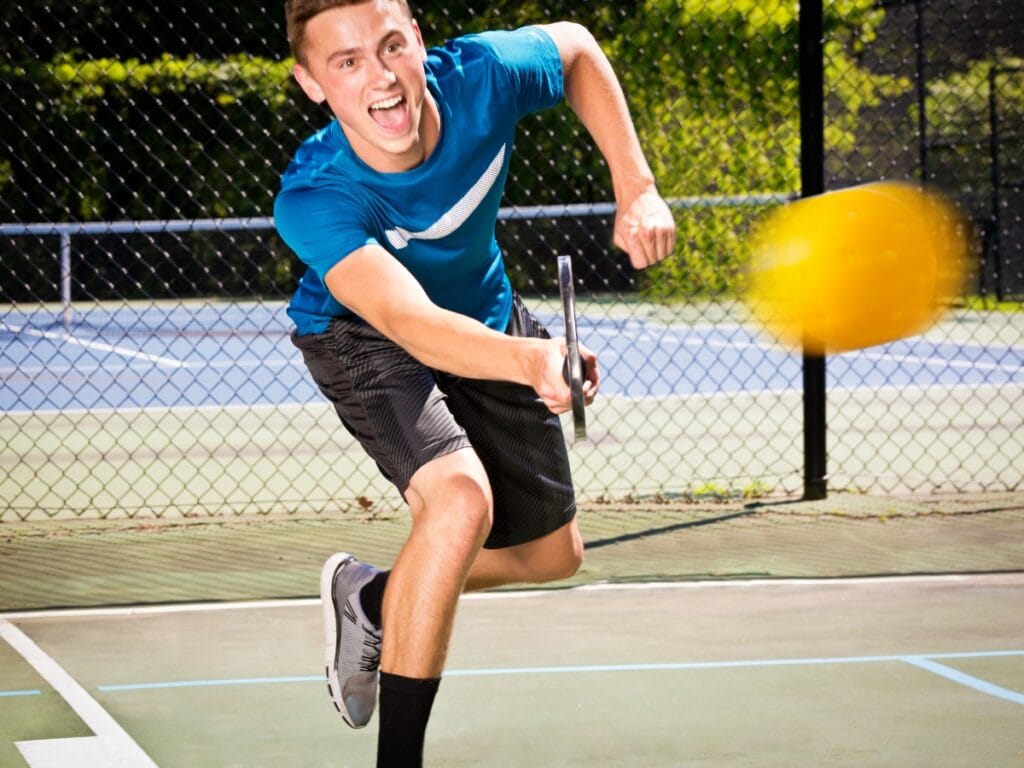
For players looking for practical pickleball strategies for beginners, learning how to dink well at the kitchen line is one of the most important early skills. Dinking is the soft, controlled exchange that happens near the non-volley zone and it depends more on touch and patience than power. The goal is to send a low, gentle ball that lands near your opponent’s kitchen line, forcing them to hit up instead of driving down at your feet. When you can keep these exchanges low and controlled, you set up easy mistakes and pop-ups without having to swing hard.
Good technique starts with a neutral, continental grip and a relaxed wrist on your paddle. Keep your backswing short, use a slightly open paddle face, and think of the motion as more of a soft push than a full swing. Most of the movement comes from a small forearm rotation rather than a big shoulder or body swing, which helps you stay consistent even when rallies get fast. Lean slightly forward, stay on the balls of your feet, and watch the ball all the way into the paddle so you are never surprised by pace or spin.
One of the most effective pickleball strategies for beginners is to build dinking skills in simple progressions. You might start by standing a few feet from a wall or net and softly tapping the ball to a target near an imaginary kitchen line. From there, move into cross-court dinking with a partner, trying to maintain a long, steady rally instead of going for winners. Once that feels comfortable, you can work on angle dinks that pull opponents wide and reset dinks that send the ball safely back to the middle when you are under pressure. These progressions teach soft hands, consistent contact, and better decision-making at the non-volley zone.
Different types of dinks serve different purposes. A cross-court dink travels over the lowest part of the net and gives you more margin for error, making it a reliable pattern when you are still learning. An angle dink uses a slightly more open paddle face and a small foot pivot to send the ball shorter and wider, pulling your opponent off the court. The reset dink is the safety shot you play when a rally speeds up – you shorten the stroke, aim for the middle, and focus on height control so you can regain a neutral position at the kitchen line. Knowing when to choose each option is just as important as having the mechanics.
How Does Controlling The Kitchen Line Improve Your Game?
Controlling the kitchen is one of the clearest signs you are moving beyond beginner status. When you and your partner hold the non-volley zone, you force opponents to hit up from deeper in the court, which makes attacking much easier for you and much harder for them. Low, patient dinks at the kitchen line shrink their available angles and reduces their reaction time, turning a neutral rally into one where you are quietly in charge.
A typical point pattern shows how this works. The rally starts with a serve and return, followed by a third shot drop that brings you to the kitchen. From there, a controlled dink exchange develops as both sides fight for position. The moment your opponent sends a ball slightly higher or deeper than they meant to, you can step in with a soft attack or firm volley into the open space. Practicing these transitions – from soft dink to controlled attack, then back to a safe reset if needed – teaches you how to build points instead of just reacting.
Opponents will try to break your kitchen control with hard volleys, sharp angles, or surprise lobs. This is where your dinking foundation pays off. A calm reset dink back to the middle can slow a fast rally and buy time. An occasional well-placed angle dink can move a player off the court and open a lane for your partner. A controlled, defensive lob can push aggressive opponents off the line and give you time to reset your formation. The more comfortable you are at the kitchen line, the easier it becomes to choose the right response.
What Are the Key Court Positioning and Footwork Strategies for Beginner Pickleball Players?
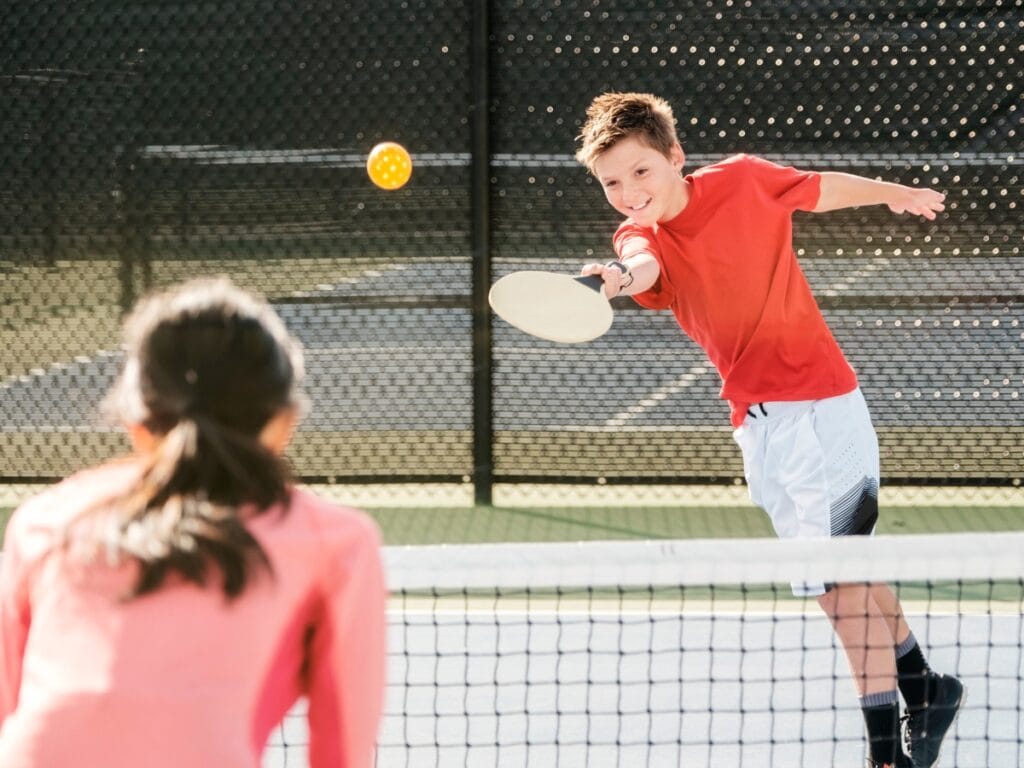
Good positioning and footwork prevent reach errors, speed recovery, and make dinking and transition play more consistent. The ready position—knees slightly bent, paddle up and in front, weight on the balls of the feet—keeps you ready to move. Transitioning from baseline to kitchen uses a low push step, short controlled strides, and settling into a balanced stance at the transition line. Below are simple positioning rules and footwork drills to help beginners cover the court efficiently without wasting energy.
How Should Beginners Position Themselves for Optimal Court Coverage?
Positioning changes by phase: on serve/receive, stay nearer the baseline to cover the court; during transition move together toward the non-volley line with staggered spacing; at the kitchen hold a compact, mirror stance with a small separation to cover angles. For doubles, use simple partner rules—server’s partner covers shallow cross-court angles, receiver covers deep returns—to avoid collisions and middle gaps. Practice step-by-step positioning rules so spacing and movement become automatic during live play.
Basic partner spacing: after transition, both players should be near the kitchen with one slightly ahead on the diagonal to cover the middle. Pair drills help make this coordination second nature and reduce mental load in matches.
Footwork and positional drills to rehearse coverage:
- Short side-steps with paddle recovery to simulate kitchen exchanges.
- Partner shadowing to rehearse synchronized forward/backward transitions.
- Serve-to-kitchen sprints with a controlled stop to train approach timing.
Positioning and drill comparison for practice clarity:
What Footwork Drills Help Improve Agility and Movement on the Court?
Footwork drills build a faster first step, better lateral agility, and controlled recovery to ready position—attributes that prevent off-balance shots. Use agility ladders for foot placement and coordination, side-step sequences for lateral endurance, and short T-drills for explosive direction changes while keeping the paddle ready. Structure practice with measurable reps: three sets of 30 seconds for ladder work, six lateral exchanges per side-step set, and four timed T-drill runs focusing on clean recovery.
Coach cues: low hips, quick compact steps, and immediate paddle re-positioning after every move. Track times and exchange counts to quantify progress and stay motivated. Add these drills twice a week in short sessions to keep gains without overdoing it.
Suggested footwork drill list:
- Agility ladder quick-feet: Improve cadence and coordination for fast adjustments.
- Side-step exchange: Build lateral endurance for long dinking rallies.
- T-drill change-of-direction: Train explosive recoveries toward the kitchen and back.
How Do Pickleball Doubles Strategies Enhance Teamwork for New Players?
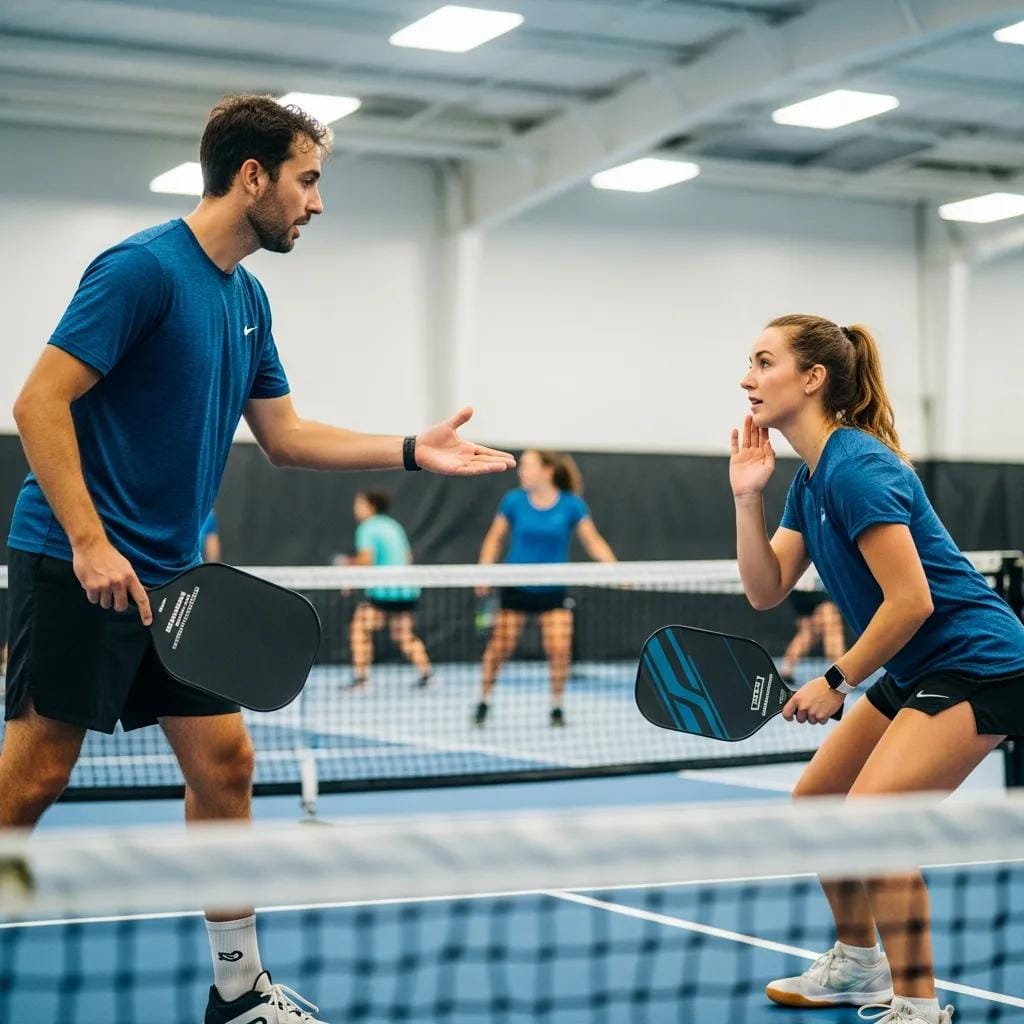
When you are just starting out, the game can feel chaotic, especially in doubles. This is where simple, clear pickleball strategies for beginners make a real difference. Doubles strategy is less about fancy shots and more about communication, role clarity, and moving as a unit, so you are not both reaching for the same ball or leaving big gaps on the court. When partners agree on a few basic rules and stick to them, individual skills start to work together instead of against each other.
For new teams, it helps to keep things simple. Decide who will cover the middle on most balls, when you will switch sides, and how you both plan to move from the baseline to the kitchen. Short verbal calls, basic stacking or switching routines on serve, and a couple of easy nonverbal signals give you structure without overthinking every point. Over time, these shared habits become automatic, so you can focus on building touch, consistency, and confidence at the kitchen line.
What Are Effective Communication Techniques Between Doubles Partners?
Good partners talk before the point, during the point, and right after it. Before the serve, agree on targets, who will handle lobs, and which player is responsible for the middle if a ball comes between you. During play, use simple, loud calls such as “Mine” when you are taking a ball in the center or “Yours” when you are yielding to your partner. If you need to change positions after a deep shot or lob, a quick “Switch” helps both players adjust without hesitation.
Nonverbal communication is just as useful. A brief nod, eye contact, or a small paddle signal behind the back before serving can indicate whether you plan to stay in your lane or slide to cover more of the court. Keep the language and signals limited and repeat them every match so they become second nature. One of the most underrated pickleball strategies for beginners is a quick, calm check-in after each point: a short “nice shot,” “my bad,” or “next one” helps both players stay connected and resets the energy for the next rally.
How Should Beginners Coordinate Court Coverage And Movement In Doubles?
Court coverage in doubles is all about minimizing gaps. A useful guideline for new teams is to imagine a rope connecting you and your partner. As one player moves, the other adjusts a step or two so you stay roughly the same distance apart and keep the middle covered. The player closer to the center usually takes responsibility for most balls down the middle, while the partner shades slightly toward the sideline to protect against sharp angles.
When you are returning serve, both players should look to move forward together after a good third shot drop, rather than having one player rush in alone. Small, controlled steps toward the kitchen help you arrive balanced and ready to react. On defense, if you are pushed back by a hard drive or lob, retreat together so you do not leave a large open space at your feet. Practicing simple scenarios in drills, such as sliding side to side as a pair to defend cross-court drives or advancing together after a soft third shot, quickly builds trust.
Which Essential Pickleball Shots Should Beginners Learn To Improve Their Game?
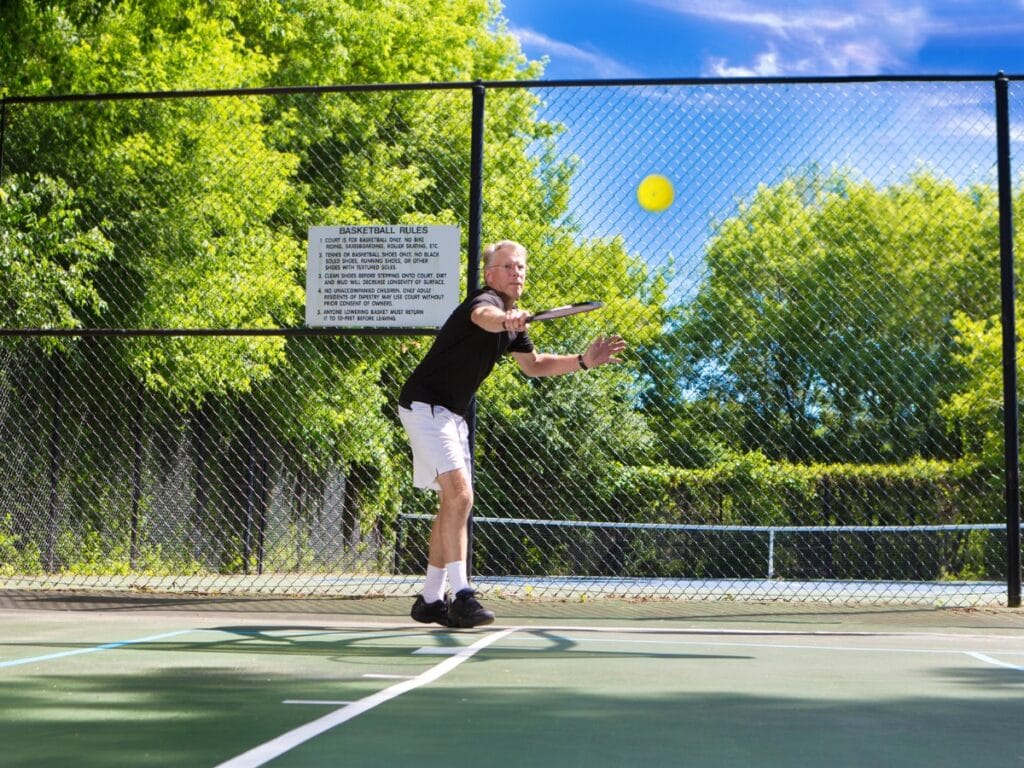
If you are just starting out, it helps to focus on a small group of shots that quickly lift your overall level. Three stand out for most players: the third shot drop, the lob, and a steady, controlled volley. Together, these cover how you move from the baseline to the kitchen, how you escape pressure, and how you finish points once you are in a strong position. Instead of trying every advanced trick at once, building these core skills gives you a simple set of pickleball strategies for beginners that you can rely on in almost every match.
The third shot drop helps you move safely to the net without feeding your opponents an easy attack. A well-judged lob lets you reset when you are stuck in a defensive exchange or when both opponents are crowding the kitchen. Solid volleys turn weak replies into winning chances. As you improve your control and decision-making with these shots, you will notice longer rallies, fewer errors, and a clearer idea of what you are trying to do on each point.
How Do You Perform The Third Shot Drop For Better Point Control?
The third shot drop is one of the most valuable pickleball strategies for beginners because it turns defense into a neutral or even favorable position. The goal is to send a soft, arcing shot that lands near the opponent’s kitchen line and stays low, forcing them to hit up instead of driving the ball at you.
Use a continental grip and keep your swing compact. Start with a small backswing, meet the ball out in front of your body, and keep the paddle face slightly open so the ball lifts gently over the net. You are not trying to hit hard. You are trying to let the ball travel with just enough height and depth to land close to the non-volley zone line.
A simple practice pattern works well. Have a partner feed you returns while you stand at the baseline and aim each third shot at a target near the kitchen line. Focus on a smooth tempo and a consistent contact point. Once you can land several drops in a row, start moving forward after each one so you get used to approaching the net behind the shot. This combination of placement and footwork is what eventually allows you to reach the kitchen together with your partner and control the point.
When And How Should Beginners Use Lob Shots Effectively?
For new players, the lob is most useful as a reset tool rather than a constant attacking weapon. It works best when both opponents are pressed up at the kitchen and hitting down on you, or when you are pulled out of position and need a moment to recover.
To hit a controlled lob, relax your grip slightly and use a longer, smoother swing that sends the ball high and deep toward the opponent’s baseline. Aim for plenty of height and give yourself margin over the net, especially when you are under pressure. Avoid floating lobs to the middle of the court where stronger players can put the ball away easily. After you lob, recover to a balanced, central position and be ready for the next ball.
You can train this by standing at the kitchen and lifting soft balls over imaginary opponents, then by practicing with real players at the net who try to track the ball down. Over time, you will learn when a lob is a smart change of pace and when it is too risky.
How Can Beginners Build Reliable Volleys At The Net?
Volleys are where many points are won once you have earned your place at the kitchen. For beginners, the key is stability rather than power. Keep your paddle up in front of your chest, bend your knees slightly, and use short, firm punches instead of big swings. Meet the ball early, in front of your body, and aim for deep, chest high targets on the opposite side.
Start with gentle cooperative volleys at the kitchen line, then add more pace as your control improves. As your third shot drops and lobs begin to work, these simple, confident volleys will help you finish points and turn your growing set of pickleball strategies for beginners into a complete, practical game plan.
How Does Planet Pickle Support Beginners in Mastering Pickleball Strategies?
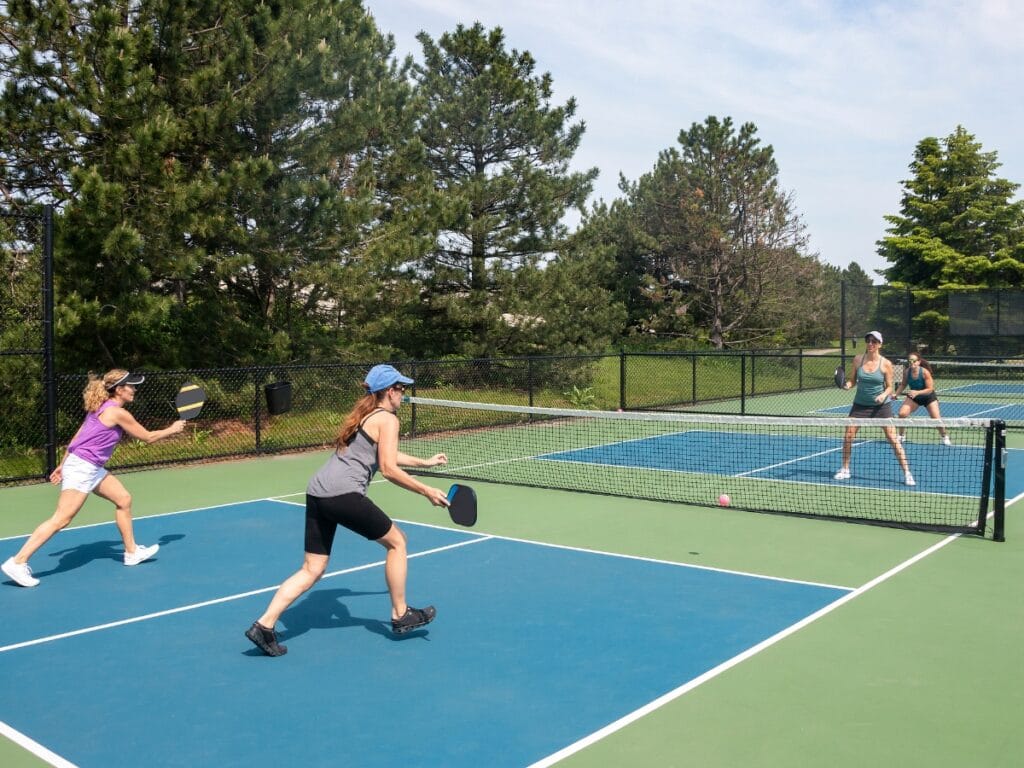
This guide is aimed at local adults and families in the greater Atlanta area who want an active, social, and skill-building pickleball experience. Planet Pickle runs a modern indoor facility in Suwanee, Georgia with 12 courts and amenities designed for year-round practice. Our mission is to offer inclusive programs for all levels, certified coaches who focus on technique, and structured clinic series that step directly through beginner strategy development. Below are the core beginner offerings and community advantages you’ll find at a dedicated indoor facility.
What Beginner Clinics and Training Programs Does Planet Pickle Offer?
Planet Pickle’s beginner pathway includes structured Beginner Clinics that cover serve-and-return, kitchen-line control, and basic doubles strategy, plus an Intermediate Bootcamp that advances third-shot and transition skills. Each clinic blends technical breakdowns, partner drills, and supervised live-play segments so coaching feedback gets applied in match-like situations. Register through our booking channels and consider staying for social play afterward to practice what you learned. These clinic formats follow the progressive practice path above, giving beginners a clear route from isolated drills to integrated match play.
Facility-based programs give immediate coach feedback, consistent practice partners, and access to multiple courts for rotating drills. Our indoor setting removes weather variables so you can improve steadily across weeks of attendance.
We pair clinics with round robins, social events, and family-friendly programming to increase practice time and create regular partners. Being part of a local practice community speeds skill consolidation and keeps learning social and sustainable.
How Does Joining Planet Pickle’s Community Enhance Learning and Social Play?
Joining an indoor facility community gives you steady practice opportunities, a variety of partners, and social accountability that encourages regular attendance and measured improvement. Members get access to skill-focused clinics—like dinking control or third-shot drops—coached drills that speed feedback loops, and relaxed social sessions to try new strategies in low-pressure play. With 12 courts and premium amenities, Planet Pickle lets you rotate through targeted drills without long waits that outdoor sites often create.
Key community benefits include:
- Regular practice partners for consistent drill progress and feedback.
- Social events and round-robins that offer low-pressure match experience.
- Climate-controlled indoor courts for year-round, reliable practice.
Summary: A local facility community turns solo practice into a sustainable learning path by supplying structure, partners, and space for repeated, coached application of beginner strategies.
Frequently Asked Questions
What is the importance of footwork in pickleball for beginners?
Footwork is essential for beginners because it improves movement efficiency and shot execution. Good footwork positions you to hit with balance, reduces reaching errors, and expands court coverage. By practicing footwork drills you’ll move more smoothly between offense and defense, stay balanced, and react faster—skills that pay off immediately in matches.
How can beginners improve their communication during doubles play?
Clear communication prevents confusion and builds coordinated movement. Start with a simple call system—words like “Mine” and “Yours” work—and practice hand signals for noisy courts. Rehearse these cues in drills so they become automatic; the result is fewer collisions and faster decisions during points.
What are some common mistakes beginners make in pickleball, and how can they be avoided?
Typical beginner mistakes include poor shot selection, inconsistent serving, and weak court awareness. Avoid them by focusing on core skills—repeatable serves, reliable dinks, and steady positioning. Drill-specific practice and coach feedback help correct habits early. Also, learn when to be patient and when to attack; strategy matters as much as technique.
How does practicing in a community setting benefit beginner pickleball players?
Community practice exposes you to varied partners and play styles, which accelerates learning. Group clinics and social play create accountability and more reps, while coached sessions speed up correct technique. The social side also makes practice more enjoyable and keeps you coming back.
What role does mental strategy play in pickleball for beginners?
Mental strategy matters—knowing when to be patient, anticipating opponents’ moves, and staying composed under pressure all improve performance. Beginners should practice staying calm, using visualization, and setting simple goals each session. Those mental habits help decision-making during tight points.
How can beginners effectively track their progress in pickleball?
Track progress with a practice journal: note serve accuracy, dink exchanges, and match results. Video analysis helps spot technique issues, and setting small, measurable goals for each session keeps you focused. Regular check-ins with a coach or partner provide useful perspective and motivation.
Conclusion
Mastering foundational strategies is the key to unlocking both the competitive joy and social fun of pickleball. By focusing on placement over power, learning to “dink” effectively, and moving in sync with your partner, you’ll build a smarter, more confident game. To put these strategies into practice in a supportive environment, visit Planet Pickle. With premier courts, expert-led clinics, and a vibrant community, we provide the perfect setting for beginners to learn, grow, and play. Ready to elevate your game? Call 678-404-5792 today or send us a message to book court time or join a program. Your journey from beginner to strategic player starts here.